If you've developed anxiety during perimenopause and you've never been an anxious person before, you're not losing your mind. You're experiencing one of the most common and least understood symptoms of this stage of life.
A 2024 systematic review of over 9,000 women confirmed that the perimenopausal transition carries a significantly elevated risk of anxiety and depressive symptoms compared to premenopause. And a global analysis projects that the burden of anxiety disorders in perimenopausal women will increase by more than 40% by 2035.
This is not a small problem. It's not "just stress." And it's not something you should be expected to push through. In this article, we explain what's happening in your brain and body, why perimenopause anxiety feels different from anything you've experienced before, and the practical steps that research shows make a real difference.
Key takeaways
- Oestrogen directly influences serotonin, dopamine and GABA, the three neurotransmitter systems most involved in anxiety. As oestrogen fluctuates, these calming chemicals become unstable.
- Falling progesterone reduces GABA activity, which is your brain's primary calming system. This is why many women feel wired, restless and unable to relax.
- Sleep disruption is the single biggest amplifier of perimenopausal anxiety. Addressing sleep can improve anxiety more than almost any other intervention.
- Your gut produces around 95% of your body's serotonin. Supporting gut health during perimenopause directly affects your mood and anxiety levels.
- Perimenopause anxiety is hormonal. It responds to hormonal support, lifestyle changes and targeted nutrition, not just conventional anxiety treatments.
In this article
- Why does perimenopause cause anxiety?
- The progesterone piece: your missing calming agent
- Why your stress response is on overdrive
- Sleep: the biggest amplifier
- Your gut and your mood: the connection nobody mentions
- What perimenopause anxiety actually feels like
- What actually helps
- When to see your GP
- The bottom line
Why does perimenopause cause anxiety?
The short answer: your hormones directly control the chemicals in your brain that regulate mood, calm and emotional stability. When those hormones fluctuate, so do those chemicals.
Oestrogen is a master regulator of three neurotransmitter systems. Serotonin, which governs feelings of calm and wellbeing. Dopamine, which controls motivation, pleasure and the ability to cope with challenges. And GABA, the primary inhibitory (calming) neurotransmitter in your nervous system.
During your reproductive years, oestrogen levels follow a predictable cycle. Your brain chemistry adjusts accordingly, and everything stays relatively stable. During perimenopause, oestrogen doesn't decline gradually. It swings erratically, sometimes spiking higher than it ever did before dropping sharply, sometimes within the same week. Each swing affects serotonin, dopamine and GABA production, creating unpredictable dips that leave you feeling emotionally unsteady.
This is why women who have never experienced anxiety before can develop it for the first time in their 40s. It's not psychological. It's neurochemical.
The progesterone piece: your missing calming agent
If oestrogen is the conductor of your brain's mood orchestra, progesterone is the volume control. And during perimenopause, that volume control starts to fail.
Progesterone metabolises into a compound called allopregnanolone, which directly activates GABA receptors in your brain. GABA is your nervous system's brake pedal. It slows things down, promotes calm, helps you relax and supports sleep. When progesterone drops (which often happens earlier and more sharply than oestrogen during perimenopause), GABA activity decreases with it.
The result: a nervous system that's running with the brakes off. Women describe it as feeling wired but tired, restless even when they're exhausted, unable to switch off, and on edge without any obvious reason. If that sounds familiar, it's not in your head. It's your progesterone.
Why your stress response is on overdrive
Your body has a built-in stress response system called the HPA axis (hypothalamic-pituitary-adrenal axis). It's what triggers the release of cortisol when you're under threat. Oestrogen normally has a dampening effect on this system, keeping cortisol responses proportionate to the situation.
As oestrogen fluctuates and declines during perimenopause, that dampening effect weakens. Your cortisol responses become exaggerated. The email that would have mildly annoyed you two years ago now triggers a full stress response. The situation that you would have handled calmly now feels overwhelming. Your baseline level of physiological arousal is simply higher than it used to be.
This isn't about being less resilient. It's about your stress response system losing the hormonal support it relied on to stay proportionate.
Support your calm
Better Night contains ashwagandha (KSM-66), saffron, magnesium, chamomile and Montmorency cherry. A food supplement designed to support relaxation and restful sleep during perimenopause.
Sleep: the biggest amplifier
If there's one factor that makes perimenopausal anxiety worse than anything else, it's poor sleep. Research shows that even one week of disrupted sleep raises anxiety levels and emotional reactivity in controlled studies. During perimenopause, when sleep is already under assault from night sweats, hormonal waking and cortisol spikes, the effect is compounded.
Poor sleep reduces your brain's ability to regulate emotions, increases sensitivity to perceived threats, raises baseline cortisol, and impairs the production of serotonin and GABA. It creates a cycle: anxiety disrupts sleep, and disrupted sleep worsens anxiety.
This is why addressing sleep is often the single most effective thing you can do for perimenopausal anxiety. It won't solve everything, but it changes the baseline from which you're working. Our guide to perimenopause and sleep covers this in detail.
Your gut and your mood: the connection nobody mentions
Your gut produces approximately 95% of your body's serotonin. Read that again. The chemical most responsible for feelings of calm and wellbeing is produced almost entirely in your gut, not your brain.
This is why gut health is not a side issue when it comes to perimenopausal anxiety. It's central to it. A 2026 narrative review published in Nutrients examined the gut-brain axis specifically in the context of perimenopausal mood disorders and concluded that gut dysfunction is "one of the key factors contributing to perimenopausal anxiety and depression," triggering neurotransmitter imbalance, gut barrier impairment and neuroinflammatory responses.
During perimenopause, hormonal changes directly affect your gut microbiome. The estrobolome (the collection of gut bacteria that help metabolise oestrogen) shifts as hormone levels change, which can create a feedback loop: hormonal changes impair gut function, and impaired gut function worsens the hormonal symptoms, including anxiety.
Supporting your gut during perimenopause isn't just about digestion. It's one of the most effective ways to support your mood from the inside out.
Your gut and your mood are connected
Better Gut is a food supplement containing six probiotic strains formulated specifically for women in perimenopause and menopause, designed to support gut health and the gut-brain connection.
What perimenopause anxiety actually feels like
Perimenopause anxiety doesn't always look like what you'd expect. For some women, it's the classic racing heart and tight chest. For others, it's subtler and harder to name. Here are some of the ways women in our community describe it:
- A feeling of dread first thing in the morning, before you've even opened your eyes
- Overthinking and catastrophising situations that you'd normally handle easily
- Feeling unable to switch off, even when you're physically exhausted
- Heart palpitations or a racing heart at rest
- A tight chest or shallow breathing
- Irritability and a short fuse that feels out of proportion
- Social anxiety or dread about events you used to enjoy
- A sense of losing yourself or not recognising who you are anymore
- Feeling overwhelmed by things that previously felt manageable
- Night-time anxiety that worsens in the early hours
If your anxiety follows a pattern linked to your menstrual cycle (worsening around ovulation or in the days before your period), that's a strong indicator that hormones are playing a role.
What actually helps
1. Prioritise sleep above everything
Sleep is the foundation. If you can improve your sleep, your anxiety will likely improve with it. Keep your bedroom cool and dark, stop caffeine after midday, reduce alcohol (it fragments sleep and raises cortisol), avoid screens before bed, and consider magnesium before sleep. Our sleep guide has the full breakdown.
2. Move your body regularly
Exercise is one of the most effective natural anxiety treatments available. Aerobic exercise (walking, swimming, cycling, dancing) directly increases serotonin and GABA production. Aim for 30 minutes most days. It doesn't need to be intense. A brisk walk counts. Yoga and pilates also have evidence for reducing anxiety during perimenopause, combining movement with breathwork and nervous system regulation.
3. Support your gut
Eat a diverse range of plant foods (aim for 30 different plants a week), include prebiotic-rich foods (oats, flaxseeds, garlic, onions), reduce ultra-processed foods, and consider a probiotic formulated for women in perimenopause. Your gut produces the serotonin your brain needs. Give it the support to do its job.
4. Reduce caffeine and alcohol
Both can worsen anxiety during perimenopause. Caffeine stimulates cortisol production and can trigger palpitations. Alcohol depletes GABA, disrupts sleep and increases next-day anxiety ("hangxiety") which can be disproportionately intense during perimenopause. You don't have to cut them out entirely, but reducing both can produce noticeable improvements within days.
5. Practise nervous system regulation
Breathing exercises can directly calm your stress response. Box breathing (inhale for 4 counts, hold for 4, exhale for 4, hold for 4) activates your parasympathetic nervous system and reduces cortisol in minutes. Time outdoors, particularly in green spaces, has also been shown to lower cortisol and improve mood. Even 20 minutes makes a difference.
6. Consider targeted supplements
Several supplements have research behind them for supporting wellbeing during perimenopause. Magnesium contributes to normal functioning of the nervous system and normal psychological function. Ashwagandha is an adaptogenic herb traditionally used to support the body during times of stress. Saffron has been the subject of clinical research in perimenopausal women looking at its role in supporting mood. These work best as part of a broader approach alongside diet and lifestyle changes, not as a standalone fix.
7. Talk to someone
This doesn't have to mean therapy (although CBT adapted for menopausal symptoms has strong evidence). It can mean telling a friend, a partner or a colleague what you're going through. Perimenopause anxiety thrives in silence. Naming it and sharing it reduces its power.
Related reading
When to see your GP
You can see your GP at any point if anxiety is affecting your quality of life. You don't need to reach crisis point before the conversation is worthwhile.
It's particularly important to seek help if:
- Anxiety is interfering with your ability to work, parent or maintain relationships
- You're experiencing panic attacks
- You're avoiding situations you used to manage
- Your existing anxiety medication no longer seems to work (this can happen when hormones shift)
- You're experiencing persistent low mood alongside anxiety
- You're having thoughts of self-harm
When you see your GP, ask specifically about the hormonal connection. Not all GPs are trained to consider hormones as part of a mental health assessment, but the evidence for the link is clear. If your GP is not familiar with the connection between perimenopause and anxiety, you can request a referral to a menopause clinic or a GP with a special interest in menopause.
Treatment options may include HRT (which addresses the hormonal root cause), CBT adapted for menopausal symptoms, lifestyle and dietary changes, targeted supplementation, or a combination of approaches. What works best depends on your individual circumstances.
The bottom line
Perimenopause anxiety is real, it's hormonal, and it's treatable. If you've developed anxiety for the first time in your 40s, or your existing anxiety has become unmanageable, your hormones are almost certainly involved.
You are not weaker than you used to be. Your brain chemistry has changed because your hormones have changed. That's a medical reality, not a personal failing. And once you understand what's driving it, you can start addressing it at the root.
Prioritise sleep. Move your body. Support your gut. Reduce the things that make it worse. Talk to your GP. And talk to the women around you. You'll be surprised how many of them are going through the same thing.
This article is for informational purposes and is not a substitute for professional medical advice. If you are experiencing anxiety, panic attacks or thoughts of self-harm, please speak to your GP or contact the Samaritans on 116 123 (free, 24 hours a day).
References
- Badawy Y, Spector A, Lee Z, Desai R. The risk of depression in the menopausal stages: A systematic review and meta-analysis. Journal of Affective Disorders. 2024. DOI: 10.1016/j.jad.2024.04.041
- Zhang Y, Hu TT, Cheng YR, Zhang ZF, Su J. Global, regional, and national burden of anxiety disorders during the perimenopause (1990-2021) and projections to 2035. BMC Women's Health. 2025. DOI: 10.1186/s12905-025-03547-z
- Zhao H et al. Nutritional Interventions for Perimenopausal Anxiety and Depression Targeting Tryptophan and GABA Pathways: A Narrative Review. Nutrients. 2026;18(13):2185. DOI: 10.3390/nu18132185
- Yano JM et al. Indigenous Bacteria from the Gut Microbiota Regulate Host Serotonin Biosynthesis. Cell. 2015;161(2):264-276. DOI: 10.1016/j.cell.2015.02.047
- Lopresti AL, Smith SJ. The Effects of a Saffron Extract (affron) on Menopausal Symptoms in Women during Perimenopause: A Randomised, Double-Blind, Placebo-Controlled Study. Journal of Menopausal Medicine. 2021;27(2):66-78. DOI: 10.6118/jmm.21002
- Menopause and mental health: clinical evidence and public discourse. PMC. 2026. Available at: pmc.ncbi.nlm.nih.gov/articles/PMC13371693
Support your body and mind during perimenopause
Our food supplements are designed specifically for women in perimenopause and menopause. Better Gut is formulated with six probiotic strains to support gut health. Better Night combines ashwagandha, saffron and magnesium to support relaxation and restful sleep.
Shop all supplements →Discover our award-winning formulations
-
Regular priceFrom $50.00Regular priceSale priceFrom $50.00 Save $-50.00 (%)Unit priceper
Better Gut
-
Regular priceFrom $50.00Regular priceSale priceFrom $50.00 Save $-50.00 (%)Unit priceper
Better Night
-
Regular priceFrom $50.00Regular priceSale priceFrom $50.00 Save $-50.00 (%)Unit priceper
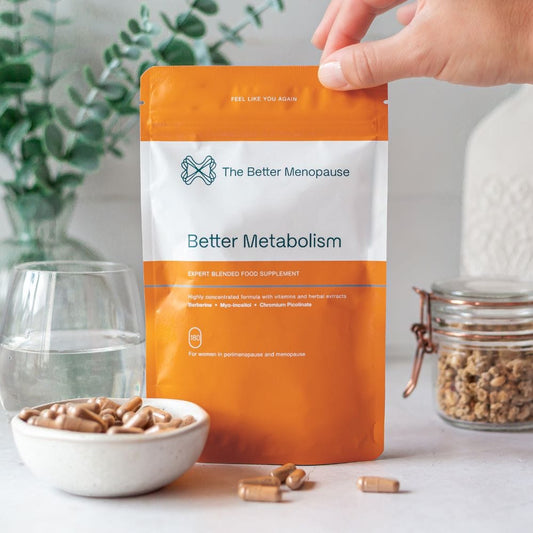
Better Metabolism
-
Regular priceFrom $45.00Regular priceSale priceFrom $45.00 Save $-45.00 (%)Unit priceper
Better Libido