What is metabolism, how is it affected by menopause and how can you boost yours to improve your health?
If your jeans feel tighter despite eating exactly as you always have, you are not imagining it. A slower metabolism, stubborn weight around the middle, and an energy dip that no amount of coffee can fix are some of the most common, and most frustrating, changes women report through perimenopause and menopause.
The good news? Once you understand why this is happening, you have a clear set of levers to pull. This guide explains what metabolism actually is, how perimenopause and menopause change it, and the evidence-based ways to boost your metabolic rate and metabolic health naturally.
What is metabolism?
Metabolism is the set of processes your body uses to turn food into energy and the building blocks it needs to function. When people talk about metabolism in everyday conversation, they usually mean one of two things, and both matter for your weight and overall health.
Metabolic rate
Your metabolic rate, also called basal metabolic rate or BMR, is the number of calories your body burns each day simply to keep you alive. It fuels breathing, circulation, brain activity, digestion, and the energy your muscles use even when you are sitting still. Metabolic rate accounts for around 60 to 80 per cent of the total calories you burn in a day, well before any exercise is added in.
A lower metabolic rate makes it easier to gain body fat, and harder to lose it. This is the number most women are referring to when they talk about wanting to boost their metabolism.
Food metabolism
Food metabolism is how efficiently your body processes the food you eat to extract energy, protein, vitamins, and other nutrients. Your gut microbiome, the trillions of bacteria living in your digestive tract, plays a central role in this process, breaking down nutrients and influencing how they are absorbed and used.
How well you metabolise food affects your blood sugar levels, your blood fats including cholesterol, how effectively you build and maintain muscle, and how your hormones move through the body. A specific subset of your gut microbiome, called the estrobolome, is responsible for metabolising oestrogen, which means your gut directly influences how much oestrogen circulates around your body at any given time.
Metabolic health and metabolic syndrome
Metabolic health is a measure of how effectively your metabolism handles sugar and fat from your diet. Poor metabolic health is sometimes called metabolic syndrome, and it raises your risk of type 2 diabetes, heart disease, and stroke.
Definitions vary, but metabolic syndrome usually means having three or more of the following:
- A larger waist circumference or excess belly fat
- High blood pressure
- High blood sugar or insulin resistance
- High triglycerides, a type of blood fat
- Low levels of HDL, the so-called good cholesterol
In short: metabolism is the engine, metabolic rate is how fast it runs, and metabolic health is how cleanly it runs.
How does menopause affect metabolism?
Perimenopause and menopause influence both your metabolic rate and your metabolic health, often at the same time. Several mechanisms are at play.
As you move through midlife, your body becomes less efficient at using dietary protein to maintain muscle. Without intentional changes to nutrition and movement, muscle mass tends to drop. Because muscle is the most metabolically active tissue in the body, losing it directly slows your metabolic rate.
Poor sleep, another hallmark of perimenopause, compounds the problem. Disrupted sleep reduces muscle protein synthesis, raises hunger hormones the next day, and tips the body towards storing fat rather than burning it.
Menopause is also linked to increased visceral fat, the deeper, more inflammatory fat that sits around your abdominal organs. Studies show that women who have been through menopause have, on average, higher blood pressure, higher fasting blood sugar, more insulin resistance, and a greater risk of cardiovascular disease.
Why oestrogen matters for metabolism
Falling oestrogen is the thread connecting most of these changes. Oestrogen helps preserve muscle mass, supports insulin sensitivity, and influences where your body stores fat. As levels drop, fat redistribution shifts from the hips and thighs to the abdomen, hunger and satiety signals can become harder to read, and insulin resistance creeps up.
Oestrogen also shapes your gut microbiome, which in turn shapes how you metabolise food and recycle hormones. The two systems are not separate. They are in constant conversation.
The gut, the estrobolome, and your metabolism
Your gut microbiome influences metabolism on every level. It helps extract energy from food, regulates the production of short-chain fatty acids that support a healthy gut lining, and plays a central role in inflammation, blood sugar control, and appetite regulation.
A specific community of gut bacteria, known as the estrobolome, produces an enzyme that determines how much oestrogen is recirculated and how much is eliminated. When the estrobolome is out of balance, hormone metabolism becomes less predictable, which can worsen the very symptoms women hope to ease, including stubborn weight gain, brain fog, and energy dips.
This is why supporting gut health is one of the most powerful, and most underused, levers for metabolic health in midlife. A diverse, well-fed microbiome helps regulate blood sugar, reduces low-grade inflammation, and supports the smoother metabolism of oestrogen alongside everything else.
How to boost your metabolic rate during menopause
Building and protecting muscle mass is the single most effective way to raise your metabolic rate. The lifestyle changes below all contribute, and they work best in combination.
Do regular resistance training
Resistance training, whether that means lifting weights, using resistance bands, or doing bodyweight exercises like squats and press-ups, builds the muscle that drives your metabolic rate. The British Menopause Society describes resistance training as almost non-negotiable for menopausal women looking to change body composition.
You do not need long or punishing sessions. Aim for three moderate, consistent sessions a week and let progress build over months rather than weeks.
Eat more protein
Adequate protein is essential for maintaining muscle through the menopause transition. Some guidelines suggest 1 to 1.2 grams per kilogram of body weight per day, the equivalent of 56 to 84 grams for a 70 kg woman. Observational research suggests menopausal women with the lowest body fat and the most muscle eat closer to 1.6 grams per kilogram.
Build meals around quality sources such as legumes, tofu, fish, chicken, eggs, full-fat dairy, nuts, and seeds. Spreading protein evenly across the day supports muscle synthesis better than loading it all into one meal.
Improve your sleep
Disrupted sleep is one of the most overlooked drivers of a slowing metabolic rate. A few small changes can make a meaningful difference:
- Keep consistent bed and wake times, even at weekends
- Avoid caffeine after lunch
- Skip large meals and alcohol in the hours before bed
- Step away from screens for the last hour of the evening
- Keep your bedroom cool, dark, and well ventilated
- Wear light, loose nightwear and keep water and a fan within reach if night sweats wake you
If your sleep is being disturbed by night sweats, anxiety, or a busy mind, Better Night is our expert-formulated blend of adaptogens, herbal extracts, vitamins, and minerals designed to support deeper, more restorative sleep through midlife.
How to improve metabolism and metabolic health
Boosting your metabolic rate is one half of the picture. The other half is improving how cleanly your metabolism runs: how it handles sugar, fat, and inflammation, and how it metabolises nutrients and hormones.
Eat more plants
A diet rich in plants is one of the best-evidenced ways to support metabolic health. Soluble fibre slows the absorption of sugar and cholesterol, helping to keep blood sugar levels steady and reducing post-meal spikes. Diets like the Mediterranean pattern, which centres vegetables, whole grains, legumes, fish, and olive oil, are consistently linked to lower rates of metabolic syndrome, type 2 diabetes, heart disease, and stroke.
Plants also feed your microbiome. Different plant foods contain different prebiotic fibres and polyphenols, which is why diversity matters as much as quantity. Aim for thirty or more different plant foods across the week, spread over vegetables, fruit, whole grains, legumes, nuts, seeds, herbs, and spices.
Reduce refined carbs and sugar
Refined carbohydrates and sugary drinks are metabolised quickly, sending blood sugar up sharply and then crashing it back down. The short-term consequence is more cravings, lower energy, and irritability. The long-term consequence is a higher risk of insulin resistance and type 2 diabetes.
Simple swaps make a real difference. Choose whole grains and pulses over white rice and white bread. Reach for fruit and a handful of nuts instead of biscuits. Trade fizzy drinks and fruit juice for sparkling water with lemon, herbal teas, or fruit teas.
Support your gut microbiome
Probiotics are live bacteria that, in the right strains and doses, can shift the balance of your gut microbiome in your favour. They are found in fermented foods like kefir, live yoghurt, sauerkraut, kimchi, miso, and kombucha, and they can also be taken as targeted supplements. Better Gut contains six clinically studied probiotic strains chosen specifically for the perimenopausal and menopausal gut, supporting microbial diversity, gut barrier integrity, and the estrobolome activity that underpins balanced hormone metabolism.
Where Better Metabolism fits in
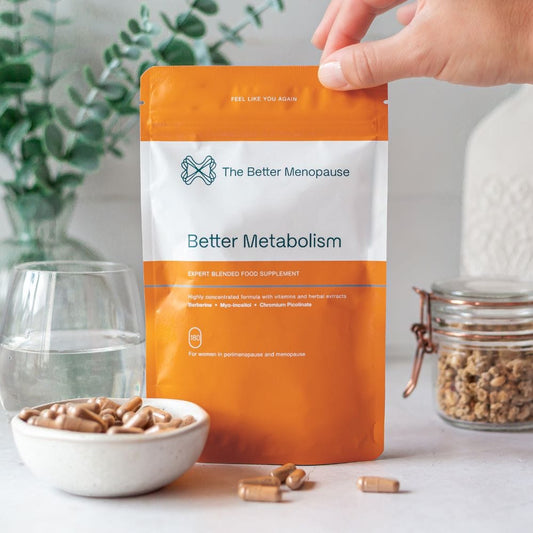
Lifestyle is the foundation. But for many women, perimenopause and menopause introduce a layer of metabolic resistance that food and movement alone do not fully address. This is where targeted supplementation becomes useful, and it is exactly why we developed Better Metabolism.
Formulated by Dr Shahzadi Harper, Better Metabolism is a multi-ingredient blend designed to support metabolic function, blood sugar regulation, cravings, and energy through midlife. The hero ingredient is berberine, a botanical compound that has been used in traditional Chinese and Ayurvedic medicine for centuries and is now backed by a growing body of clinical research.
Berberine activates an enzyme called AMPK, sometimes described as the body's metabolic master switch. This is the same enzyme activated by exercise and fasting, and it shifts cells from storing fat towards using energy. Studies show berberine can support glucose control, insulin sensitivity, and healthy cholesterol levels, all of which become more difficult as oestrogen declines.
Better Metabolism pairs berberine with three complementary ingredients chosen for their evidence base in midlife metabolic health:
- Cinnamon extract, which supports insulin signalling and helps reduce post-meal blood sugar spikes.
- Chromium, which supports glucose transport and helps curb sugar cravings.
- Myo-inositol, which supports insulin function and hormone balance, with a strong evidence base in PCOS and emerging research in perimenopause.
The combination is designed to support steadier energy, fewer cravings, and a smoother response to the foods you eat, without harsh stimulants or prescription intervention.
Better Metabolism and Better Gut: a midlife duo
Metabolism does not work in isolation. Your gut microbiome influences blood sugar regulation, inflammation, oestrogen metabolism, and how well your body absorbs nutrients. Pairing Better Metabolism with Better Gut gives you support across both systems at once. For women who want to address gut and metabolic health together, our Body Bundle brings the two formulas into one routine.
As with any supplement, consistency is key. Most women begin to notice changes in energy and cravings within a few weeks, with broader benefits to body composition and metabolic markers building over three months.
Frequently asked questions
Does menopause really slow your metabolism?
Yes. Falling oestrogen, gradual loss of muscle mass, disrupted sleep, and shifts in the gut microbiome all contribute to a slower metabolic rate and less efficient food metabolism through perimenopause and menopause. The good news is that resistance training, adequate protein, better sleep, a plant-rich diet, and targeted supplements can all help to counteract these changes.
How can I boost my metabolism naturally during perimenopause?
Focus on building muscle through regular resistance training, eating enough protein at each meal, prioritising sleep, and supporting your gut microbiome with a diverse plant-based diet. A targeted supplement like Better Metabolism, which combines berberine, cinnamon, chromium, and myo-inositol, can offer additional support for blood sugar balance and cravings alongside these foundations.
Is berberine safe during perimenopause and menopause?
Berberine has been used in traditional medicine for centuries and is generally well tolerated when taken at recommended doses. Research specifically in perimenopausal and postmenopausal women suggests it may help with insulin resistance, cholesterol, and weight management. As with any supplement, speak to your GP if you are taking prescription medication, particularly for blood sugar, blood pressure, or cholesterol, as berberine can interact with these.
How long does it take to feel a difference?
Most women notice changes in energy and cravings within two to four weeks of consistent supplementation alongside lifestyle changes. Improvements in body composition, blood sugar markers, and overall metabolic resilience typically build over twelve weeks, which is the timeframe we recommend committing to before assessing the full benefit.
Can I take Better Metabolism alongside HRT?
Yes. Better Metabolism works on metabolic and blood sugar pathways rather than directly on the hormone receptors HRT acts on, so the two are complementary. Many women on HRT find that supporting metabolism alongside their prescription helps them feel the benefits of HRT more fully. If you have any concerns, check with your prescribing clinician.
Do I still need supplements if my diet is good?
Food and lifestyle are the foundation of metabolic health and always come first. Supplements are not a substitute. They are a layer of additional support designed to bridge the specific challenges of midlife metabolism, particularly insulin resistance, cravings, and the loss of metabolic flexibility that comes with falling oestrogen.
Written by Joanna Lyall, Registered Nutritional Therapist (mBANT, CNHC), co-founder of The Better Menopause. Medically reviewed by The Better Menopause Nutrition Team.
References
Lee YS, Kim WS, Kim KH, et al. Berberine, a natural plant product, activates AMP-activated protein kinase. Diabetes. 2006. https://pubmed.ncbi.nlm.nih.gov/16873688/
Yin J, Xing H, Ye J. Efficacy of berberine in patients with type 2 diabetes mellitus. Metabolism. 2008. https://pubmed.ncbi.nlm.nih.gov/18442638/
Liu D, Zhao H, Zhang Y, et al. Efficacy and safety of berberine on the components of metabolic syndrome: a systematic review and meta-analysis. Front Pharmacol. 2025. https://pubmed.ncbi.nlm.nih.gov/40740996/
Caliceti C, Franco P, Spinozzi S, et al. Berberine: new insights from pharmacological aspects to clinical evidences in the management of metabolic disorders. 2016. https://pubmed.ncbi.nlm.nih.gov/26898656/
Baker JM, Al-Nakkash L, Herbst-Kralovetz MM. Estrogen gut microbiome axis: physiological and clinical implications. Maturitas. 2017. https://pubmed.ncbi.nlm.nih.gov/28778332/
Peters BA, Santoro N, Kaplan RC, Qi Q. Spotlight on the gut microbiome in menopause: current insights. Int J Womens Health. 2022. https://pubmed.ncbi.nlm.nih.gov/35464341/
Greendale GA, Sternfeld B, Huang M, et al. Changes in body composition and weight during the menopause transition. JCI Insight. 2019. https://pubmed.ncbi.nlm.nih.gov/30843880/
Allen RW, Schwartzman E, Baker WL, et al. Cinnamon use in type 2 diabetes: an updated systematic review and meta-analysis. Ann Fam Med. 2013. https://pubmed.ncbi.nlm.nih.gov/24019277/
Meet the author

Formulations mentioned
-
Regular priceFrom $50.00Regular priceSale priceFrom $50.00 Save $-50.00 (%)Unit priceper
Better Metabolism
-
Regular priceFrom $99.00Regular priceSale priceFrom $99.00 Save $-99.00 (%)Unit priceper
Body Bundle
-
Regular priceFrom $50.00Regular priceSale priceFrom $50.00 Save $-50.00 (%)Unit priceper
Better Gut
-
Regular priceFrom $50.00Regular priceSale priceFrom $50.00 Save $-50.00 (%)Unit priceper
Better Night