


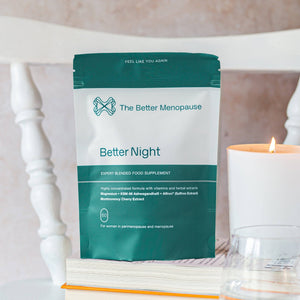
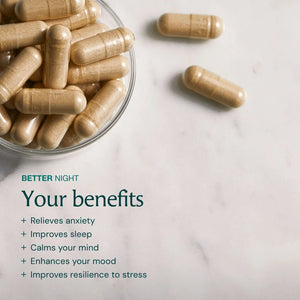

Better Night
BestsellerUnwind & wake up refreshed with Better Night
- Tiredness & fatigue
- Nervous system support
- Healthy sleep patterns
- Relaxation support

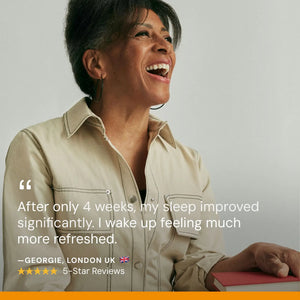
"I would describe Better Night as 'brilliant' it's so helpful and it genuinely works, it's amazing the difference taking 2 little capsules at night can make."









How Better Night works to support you nightly
Why sleep disruption is so common in perimenopause
Why sleep disruption is so common in perimenopause
During perimenopause, levels of progesterone, the hormone that plays an important role in promoting calm, begins to decline. Progesterone helps the body feel more settled and resilient to stress, so as levels fall, many women find they feel less able to cope with everyday pressures.
At the same time, hormonal fluctuations can make the nervous system more reactive. This can show up as heightened anxiety, a racing mind, or waking during the night with sudden, intrusive thoughts, even when nothing in particular feels “wrong”.
It’s also why sleep can feel lighter or more fragmented, and why early-morning waking becomes more common during this stage. These changes are common, but they can feel unsettling when they appear suddenly.
How Better Night's expert blend supports your sleep
How Better Night's expert blend supports your sleep
Better Night brings together a carefully balanced blend of botanicals, vitamins and minerals, chosen to support relaxation, emotional balance and night-time recovery when sleep feels harder to come by.
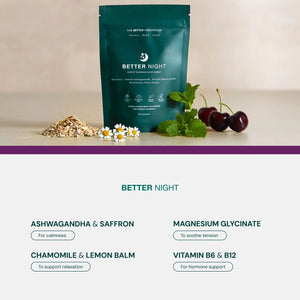
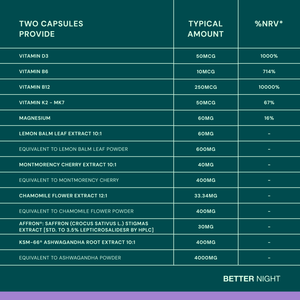
At the heart of the formula are trademarked, clinically studied forms of ashwagandha (KSM-66®) and saffron (Affron®). These ingredients have been selected for their role in supporting the body’s response to stress and emotional wellbeing, helping the mind feel calmer as you move towards sleep.
Supporting botanicals including lemon balm and chamomile are included for their traditional use in relaxation and winding down in the evening, while Montmorency cherry provides a natural source of compounds associated with the body’s natural sleep-wake rhythm.
To complete the blend, magnesium glycinate and vitamins B6, B12 and D3 support normal nervous system and psychological function. Vitamin K2 is included alongside vitamin D3 to support optimal absorption, ensuring these nutrients can be used effectively by the body.
Each ingredient has been selected not just for its individual role, but for how it works together as part of a gentle, non-sedating formula designed to support better rest, night after night.
Simple to take, easy to fit into your routine
Simple to take, easy to fit into your routine
Better Night is designed to be taken in the evening as part of your wind-down routine.
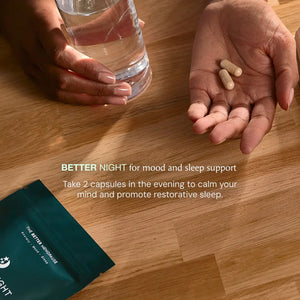
Our recommended dose to support mood and sleep is:
- 2 capsules in the evening
- Around 1 hour before bed is optimal
For longer-term use, a lower dose of 1 capsule each evening can also be taken, depending on your individual needs.
Taking Better Night helps support relaxation and night-time recovery, allowing the carefully balanced blend to work gently overnight.
Flexible subscriptions for consistent, reliable support
Flexible subscriptions for consistent, reliable support
Better Night is designed to be taken consistently, which is why we offer flexible subscription options to support your routine over time.
You can choose:
- Monthly delivery, or
- 3-month delivery, depending on what suits you best
Subscriptions help ensure you never run out, while giving you full control at our best price.
You can pause, skip or cancel at any time, directly from your account.
Because Better Night contains ashwagandha, some women choose to cycle their use, taking a short break after around six months of continuous use. This is a personal choice and not a requirement. Our subscription model makes this easy, allowing you to pause and restart whenever it feels right for you.
Think of Better Night as supportive, flexible care that adapts to your needs, rather than a fixed routine.
Developed by women’s health experts who’ve been there too

"Better nights make for for better days"
"If your sleep is suffering and your mood is low during perimenopause, Better Night's potent blend of high quality ingredients is a great addition to your menopause toolkit."
- Joanna Lyall, Resident Head of Nutrition, Nutritional Therapist (Dip Nut, mBANT, CNHC)


A targeted blend for ultimate mind and sleep support
Alongside vitamins B6, B12 and D3, each ingredient has been expertly selected for its role in supporting relaxation, recovery and night-time balance for women during perimenopause and menopause.


-

Calms the mind and supports the nervous system
-

Supports quality sleep and overnight restoration
-

Non-habit forming and suitable for nightly use
-

Simple capsule form – no taste, no liquid, no powder


-
Calms the mind and supports the nervous system
-
Supports quality sleep and overnight restoration
-
Non-habit forming and suitable for nightly use
-
Simple capsule form – no taste, no liquid, no powder
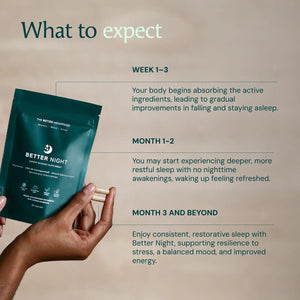
What to expect on your Better Night journey

What to expect on your Better Night journey
Settle into your new evening routine, take 2 capsules in the evening, ideally around 1 hour before bed, as part of your wind-down routine. Consistency matters more than perfection, the aim is to help your body recognise it’s time to slow down.
Within 1–2 weeks, many women begin to notice a calmer mind in the evening, less restlessness, and an easier transition into sleep. Night-time waking may start to feel less disruptive as your body adjusts.
With continued use, sleep often feels deeper and more refreshing, with fewer disturbances such as night sweats or anxious waking. Keep going, the benefits tend to build as Better Night supports night-time recovery consistently.
Still have questions? we’re here for you
View our most common FAQs below or contact us by tapping below.
Will Better Night make me feel drowsy or groggy during the day?
Will Better Night make me feel drowsy or groggy during the day?
Better Night is designed to support relaxation in the evening, not to sedate. It does not contain sleep medications and is non-habit forming.
Some women who have been sleeping poorly for a long time may notice they feel more tired at first, as their body begins to recover from accumulated sleep debt. This usually improves as sleep becomes more settled and consistent over time.
When should I take Better Night?
When should I take Better Night?
We recommend taking 2 capsules in the evening, around 30 minutes to 1 hour before bed.
As your body becomes more rested, some women find that 1 capsule each evening is enough for ongoing support. It’s always best to listen to how your body responds over time.
Can I take Better Night alongside other Better Menopause supplements?
Can I take Better Night alongside other Better Menopause supplements?
Yes. Better Night has been designed to work alongside the rest of The Better Menopause range.
Many women choose to take it alongside Better Gut as part of our of a wider routine that supports overall wellbeing through perimenopause and beyond.
Better Night and Better can be purchased togter as part of our Serenity Bundle.
Is Better Night non-habit forming? Can I take it long term?
Is Better Night non-habit forming? Can I take it long term?
Yes. Better Night is non-habit forming and designed for regular use as part of an evening routine.
It supports the body’s natural ability to unwind rather than forcing sleep. Many women choose to take Better Night consistently over the longer term.
Because the formula contains ashwagandha, some women prefer to cycle their use, taking a short break after several months of continuous use. This is a personal choice rather than a requirement, and our flexible subscriptions make it easy to pause and restart whenever it feels right for you.
I’m taking HRT. Can I take Better Night as well?
I’m taking HRT. Can I take Better Night as well?
Yes, Better Night can be taken alongside hormone replacement therapy or prescribed hormone treatment.
I’ve had cancer treatment. Can I take Better Night?
I’ve had cancer treatment. Can I take Better Night?
The ingredients in Better Night do not have any known contraindications for women with a history of cancer.
However, if you are currently undergoing treatment or taking prescribed medications, we recommend speaking with your GP, oncologist or healthcare team before starting any new supplement.
I wake up in the night or very early in the morning. Is Better Night still suitable?
I wake up in the night or very early in the morning. Is Better Night still suitable?
Yes. Night waking and early-morning waking are common during perimenopause and beyond.
Better Night is designed to support relaxation and night-time recovery overall, which may help support more settled sleep patterns when taken consistently.
Does Better Night contain fillers or unnecessary additives?
Does Better Night contain fillers or unnecessary additives?
No. We’ve worked carefully to keep the formulation as clean as possible.
Only natural bulking and flow agents are used, including brown rice and bamboo extract.
Build on your Better Night foundation your way


Discover more on The Better Edit

Why perimenopause symptoms are still being missed, dismissed and misdiagnosed
A researcher at the University of Maryland recently did something no clinician had done before. She studied what women are actually saying about perimenopause on online forums, and compared it with what appears in their medical records. The gap was striking. Women are describing cognitive and emotional symptoms being ignored, trivialised, or misdiagnosed as mental health disorders, early-onset dementia, or autoimmune conditions. Some reported months or years of unnecessary testing before anyone mentioned the word perimenopause. Her conclusion: the symptoms women are discussing online should become the questions researchers ask next. She is not the only one to notice. A 2025 national survey of over 1,000 women found that nearly 40% felt misdiagnosed when seeking care for perimenopause symptoms. More than half were treated for anxiety, depression, mood swings or panic attacks before perimenopause was even considered. This is not a problem of a few under-informed GPs. It is a systemic gap in how women's health is understood, taught and practised. Key takeaways Nearly 40% of women feel misdiagnosed when seeking care for perimenopause symptoms. More than half are treated for anxiety, depression or panic attacks before perimenopause is considered. Symptoms like brain fog, fatigue, mood changes and joint pain are commonly investigated as separate conditions rather than recognised as part of a hormonal picture. Only 42% of clinicians initiate the perimenopause conversation. Most women find out through their own research. You have the right to ask your GP about the hormonal connection, request a second opinion, or ask for a referral to a menopause clinic. In this article What women are actually saying online Why perimenopause symptoms are missed The symptoms most commonly misdiagnosed Why this matters How to advocate for yourself at the GP What to do next What women are actually saying online On forums like Reddit, women share experiences that paint a very different picture from the one in most medical textbooks. They describe sudden mood shifts of rage and panic being labelled as psychiatric conditions rather than hormonal fluctuations, leading to antidepressant prescriptions when the root cause was never investigated. They talk about severe brain fog and memory lapses terrifying them into believing they had a degenerative cognitive disease, before anyone suggested these seemingly disconnected symptoms might be related to their hormones. Night sweats, sleeplessness, fatigue, digestive changes, joint pain, heart palpitations, tinnitus, electric shock sensations, and a loss of confidence so profound it feels like a personality change. Women are experiencing all of these, often simultaneously, and being told it's stress, it's depression, it's their thyroid, it's their age, or it's nothing at all. What the University of Maryland study found was that the symptoms women discuss most openly online are precisely the ones most likely to be absent from their clinical records. The conversation happening in waiting rooms and the conversation happening on forums are two entirely different things. Why perimenopause symptoms are missed There are several reasons this keeps happening, and most of them are structural rather than personal. Medical training still contains minimal menopause education. A 2021 survey of UK medical schools found that the average amount of menopause teaching was just a few hours across the entire medical degree. Many GPs report feeling under-equipped to identify and manage perimenopausal symptoms. A qualitative study from the University of Bristol confirmed that GPs acknowledge gaps in their training and use variable approaches when women present with mood changes during the perimenopausal age range. Symptoms overlap with dozens of other conditions. Anxiety, fatigue, brain fog, weight changes and joint pain can all be explained by thyroid dysfunction, depression, autoimmune conditions, or simply "getting older." Without the training to consider perimenopause as a unifying explanation, clinicians naturally investigate each symptom in isolation. This leads to fragmented care: one referral for the anxiety, another for the joint pain, a blood test for the thyroid, and nobody joining the dots. Women themselves often don't make the connection. The Bristol study also found that many women either did not recognise perimenopause or felt inhibited and embarrassed about raising it. If you don't know that rage, panic, brain fog and digestive problems can all be hormonal, why would you mention them in the same appointment? The "too early" problem. Perimenopause can begin in the late 30s or early 40s. Women presenting with symptoms at 38 or 42 are often told they're "too young" for menopause, which may be true for menopause but not for perimenopause. The transition can start years before periods become noticeably irregular. The symptoms most commonly misdiagnosed Based on the research and the experiences shared by thousands of women online, these are the perimenopause symptoms most frequently missed or attributed to other conditions. Anxiety and panic attacks are the most commonly misdiagnosed perimenopause symptom. One in three women in the Biote survey received an anxiety diagnosis before perimenopause was considered. Oestrogen directly influences serotonin, dopamine and GABA, meaning anxiety that appears for the first time in your 40s has a strong hormonal component that is often overlooked. Our article on perimenopause and anxiety covers this in detail. Brain fog and memory problems are among the most frightening symptoms because women often fear they are developing dementia. In reality, perimenopausal brain fog is driven by oestrogen fluctuations affecting neurotransmitter production and blood flow to the brain. It is temporary, and for most women it improves as the hormonal transition stabilises. Fatigue and exhaustion are routinely attributed to depression, thyroid issues, anaemia or burnout. During perimenopause, fatigue can be compounded by poor sleep, hormonal fluctuations, and the sheer cognitive and emotional load of experiencing multiple symptoms at once. Joint pain and stiffness can lead to investigations for rheumatoid arthritis or other autoimmune conditions. Oestrogen has anti-inflammatory properties and helps maintain joint lubrication. As levels decline, joint pain can appear or worsen without any underlying autoimmune cause. Digestive changes including bloating, new food sensitivities, and altered bowel habits are common during perimenopause but rarely attributed to hormonal changes. Oestrogen directly affects gut motility, the gut microbiome, and how the body processes histamine. Many women are investigated for IBS, food intolerances or coeliac disease before the hormonal connection is considered. Supporting your gut during perimenopause Your gut microbiome plays a direct role in how your body metabolises hormones, manages inflammation and regulates mood. Better Gut is a food supplement containing six biotic strains formulated specifically for women in perimenopause and menopause, to support gut health and digestion. Heart palpitations can trigger extensive cardiac investigations when the cause is hormonal. Oestrogen helps regulate heart rhythm and the nervous system's response to adrenaline. Fluctuating levels can cause episodes of racing, fluttering or pounding that are alarming but, in most cases, harmless. Why this matters Misdiagnosis is not just frustrating. It has real consequences. Women prescribed antidepressants for what is actually a hormonal mood change may not respond to treatment, because the root cause is not being addressed. The Bristol study noted that assigning perimenopause-related mood changes to primary psychiatric disorders could lead to prescription of antidepressants when hormonal support might be more appropriate and perhaps more effective. Women investigated for autoimmune conditions, cardiac problems or cognitive decline undergo unnecessary testing, with all the anxiety that comes with it. Months or years pass before anyone connects the symptoms to the hormonal transition that was happening all along. And perhaps most importantly, women lose trust in their own bodies. When you are repeatedly told nothing is wrong, or that your symptoms are "just stress," you begin to doubt yourself. The loss of confidence that many women describe during perimenopause is compounded by a healthcare experience that makes them feel unheard. How to advocate for yourself at the GP Track everything first. Before your appointment, track your symptoms and menstrual cycle for two to three months. Apps like Flo, Clue or Balance work well, or a notebook is fine. Note what you're experiencing, when it happens, how intense it is, and whether it follows a pattern linked to your cycle. This gives your GP a clear picture rather than a list of disconnected complaints. Present the full picture. Don't go in to discuss one symptom. List all of them, even the ones you think are unrelated. The combination of anxiety, sleep disruption, brain fog, joint pain and digestive changes appearing together in a woman in her 40s is a strong indicator of perimenopause. Presented individually, each one gets investigated separately. Presented together, the pattern becomes clear. Ask directly. "Could these symptoms be related to perimenopause?" is a question that changes the direction of the appointment. You are not diagnosing yourself. You are asking your GP to consider something that the data shows is routinely overlooked. Know your rights. For women over 45, NICE guidelines state that perimenopause should be diagnosed based on symptoms and menstrual history, not blood tests. If your GP insists on a blood test and the result comes back "normal," that does not mean your symptoms are not hormonal. Hormone levels fluctuate too dramatically during perimenopause for a single test to be reliable. If you are not heard, ask again. You have the right to request a second opinion, ask for a referral to a menopause clinic, or find a GP with a special interest in menopause. The British Menopause Society maintains a register of accredited specialists. Our guide to recognising perimenopause can also help you prepare for the conversation. What to do next If you recognise yourself in any of this, start here: Track your symptoms for two to three months. Look for patterns linked to your cycle. Read our guide: Am I in perimenopause? The signs, the stages, and what to do next Understand the anxiety connection: Perimenopause and anxiety: why it hits differently and what actually helps Learn what helps: Perimenopause: where to start Book a GP appointment and bring your symptom tracker with you. Talk to other women. You will be surprised how many are going through the same thing. The fact that you are here, reading this, looking for answers, already puts you ahead. The system may not be built to help you yet, but you can help yourself. And the more women who walk into their GP armed with the right questions, the faster this changes for everyone. This article is for informational purposes and is not a substitute for professional medical advice. If you have concerns about your symptoms, please speak to your GP or a qualified healthcare provider. References Hswen Y. I studied Reddit forums on menopause and found what doctors are missing. STAT News. 27 August 2026. Biote. Perimenopause Focus Survey. National survey of 1,000+ US women aged 30-60. August 2025. Burgin J, Pyne Y, Davies A, Kessler D. Mental health consultations during the perimenopausal age range: a qualitative study of GP and patient experiences. British Journal of General Practice. 2025. DOI: 10.3399/BJGP.2025.0069 NICE Guideline NG23. Menopause: diagnosis and management. Updated 2024. Available at: nice.org.uk/guidance/ng23 Dorr B. In the Misdiagnosis of Menopause, What Needs to Change? American Journal of Managed Care. December 2025. British Menopause Society. Specialist register. Available at: thebms.org.uk/find-a-menopause-specialist Related reading Am I in perimenopause? The signs, the stages, and what to do next Perimenopause and anxiety: why it hits differently and what actually helps Perimenopause: where to start Why can't I sleep during perimenopause? Why is my hayfever worse during perimenopause? Support your body while you seek answers While you work with your GP to understand what's happening, supporting your gut health can make a real difference to how you feel day to day. Better Gut is a biotic food supplement containing six probiotic strains formulated for women in perimenopause and menopause. Designed to support digestion, gut health and the gut-hormone connection. Shop Better Gut →
Read more
Perimenopause and Anxiety: Why It hits differently and what actually helps
If you've developed anxiety during perimenopause and you've never been an anxious person before, you're not losing your mind. You're experiencing one of the most common and least understood symptoms of this stage of life. A 2024 systematic review of over 9,000 women confirmed that the perimenopausal transition carries a significantly elevated risk of anxiety and depressive symptoms compared to premenopause. And a global analysis projects that the burden of anxiety disorders in perimenopausal women will increase by more than 40% by 2035. This is not a small problem. It's not "just stress." And it's not something you should be expected to push through. In this article, we explain what's happening in your brain and body, why perimenopause anxiety feels different from anything you've experienced before, and the practical steps that research shows make a real difference. Key takeaways Oestrogen directly influences serotonin, dopamine and GABA, the three neurotransmitter systems most involved in anxiety. As oestrogen fluctuates, these calming chemicals become unstable. Falling progesterone reduces GABA activity, which is your brain's primary calming system. This is why many women feel wired, restless and unable to relax. Sleep disruption is the single biggest amplifier of perimenopausal anxiety. Addressing sleep can improve anxiety more than almost any other intervention. Your gut produces around 95% of your body's serotonin. Supporting gut health during perimenopause directly affects your mood and anxiety levels. Perimenopause anxiety is hormonal. It responds to hormonal support, lifestyle changes and targeted nutrition, not just conventional anxiety treatments. In this article Why does perimenopause cause anxiety? The progesterone piece: your missing calming agent Why your stress response is on overdrive Sleep: the biggest amplifier Your gut and your mood: the connection nobody mentions What perimenopause anxiety actually feels like What actually helps When to see your GP The bottom line Why does perimenopause cause anxiety? The short answer: your hormones directly control the chemicals in your brain that regulate mood, calm and emotional stability. When those hormones fluctuate, so do those chemicals. Oestrogen is a master regulator of three neurotransmitter systems. Serotonin, which governs feelings of calm and wellbeing. Dopamine, which controls motivation, pleasure and the ability to cope with challenges. And GABA, the primary inhibitory (calming) neurotransmitter in your nervous system. During your reproductive years, oestrogen levels follow a predictable cycle. Your brain chemistry adjusts accordingly, and everything stays relatively stable. During perimenopause, oestrogen doesn't decline gradually. It swings erratically, sometimes spiking higher than it ever did before dropping sharply, sometimes within the same week. Each swing affects serotonin, dopamine and GABA production, creating unpredictable dips that leave you feeling emotionally unsteady. This is why women who have never experienced anxiety before can develop it for the first time in their 40s. It's not psychological. It's neurochemical. The progesterone piece: your missing calming agent If oestrogen is the conductor of your brain's mood orchestra, progesterone is the volume control. And during perimenopause, that volume control starts to fail. Progesterone metabolises into a compound called allopregnanolone, which directly activates GABA receptors in your brain. GABA is your nervous system's brake pedal. It slows things down, promotes calm, helps you relax and supports sleep. When progesterone drops (which often happens earlier and more sharply than oestrogen during perimenopause), GABA activity decreases with it. The result: a nervous system that's running with the brakes off. Women describe it as feeling wired but tired, restless even when they're exhausted, unable to switch off, and on edge without any obvious reason. If that sounds familiar, it's not in your head. It's your progesterone. Why your stress response is on overdrive Your body has a built-in stress response system called the HPA axis (hypothalamic-pituitary-adrenal axis). It's what triggers the release of cortisol when you're under threat. Oestrogen normally has a dampening effect on this system, keeping cortisol responses proportionate to the situation. As oestrogen fluctuates and declines during perimenopause, that dampening effect weakens. Your cortisol responses become exaggerated. The email that would have mildly annoyed you two years ago now triggers a full stress response. The situation that you would have handled calmly now feels overwhelming. Your baseline level of physiological arousal is simply higher than it used to be. This isn't about being less resilient. It's about your stress response system losing the hormonal support it relied on to stay proportionate. Support your calm Better Night contains ashwagandha (KSM-66), saffron, magnesium, chamomile and Montmorency cherry. A food supplement designed to support relaxation and restful sleep during perimenopause. Sleep: the biggest amplifier If there's one factor that makes perimenopausal anxiety worse than anything else, it's poor sleep. Research shows that even one week of disrupted sleep raises anxiety levels and emotional reactivity in controlled studies. During perimenopause, when sleep is already under assault from night sweats, hormonal waking and cortisol spikes, the effect is compounded. Poor sleep reduces your brain's ability to regulate emotions, increases sensitivity to perceived threats, raises baseline cortisol, and impairs the production of serotonin and GABA. It creates a cycle: anxiety disrupts sleep, and disrupted sleep worsens anxiety. This is why addressing sleep is often the single most effective thing you can do for perimenopausal anxiety. It won't solve everything, but it changes the baseline from which you're working. Our guide to perimenopause and sleep covers this in detail. Your gut and your mood: the connection nobody mentions Your gut produces approximately 95% of your body's serotonin. Read that again. The chemical most responsible for feelings of calm and wellbeing is produced almost entirely in your gut, not your brain. This is why gut health is not a side issue when it comes to perimenopausal anxiety. It's central to it. A 2026 narrative review published in Nutrients examined the gut-brain axis specifically in the context of perimenopausal mood disorders and concluded that gut dysfunction is "one of the key factors contributing to perimenopausal anxiety and depression," triggering neurotransmitter imbalance, gut barrier impairment and neuroinflammatory responses. During perimenopause, hormonal changes directly affect your gut microbiome. The estrobolome (the collection of gut bacteria that help metabolise oestrogen) shifts as hormone levels change, which can create a feedback loop: hormonal changes impair gut function, and impaired gut function worsens the hormonal symptoms, including anxiety. Supporting your gut during perimenopause isn't just about digestion. It's one of the most effective ways to support your mood from the inside out. Your gut and your mood are connected Better Gut is a food supplement containing six probiotic strains formulated specifically for women in perimenopause and menopause, designed to support gut health and the gut-brain connection. What perimenopause anxiety actually feels like Perimenopause anxiety doesn't always look like what you'd expect. For some women, it's the classic racing heart and tight chest. For others, it's subtler and harder to name. Here are some of the ways women in our community describe it: A feeling of dread first thing in the morning, before you've even opened your eyes Overthinking and catastrophising situations that you'd normally handle easily Feeling unable to switch off, even when you're physically exhausted Heart palpitations or a racing heart at rest A tight chest or shallow breathing Irritability and a short fuse that feels out of proportion Social anxiety or dread about events you used to enjoy A sense of losing yourself or not recognising who you are anymore Feeling overwhelmed by things that previously felt manageable Night-time anxiety that worsens in the early hours If your anxiety follows a pattern linked to your menstrual cycle (worsening around ovulation or in the days before your period), that's a strong indicator that hormones are playing a role. What actually helps 1. Prioritise sleep above everything Sleep is the foundation. If you can improve your sleep, your anxiety will likely improve with it. Keep your bedroom cool and dark, stop caffeine after midday, reduce alcohol (it fragments sleep and raises cortisol), avoid screens before bed, and consider magnesium before sleep. Our sleep guide has the full breakdown. 2. Move your body regularly Exercise is one of the most effective natural anxiety treatments available. Aerobic exercise (walking, swimming, cycling, dancing) directly increases serotonin and GABA production. Aim for 30 minutes most days. It doesn't need to be intense. A brisk walk counts. Yoga and pilates also have evidence for reducing anxiety during perimenopause, combining movement with breathwork and nervous system regulation. 3. Support your gut Eat a diverse range of plant foods (aim for 30 different plants a week), include prebiotic-rich foods (oats, flaxseeds, garlic, onions), reduce ultra-processed foods, and consider a probiotic formulated for women in perimenopause. Your gut produces the serotonin your brain needs. Give it the support to do its job. 4. Reduce caffeine and alcohol Both can worsen anxiety during perimenopause. Caffeine stimulates cortisol production and can trigger palpitations. Alcohol depletes GABA, disrupts sleep and increases next-day anxiety ("hangxiety") which can be disproportionately intense during perimenopause. You don't have to cut them out entirely, but reducing both can produce noticeable improvements within days. 5. Practise nervous system regulation Breathing exercises can directly calm your stress response. Box breathing (inhale for 4 counts, hold for 4, exhale for 4, hold for 4) activates your parasympathetic nervous system and reduces cortisol in minutes. Time outdoors, particularly in green spaces, has also been shown to lower cortisol and improve mood. Even 20 minutes makes a difference. 6. Consider targeted supplements Several supplements have research behind them for supporting wellbeing during perimenopause. Magnesium contributes to normal functioning of the nervous system and normal psychological function. Ashwagandha is an adaptogenic herb traditionally used to support the body during times of stress. Saffron has been the subject of clinical research in perimenopausal women looking at its role in supporting mood. These work best as part of a broader approach alongside diet and lifestyle changes, not as a standalone fix. 7. Talk to someone This doesn't have to mean therapy (although CBT adapted for menopausal symptoms has strong evidence). It can mean telling a friend, a partner or a colleague what you're going through. Perimenopause anxiety thrives in silence. Naming it and sharing it reduces its power. Related reading Am I in perimenopause? The signs, the stages, and what to do next Perimenopause: where to start Why can't I sleep during perimenopause? Perimenopause and alcohol: why you can't drink like you used to The estrobolome: how your gut bacteria affect your oestrogen levels When to see your GP You can see your GP at any point if anxiety is affecting your quality of life. You don't need to reach crisis point before the conversation is worthwhile. It's particularly important to seek help if: Anxiety is interfering with your ability to work, parent or maintain relationships You're experiencing panic attacks You're avoiding situations you used to manage Your existing anxiety medication no longer seems to work (this can happen when hormones shift) You're experiencing persistent low mood alongside anxiety You're having thoughts of self-harm When you see your GP, ask specifically about the hormonal connection. Not all GPs are trained to consider hormones as part of a mental health assessment, but the evidence for the link is clear. If your GP is not familiar with the connection between perimenopause and anxiety, you can request a referral to a menopause clinic or a GP with a special interest in menopause. Treatment options may include HRT (which addresses the hormonal root cause), CBT adapted for menopausal symptoms, lifestyle and dietary changes, targeted supplementation, or a combination of approaches. What works best depends on your individual circumstances. The bottom line Perimenopause anxiety is real, it's hormonal, and it's treatable. If you've developed anxiety for the first time in your 40s, or your existing anxiety has become unmanageable, your hormones are almost certainly involved. You are not weaker than you used to be. Your brain chemistry has changed because your hormones have changed. That's a medical reality, not a personal failing. And once you understand what's driving it, you can start addressing it at the root. Prioritise sleep. Move your body. Support your gut. Reduce the things that make it worse. Talk to your GP. And talk to the women around you. You'll be surprised how many of them are going through the same thing. This article is for informational purposes and is not a substitute for professional medical advice. If you are experiencing anxiety, panic attacks or thoughts of self-harm, please speak to your GP or contact the Samaritans on 116 123 (free, 24 hours a day). References Badawy Y, Spector A, Lee Z, Desai R. The risk of depression in the menopausal stages: A systematic review and meta-analysis. Journal of Affective Disorders. 2024. DOI: 10.1016/j.jad.2024.04.041 Zhang Y, Hu TT, Cheng YR, Zhang ZF, Su J. Global, regional, and national burden of anxiety disorders during the perimenopause (1990-2021) and projections to 2035. BMC Women's Health. 2025. DOI: 10.1186/s12905-025-03547-z Zhao H et al. Nutritional Interventions for Perimenopausal Anxiety and Depression Targeting Tryptophan and GABA Pathways: A Narrative Review. Nutrients. 2026;18(13):2185. DOI: 10.3390/nu18132185 Yano JM et al. Indigenous Bacteria from the Gut Microbiota Regulate Host Serotonin Biosynthesis. Cell. 2015;161(2):264-276. DOI: 10.1016/j.cell.2015.02.047 Lopresti AL, Smith SJ. The Effects of a Saffron Extract (affron) on Menopausal Symptoms in Women during Perimenopause: A Randomised, Double-Blind, Placebo-Controlled Study. Journal of Menopausal Medicine. 2021;27(2):66-78. DOI: 10.6118/jmm.21002 Menopause and mental health: clinical evidence and public discourse. PMC. 2026. Available at: pmc.ncbi.nlm.nih.gov/articles/PMC13371693 Support your body and mind during perimenopause Our food supplements are designed specifically for women in perimenopause and menopause. Better Gut is formulated with six probiotic strains to support gut health. Better Night combines ashwagandha, saffron and magnesium to support relaxation and restful sleep. Shop all supplements →
Read more
Perimenopause: Where to Start
So you've worked out that you're in perimenopause. Maybe a GP confirmed it. Maybe you read our guide on the signs and stages and everything clicked. Maybe you just know, because your body has been telling you for months and you've finally started listening. Now what? This is the bit nobody covers. There's plenty of information about what perimenopause is, but far less about what to actually do when you're in it. Where do you begin when the list of possible symptoms runs to forty items and the advice ranges from "just exercise more" to "overhaul your entire life"? The answer is simpler than you think. You don't need to change everything. You need to change the right things, in the right order, and give yourself time. This guide is your starting point. Key takeaways Your gut microbiome directly affects how your body metabolises hormones. Supporting it is the foundation everything else is built on. You don't need to change everything at once. Start with gut health, sleep and protein, then build from there. Strength training is the single most valuable form of exercise during perimenopause. If you do nothing else, start lifting. Your gut microbiome directly affects how your body metabolises hormones. Supporting it is not optional. See your GP when you're ready. You don't need to wait until things are unbearable. Bring a symptom tracker. In this article The four foundations Support your gut (it's the foundation) Protect your sleep Eat enough protein Move your body (but differently) Manage stress (before it manages you) What to reduce Where supplements fit in Talking to your GP The bottom line The four foundations When everything feels like it's shifting at once, the temptation is to try to fix everything simultaneously. New supplements, a new diet, a new exercise regime, all on a Monday. By Wednesday, you're exhausted and nothing has stuck. Instead, focus on four things. These are the foundations that affect almost every perimenopause symptom, from sleep and mood to weight and energy. Get these right and everything else becomes easier. Gut health. Your microbiome directly affects how your body processes hormones. It's the foundation everything else is built on. Sleep. The multiplier. Poor sleep worsens every other symptom. Protein. Most women aren't eating enough. Increasing it supports muscle, metabolism, blood sugar and satiety. Movement. Specifically, strength training. It's the most valuable thing you can do for your body during perimenopause. Pick whichever one feels most achievable right now and start there. You can layer in the others over time. Progress beats perfection every time. Support your gut (it's the foundation) Your gut microbiome isn't just about digestion. It plays a direct role in how your body metabolises oestrogen (via the estrobolome), regulates inflammation, produces neurotransmitters (including serotonin), manages immune function, and processes histamine. During perimenopause, hormonal changes can shift the balance of your gut bacteria, which in turn affects how well your body handles the hormonal transition. This is why gut health comes first. It underpins everything else: your sleep, your mood, your energy, your weight, your immune system. Get your gut right and the other changes work harder. What helps: Eat a diverse range of plants. Aim for 30 different plant foods per week (vegetables, fruits, wholegrains, legumes, nuts, seeds, herbs and spices all count). Diversity feeds diversity in your microbiome. Include prebiotic-rich foods. Oats, flaxseeds, garlic, onions, leeks, asparagus and bananas feed beneficial bacteria. Consider a targeted probiotic. Not all probiotics are the same. Choose one formulated for women during perimenopause, with clinically studied strains that support the gut-hormone connection. Reduce ultra-processed foods. They tend to reduce microbial diversity and promote inflammation. Manage stress. Cortisol directly impairs gut function. More on this below. Our guide to the estrobolome explains the gut-hormone connection in more detail. Your gut and your hormones are connected Better Gut contains six clinically studied probiotic strains formulated specifically for women in perimenopause and menopause. Protect your sleep Sleep is the multiplier. When you sleep badly, your cortisol rises, your blood sugar is less stable, your appetite hormones shift (making you crave sugar and carbohydrates), your mood drops, your brain fog worsens, and your body's ability to repair itself is compromised. Fixing your sleep won't solve perimenopause, but not fixing it will make everything harder. During perimenopause, sleep disruption is driven by hormonal changes (falling progesterone removes a natural sedative effect), hot flushes and night sweats, increased cortisol reactivity, and changes in your circadian rhythm. This means standard sleep advice ("just go to bed earlier") often isn't enough. What actually helps: Keep your bedroom cool (16 to 18 degrees) and as dark as possible Stop caffeine after midday (your body processes it more slowly during perimenopause) Establish a consistent wind-down routine in the hour before bed Avoid screens for at least 30 minutes before sleep If night sweats are waking you, try layered bedding that you can easily remove Consider magnesium before bed (it supports muscle relaxation and nervous system function) If sleep disruption is persistent and affecting your daily life, speak to your GP. There are effective treatments available, including HRT (which addresses the hormonal root cause) and CBT for insomnia. Our full guide to perimenopause and sleep covers this in more detail. Eat enough protein If there's one nutritional change that makes the biggest difference during perimenopause, it's eating more protein. Most women aren't getting enough, and the gap between what they need and what they're eating tends to widen during midlife. Why it matters now: declining oestrogen increases muscle protein breakdown, reduces your body's ability to build new muscle, and makes blood sugar regulation less stable. Adequate protein counteracts all three. It supports muscle maintenance, stabilises blood sugar (reducing cravings and energy crashes), increases satiety, and provides the amino acids your body needs for repair. How much: aim for 1.0 to 1.6g of protein per kilogram of body weight per day, spread across meals in portions of 25 to 30g. For most women, that means roughly 70 to 100g per day, depending on size and activity level. What 25 to 30g looks like: a palm-sized portion of chicken or fish, three eggs, 200g Greek yoghurt with nuts, a tin of chickpeas, or 150g tofu with quinoa. Start with breakfast. This is where most women fall short. Swapping toast or cereal for eggs, Greek yoghurt with seeds, or a protein smoothie can change the trajectory of your entire day. Our guide to protein in perimenopause goes deeper. Supporting blood sugar and metabolism Alongside adequate protein, targeted supplementation can support metabolic function during perimenopause. Better Metabolism combines berberine, cinnamon, chromium and myo-inositol to support blood sugar balance, reduce cravings and help your body use energy more efficiently. Move your body (but differently) If you've been relying on cardio (running, spinning, HIIT classes) as your primary form of exercise, perimenopause is the time to rethink your approach. This isn't about doing less. It's about doing what your body actually needs right now. Strength training is the priority. It's the single most valuable form of exercise during perimenopause, and the research is clear. It protects and builds muscle mass (which you're losing), supports bone density (which is declining as oestrogen drops), boosts your resting metabolic rate, improves insulin sensitivity, and has a direct positive effect on mood, confidence and sleep. Two to three sessions per week is enough to make a measurable difference. If you've never lifted weights, start with bodyweight exercises or light dumbbells and build gradually. A personal trainer, even for a few sessions, can give you the confidence to know what you're doing. Many gyms offer introductory sessions for free. Keep moving daily. Alongside strength training, aim for regular aerobic movement: walking, swimming, cycling, dancing. It doesn't need to be intense. Consistency matters more than effort. A daily 30-minute walk does more for your health than a punishing HIIT session once a week followed by four days on the sofa. Prioritise recovery. Your body recovers more slowly during perimenopause. Give yourself rest days. Sleep well. Stretch. Listen to your body when it tells you to ease off. Pushing through exhaustion is counterproductive during this stage of life. Manage stress (before it manages you) During perimenopause, your stress response becomes more reactive. Oestrogen helps regulate cortisol, and as it fluctuates, the same stressor that wouldn't have bothered you two years ago can now trigger a disproportionate physical response: racing heart, shallow breathing, irritability, insomnia, digestive issues. Stress management during perimenopause isn't a luxury. It directly affects your sleep, your gut health, your blood sugar, your weight, your mood and your immune function. Everything is connected. What actually helps (not just "have a bath"): Daily movement. Even 20 minutes of walking reduces cortisol. Breathing exercises. Box breathing (4 counts in, 4 hold, 4 out, 4 hold) activates your parasympathetic nervous system. Two minutes can shift your state. Boundaries. Saying no to things that drain you is a health intervention, not selfishness. Time outdoors. Natural light and green spaces lower cortisol. Reducing caffeine and alcohol. Both increase cortisol reactivity during perimenopause. Connection. Talking to someone who understands. Not about finding solutions. Just about being heard. What to reduce This isn't about restriction or rules. It's about understanding that certain things hit differently during perimenopause, and adjusting accordingly. Alcohol. Your body processes it more slowly, it disrupts sleep, destabilises blood sugar, increases cortisol and adds to your histamine load. You don't have to stop entirely, but reducing can produce noticeable improvements in sleep, mood and energy. Our guide to perimenopause and alcohol explains why. Ultra-processed foods. These tend to be high in refined sugar, unhealthy fats and additives that reduce gut microbial diversity and promote inflammation. Swap where you can, not because you have to be perfect, but because your body responds to the quality of what you give it. Caffeine after midday. Your ability to metabolise caffeine slows during perimenopause. An afternoon coffee that never used to affect you can now keep you awake at midnight. Artificial sweeteners. Emerging research suggests many common sweeteners affect gut bacteria. Where possible, opt for naturally sweet foods or reduce your reliance on sweetness altogether. Where supplements fit in Supplements work best when they support a foundation of good nutrition, sleep and movement. They're not a replacement for those things, but they can fill gaps and provide targeted support where diet alone falls short. During perimenopause, the supplements with the strongest rationale include: A targeted probiotic to support the gut-hormone connection and digestive health Magnesium for sleep, muscle function and nervous system support (many women are depleted) Vitamin D for bone health, immune function and mood (especially in the UK where sunlight is limited for much of the year) Omega-3 fatty acids for brain health, cardiovascular support and inflammation Supplements for blood sugar support (such as berberine, chromium and cinnamon) if cravings and energy crashes are a problem Always choose supplements from reputable brands that use clinically studied ingredients and are transparent about what's in them. If you're taking medication, check with your GP or pharmacist before adding supplements. Talking to your GP You can see your GP at any point. You don't need to wait until symptoms are severe, and you don't need to have tried everything else first. A conversation with your GP can help you understand your options, rule out other conditions, and decide whether medical treatment (including HRT) is right for you. Before your appointment: Track your symptoms for two to three months (what, when, how intense, any patterns linked to your cycle) Note how symptoms are affecting your daily life, work and relationships Write down what you've already tried and what's helped Prepare specific questions (about HRT, about blood tests, about referrals) If your GP is dismissive, you have the right to ask for a second opinion or a referral to a menopause clinic. Your symptoms are real. You deserve to be taken seriously. HRT (hormone replacement therapy) addresses the hormonal root cause of perimenopause symptoms and is the most effective treatment for many women. It's not right for everyone, and the decision is personal, but it's worth understanding your options. Your GP can talk you through the benefits, risks and different types available. Related reading Am I in perimenopause? The signs, the stages, and what to do next Protein in perimenopause: how much you need and why it matters Why can't I sleep during perimenopause? The estrobolome: how your gut bacteria affect your oestrogen levels Perimenopause and alcohol: why you can't drink like you used to Perimenopause weight gain: why it happens and what actually helps The bottom line Perimenopause can feel overwhelming when you're standing at the beginning of it, looking at the full list of things you could or should be doing. But you don't need to do everything. You need to start somewhere. Sleep. Protein. Movement. Gut health. These four things will change how you feel more than any single supplement, diet or viral trend. Build them into your routine one at a time, give yourself grace when it's not perfect, and know that the timing is on your side. Research shows that perimenopause is actually the window when your body is most responsive to lifestyle changes. The choices you make now have a bigger impact than they will later. That's not pressure. It's opportunity. Start where you are. Use what you have. Do what you can. And come back to this page whenever you need a reminder of what matters most. Start with your gut If you're looking for somewhere to begin, start with your gut. Better Gut contains six clinically studied probiotic strains formulated for women in perimenopause and menopause, supporting digestion, hormone metabolism and the gut-hormone connection. Shop Better Gut →
Read more
Menopause Hair Loss: Why it happens and what helps
Written by the hair experts at Nanogen Menopause brings plenty of changes, but one that isn't always talked about is what happens to your hair. During perimenopause and menopause, you may notice more hair in your brush or shower, your ponytail feeling thinner, or your scalp becoming more visible. You might also notice changes around your parting, temples and hairline, where hair can begin to look less dense. For many women, these changes can have a real impact on confidence. Your hair can be such a big part of how you see yourself, so noticing it becoming thinner can feel difficult to navigate. This Hair Loss Awareness Month, we've partnered with The Better Menopause to shine a light on menopausal hair loss and, importantly, explore what you can actually do to support your hair through this stage of life. Key takeaways Hormonal changes during perimenopause and menopause can shorten your hair's active growth phase, leading to shedding, slower growth and reduced density. Menopause isn't always the only factor — genetics, stress, illness, nutritional deficiencies and medications can all play a role. There's no single magic fix: a 360° approach means supporting the scalp, nourishing your body from within, and using thickening products for immediate confidence. Topical treatments take 8 to 12 weeks of consistent use to show results — patience and routine matter. Sudden or significant hair loss is worth discussing with your GP to rule out underlying causes. In this article So, what happens to your hair during menopause? What can you do to support your hair? 1. Start at the scalp 2. Don't forget what happens from within 3. Make your hair look thicker while you work on longer-term hair health 4. Thicker hair starts with washing Menopausal hair loss isn't something you have to simply accept So, what happens to your hair during menopause? The hormonal changes that happen during perimenopause and menopause can affect your hair growth cycle. As oestrogen levels fluctuate and gradually decline, hair may spend less time in its active growth phase. For some women, this can mean increased shedding, slower growth and a gradual reduction in overall hair density. You may notice your parting becoming wider, more scalp showing through around the hairline or crown, or simply that your hair doesn't have the same fullness it once did. It's also worth remembering that menopause isn't necessarily the only reason your hair may be thinning. Genetics, stress, illness, nutritional deficiencies, certain medications and other health conditions can all play a role. That's why understanding what's happening is the first step. What can you do to support your hair? There isn't one magic solution for menopausal hair loss. Instead, think about taking a 360° approach to your hair health. That means supporting your hair from the scalp, giving your body the nutrients it needs from within and using clever styling and thickening products to help restore the appearance of density while you work on longer-term hair health. 1. Start at the scalp Your scalp is where healthy hair begins, so it's worth giving it the attention it deserves. Nanogen Hair Growth Factor Serum has been developed specifically to support thinning hair and the hair growth environment at scalp level. Its formula contains a combination of Pea Sprout Extract, Larix Bark Extract, Acetyl Tetrapeptide-3 and other carefully selected ingredients. In an independent clinical trial involving 130 participants, the serum was assessed over 8 and 12 weeks. After 8 weeks, 91% of participants reported visibly thicker hair, while 87% found their scalp was less visible. By 12 weeks, 86% noticed new hair growth. How long do topical hair treatments take to work? If you've noticed your hair becoming thinner, it's completely understandable to want to see results quickly. Unfortunately, hair doesn't work that way. Hair grows in cycles, which means targeted topical treatments need to be used consistently and given time to work. With Nanogen Hair Growth Factor Serum, noticeable results can typically be seen within 8 to 12 weeks, with the clinical trial showing positive results across this period. The key is consistency. Applying a treatment once in a while isn't going to give your hair the same opportunity as incorporating it into your regular routine. Think of it in the same way you would think about skincare: you wouldn't expect to transform your skin overnight, and your hair deserves the same patience. 2. Don't forget what happens from within Looking after your scalp is only one part of the picture. Hair is a non-essential tissue, which means that when your body is under nutritional stress, essential functions are prioritised first. A balanced diet providing enough protein, iron, zinc, B vitamins and other nutrients is therefore an important part of supporting healthy hair. And this is where our collaboration with The Better Menopause comes in. As their team explains, looking after your gut and overall nutrition during menopause can help support your body's ability to make use of the nutrients you're consuming. That doesn't mean that taking a supplement or improving your gut health will automatically stop hair loss. Menopausal hair thinning is complex and can have several contributing factors. But supporting your overall health and nutrition alongside a targeted hair and scalp routine can form part of a more complete approach to looking after your hair during midlife. It's not one or the other. It's about supporting your hair from every angle. Win the full inside-out hair reset, worth over £300 To celebrate our partnership, one winner will take home six months of The Better Menopause's Better Gut, plus Nanogen's Luxe Shampoo, Conditioner, Root Boost and three Growth Serums. Free to enter — it takes 30 seconds. Enter the giveaway → Closes 23:59, Thursday 3rd September 2026. UK residents 18+. T&Cs apply. 3. Make your hair look thicker while you work on longer-term hair health One of the hardest things about hair thinning is that you're dealing with how it looks right now. Waiting for hair to grow takes patience, and you shouldn't have to put your confidence on hold in the meantime. This is where hair-thickening fibres and root concealers can make an immediate difference. Nanogen Hair Fibres are made from 100% natural keratin and are designed to blend with your existing hair, helping to disguise areas where the scalp is more visible and create the appearance of thicker, fuller hair in seconds. For more targeted areas, such as a widening parting or visible roots around the hairline, Nanogen Root Concealer can help add instant-looking coverage exactly where you need it. The result isn't about changing your hair overnight. It's about giving you the confidence to style your hair the way you want to today, while you continue looking after it for the future. 4. Thicker hair doesn't start with styling. It starts with washing. Your haircare routine begins in the shower. When hair is looking finer or less dense, choosing a quality shampoo and conditioner designed with thinning hair in mind is an important place to start. The right products can help care for your scalp and hair, while helping your hair look and feel thicker and healthier. Nanogen's shampoo and conditioner range has been developed specifically for different hair needs, helping you build a routine around your hair rather than simply styling over the problem. From Shampoo Luxe for Women, formulated to cleanse while helping fine, thinning hair feel fuller, to Nanogen conditioners designed to hydrate and condition without weighing hair down, the range helps create the foundations for great-looking hair. And don't underestimate the basics. Regular washing, conditioning and caring for your scalp can all form part of a healthy haircare routine. When hair is finer, be gentle when brushing and styling, avoid excessive heat where possible and try to minimise tight hairstyles that can place unnecessary tension on the hair. Thicker-looking hair starts with a good routine, not just a good styling product. Menopausal hair loss isn't something you have to simply accept Perhaps the most important thing to remember is that changes in your hair during menopause are common, but that doesn't mean you have to sit back and accept them without doing anything. Start by understanding what might be contributing to your hair changes. If you're experiencing sudden or significant hair loss, speak to your GP or a qualified healthcare professional to rule out underlying causes such as nutritional deficiencies or other conditions. Then think about what your hair needs. Support your scalp. Nourish your body. Start with the right haircare. And use clever thickening products when you want an instant confidence boost. At Nanogen, we believe thicker-looking hair isn't just about appearance. It's about feeling like yourself again. And when your hair changes during menopause, you deserve solutions that support both. Related reading Menopause and hair loss The estrobolome: how your gut bacteria affect your oestrogen levels Am I in perimenopause? The signs, the stages, and what to do next Protein in perimenopause: how much you need and why it matters Don't miss the giveaway Our £350 inside-out hair reset giveaway with Nanogen is open until 23:59 on Thursday 3rd September 2026. One winner, free to enter, 30 seconds to do it. Enter free →
Read more
Am I in Perimenopause? The signs, the stages, and what to do next
Not sure if you're in perimenopause? Learn the signs, the stages, when it starts, which symptoms to look for, and the practical steps to take next.
Read more
In conversation: Mariella Frostrup on perimenopause, rage and rethinking gut health
Mariella Frostrup talks to Debbie Wosskow CBE about perimenopause anxiety, HRT, campaigning for change, and why a supplement sceptic never misses Better Gut.
Read more
Menopause and hair loss
We explore the links between menopause and hair loss, some treatments that could help and when your hair might grow back naturally.
Read more
Why am I suddenly ageing so fast?
Research has revealed that, rather than following a gradual path, biological ageing accelerates around your mid-40s and early 60s. We explore the evidence and look at what you can do to slow the process.
Read more
Is menopause causing your electric shocks and brain zaps?
Weird, disconcerting and sometimes very painful – what are these ‘electric shock’ sensations and what’s causing them?
Read more
Better Gut: your most common questions, answered
The questions we hear most often about Better Gut, answered in one place. How to take it, whether it’s safe alongside HRT, what 50 billion CFU actually means, when you’ll start to notice a difference, and whether it can be taken through every stage of menopause and after cancer treatment. The full answers, written in a way that respects your time. Quick navigation Can I take Better Gut throughout perimenopause and post-menopause? Is Better Gut safe to take with HRT? How do I take Better Gut? When will I notice a difference? Is Better Gut free from common allergens and additives? What does 50 billion CFU actually mean? Can I take Better Gut after cancer treatment? Can I take Better Gut throughout perimenopause and post-menopause? Yes. Maintaining gut health through perimenopause, menopause and beyond is both scientifically supported and highly beneficial. Oestrogen is a systemic hormone — it influences almost every cell in the body. Bone density, cardiovascular function, cognitive health, skin integrity, muscle strength. It also affects immune responses, inflammation, and has a direct impact on the composition and function of your gut microbiome. As oestrogen levels fluctuate and then decline after menopause, these systems can become more vulnerable. The gut microbiome, in particular, can lose some of its diversity, contributing to common symptoms like bloating, fatigue, and changes in mood or digestion. Supporting your gut with Better Gut helps maintain microbial balance, reduce inflammation, and promote overall physiological resilience. It may also support more effective nutrient absorption, which is vital for bone and immune health, especially after menopause when oestrogen levels are lower. Better Gut is designed to be taken safely and effectively every day throughout perimenopause, menopause and well beyond, as part of your daily wellbeing routine. Is Better Gut safe to take with HRT? Yes. Better Gut can be safely taken alongside Hormone Replacement Therapy — and in many cases, the two work well together. HRT replaces declining oestrogen and progesterone directly. Better Gut works on the gut–hormone connection: balancing the microbiome, aiding digestion, and supporting your body’s natural ability to metabolise hormones efficiently. By supporting gut health, Better Gut may also help your body make the most of the nutrients that contribute to overall wellbeing — especially important while taking HRT. As with any supplement, if you have specific medical conditions or are taking prescribed medication, check with your GP or healthcare professional first. Together, HRT and Better Gut form part of a holistic approach to menopause care, combining medical support with daily, science-backed nutrition for comfort and balance. How do I take Better Gut? One capsule daily, with a glass of water. Take it first thing in the morning or in the evening before bed — whatever fits best into your routine. Better Gut does not need to be refrigerated. Each capsule is individually blister-sealed to keep the live bacteria protected and effective. Store it in a cool, dry place away from direct sunlight. Consistency is the only variable that matters. Better Gut is designed to be taken every day, so the strains can establish in your gut and deliver lasting results. We recommend taking it for at least 12 weeks to allow your microbiome to fully adjust and experience the full benefit. Better Gut is safe to take alongside HRT and other supplements. Think of it as your daily foundation for wellbeing through perimenopause, menopause and beyond. When will I notice a difference? Probiotics do not work like painkillers. They work by gradually shifting the composition of your microbiome, which builds its effect over weeks. Most women report the following timeline: Weeks 1 to 4. Lighter, less bloated. Digestion may feel more comfortable. Weeks 4 to 8. Energy steadies. Mood feels more level. Brain fog often starts to lift. Weeks 8 to 12. The deeper changes arrive. Bloating, fatigue and mood fluctuations continue to ease as consistency pays off. Beyond 12 weeks. Better Gut becomes part of your daily rhythm. Many women notice benefits for skin, hair and overall vitality — the downstream effects of a more balanced gut. For a fuller explanation of how the strains work and why timing matters, read our guide to what is actually inside Better Gut. Is Better Gut free from common allergens and additives? Yes. Better Gut is free from artificial colours, flavours and preservatives. It contains no allergens, no GMOs, no gluten, no dairy and no animal ingredients. Each capsule is vegetarian and vegan-suitable, made from plant-based hydroxypropyl methylcellulose. No gelatin, no fillers, no binders. Just the strains, the protective capsule shell, and two functional anti-caking agents derived from rice bran and ascorbyl palmitate. What does 50 billion CFU actually mean? CFU stands for colony-forming units — the number of live, active bacteria in each dose. Each capsule of Better Gut delivers 50 billion CFU. That is 50 billion live cultures arriving in your gut, every day. This amount has been carefully selected by our experts to provide a powerful and effective dose that supports meaningful results without overwhelming your natural microbiome. It is designed to strike the right balance between strength and gentleness — daily support that works in harmony with your body for long-term gut and hormone health. For context: most over-the-counter probiotics contain between 1 and 10 billion CFU. Clinical research on probiotic efficacy generally uses doses in the tens of billions of CFU range. Can I take Better Gut after cancer treatment? Better Gut has no known contraindications for use following breast or ovarian cancer treatment, and it is considered safe to take alongside aromatase inhibitors. However, it is important to speak with your doctor or specialist before adding any supplement to your routine after cancer treatment, so they can make sure it is right for your individual health needs. Better Gut is not recommended for individuals with severely compromised immune systems, those at risk of opportunistic infections, or those with significantly damaged gastrointestinal tracts. If you are unsure, your healthcare provider can help you decide the best time to introduce Better Gut as part of your recovery and long-term wellbeing plan. Related reading What’s actually in Better Gut: the six probiotic strains, explained The estrobolome: how your gut bacteria affect your oestrogen levels Why perimenopause affects sleep and what actually helps The bottom line Better Gut is built to be a daily foundation, through perimenopause, menopause and beyond. Take one capsule a day with water. Give it 12 weeks. Most women notice a meaningful difference within that window. If you have specific medical concerns, talk to your doctor first. If your question is not covered here, get in touch. We read every message and update this guide as new questions come in.
Read more
What's inside Better Gut: The six probiotic strains explained
TL;DR Better Gut delivers 50 billion CFU of six clinically studied probiotic strains in every capsule, selected specifically for women in perimenopause and menopause. Each strain plays a distinct role in supporting gut, hormone, mood, and immune health. Results build gradually, with most women noticing change between weeks 4 and 12. This is what is actually inside Better Gut, and why every choice was made. Not all probiotics are equal. Most are formulated for general digestion, with generic strains chosen for broad appeal. Better Gut is built differently. Every capsule is the result of deliberate choices — which strains to include, how many billion live cultures to deliver, how to keep those cultures stable from the moment they leave our lab to the moment they reach your gut. This guide is for the women who have just started their Better Gut journey, and want to know exactly what they are taking and why. The gut–hormone connection, briefly Your gut is not just where food gets broken down. It is where roughly 70% of your immune system lives, where most of your serotonin is produced, and where a specific community of bacteria — known as the estrobolome — helps metabolise and recycle the oestrogen your body produces. The estrobolome was first described in 2011, and a growing body of research has since shown that it plays a direct role in regulating circulating oestrogen levels through the production of an enzyme called beta-glucuronidase (Baker et al., 2017). When the gut microbiome shifts during perimenopause, this process becomes less efficient, contributing to the symptoms many women experience. Many of the symptoms women associate with menopause — bloating, brain fog, mood changes, hot flushes and disturbed sleep — are linked in part to this disruption. Supporting your gut during this stage is not a peripheral concern. It is foundational. For a deeper look at how the estrobolome shapes your hormonal health, read our guide to the gut–hormone connection in perimenopause. The six strains inside Better Gut Every capsule contains six bacterial strains, each chosen for its evidence base in supporting women through hormonal change. 1. Lactobacillus rhamnosus One of the most extensively studied probiotic strains. Lactobacillus rhamnosus is a lactic acid bacteria shown in research to support the gut barrier, ease IBS-type symptoms, and improve digestive comfort. It is also linked to reduced anxiety and depression risk, and is one of the strains best supported for stress resilience. For women in perimenopause, where both inflammation and stress reactivity often increase, this strain does load-bearing work. 2. Lactobacillus acidophilus A foundational strain for vaginal and urinary health. Lactobacillus acidophilus supports digestive balance, enhances immune defence, and helps maintain a healthy vaginal microflora. As oestrogen declines and the protective bacteria of the vaginal and urinary tracts deplete, this strain helps preserve that protective layer and supports nutrient absorption alongside it. 3. Bifidobacterium lactis Bifidobacterium lactis has been studied for its role in reducing the frequency and severity of hot flushes and night sweats, alongside its more general benefits for immune function, bloating and constipation. It also strengthens the gut barrier, which is useful at a stage when many women find their digestion becoming less predictable. 4. Lactobacillus reuteri A multi-tasker. Lactobacillus reuteri has been studied for its role in vaginal balance, inflammation reduction, and the maintenance of bone density during perimenopause and beyond. Some research also points to its effect on mood balance and sleep quality, which makes it one of the more versatile strains in the blend. 5. Bifidobacterium bifidum Bifidobacterium bifidum is the strain most associated with relieving constipation, supporting regular digestion, and reducing bloating. It also plays a role in immune balance and skin health, contributing to the gut–skin connection that becomes more relevant in midlife. 6. HOWARU® Lactobacillus rhamnosus A clinically studied strain, specifically the HN001 variant, with a substantial body of research focused on women’s health. It supports vaginal and urinary tract health by maintaining healthy microflora, promotes digestive comfort, and enhances emotional resilience and immune balance. Of the six strains in Better Gut, HOWARU® has the most research focused specifically on women in midlife. Why 50 billion CFU matters Probiotic potency is measured in CFU, or colony-forming units. That is the number of live, viable bacteria per dose. Most over-the-counter probiotics contain between 1 and 10 billion CFU. That is typically not enough to produce the effects you find in published clinical research. The International Scientific Association for Probiotics and Prebiotics has noted that meaningful clinical effects generally require strain-specific doses in the tens of billions of CFU range (Hill et al., 2014). Better Gut delivers 50 billion CFU in every capsule. A clinically informed dose, not a marketing number. We also blister-seal each capsule. Probiotics are live bacteria, and exposure to light, moisture and air degrades them over time. Blister sealing keeps the cultures fresh until the moment you take them, rather than slowly losing potency in a bottle on a shelf. What is not in Better Gut A formulation is shaped as much by what is not in it as by what is. Better Gut contains no allergens, no artificial colours or flavours, and no preservatives. It is dairy-free, gluten-free, and suitable for vegetarians and vegans. The capsule shell is plant-based, made from hydroxypropyl methylcellulose, and the only excipients are functional — a bulking agent and two anti-caking agents derived from rice bran and ascorbyl palmitate. No fillers for the sake of filling. No flavourings to mask a taste that does not need masking. One capsule, taken with water, with or without food. What to expect on your Better Gut journey Probiotics do not work like painkillers. They work by gradually shifting the composition of your microbiome, which builds its effect over weeks. Here is the timeline most women report. Weeks 1 to 4. Many women start to feel lighter and less bloated as the strains begin to establish in the gut. Digestion may feel more comfortable, and a sense of calm sometimes emerges as the gut–brain axis begins to settle. Weeks 4 to 8. Energy steadies. Mood feels more level. Brain fog, for those experiencing it, often starts to lift. The microbial shifts happening in the background start to show up as lived experience. Weeks 8 to 12. The deeper changes arrive. Bloating, fatigue and mood fluctuations continue to ease as consistency pays off. Your gut microbiome is meaningfully more balanced than where you started. This is also the window where most published research starts to record statistically significant effects. Beyond 12 weeks. Better Gut becomes part of your daily rhythm. With continued use, many women also notice benefits for skin, hair and overall vitality — the downstream effects of a more balanced gut. Consistency is the only variable that matters. One capsule a day, every day. The science is built on that simple act. Better Gut alongside HRT Better Gut is safe to take alongside HRT and works through different mechanisms. Where HRT replaces declining hormones directly, Better Gut supports the systems — particularly the gut microbiome — that help your body metabolise and use those hormones efficiently. Many women on HRT find that supporting their gut alongside their hormone therapy enhances the effects of both. For women who cannot or choose not to take HRT, Better Gut offers a foundational, non-hormonal route to symptom support. Related reading The estrobolome: how your gut bacteria affect your oestrogen levels Why perimenopause affects sleep and what actually helps Cortisol, gut health and menopause: what you need to know The bottom line You have started taking Better Gut. What you have actually started is six clinically studied strains, working at the foundation of your hormonal health. Not a quick fix. Not a miracle. A daily, consistent intervention built on real science, calibrated for real women in real life. References: Baker, J. M., Al-Nakkash, L., & Herbst-Kralovetz, M. M. (2017). Estrogen-gut microbiome axis: Physiological and clinical implications. Maturitas, 103, 45–53. Hill, C., Guarner, F., Reid, G., et al. (2014). The International Scientific Association for Probiotics and Prebiotics consensus statement on the scope and appropriate use of the term probiotic. Nature Reviews Gastroenterology & Hepatology, 11(8), 506–514. Plus PubMed-linked strain references throughout the article.
Read more
Protein in perimenopause: how much you need and why it matters more than you think
Reviewed by Jo Lyall, Nutritional Therapist (Dip Nut, mBANT, CNHC) and Dr Shahzadi Harper, Resident Doctor at The Better Menopause If there's one thing most women in perimenopause aren't getting enough of, it's protein. Not because they don't eat well, but because the amount their body needs has quietly increased at exactly the point when most of us aren't thinking about it. Protein isn't just for gym-goers and bodybuilders. During perimenopause, it's one of the most effective nutritional tools you have for protecting muscle mass, supporting your metabolism, stabilising blood sugar, keeping cravings in check and strengthening your bones. And most women are falling short without realising it. In this article, we break down how much you actually need, why it matters more now than it did ten years ago, and how to hit your target without turning every meal into a maths problem. Key takeaways The standard protein recommendation (0.8g per kg of body weight) is a minimum to prevent deficiency, not an optimal target for midlife women. During perimenopause, aim for 1.0 to 1.6g of protein per kg of body weight per day, depending on your activity level. Spreading protein across meals in portions of 25 to 30g is more effective for muscle maintenance than eating it all in one sitting. Protein supports muscle mass, bone density, blood sugar regulation, satiety, mood and metabolic rate during perimenopause. Both animal and plant sources count. The key is consistency and quantity, not perfection. In this article Why protein matters more during perimenopause How much do you actually need? Why timing matters: the 25 to 30g rule What 25 to 30 grams of protein actually looks like Protein, muscle and your metabolism Protein, blood sugar and cravings Protein and bone health Plant protein vs animal protein Practical tips for hitting your protein target The bottom line Why protein matters more during perimenopause Your protein needs don't stay the same throughout your life. During perimenopause, several things happen at once that make protein more important than it's ever been. Muscle breakdown increases. Declining oestrogen directly affects muscle protein synthesis, your body's ability to build and repair muscle tissue. At the same time, muscle protein breakdown accelerates. The result is a gradual loss of lean muscle mass, known as sarcopenia, which begins during perimenopause and continues after menopause if left unaddressed. Your metabolism slows. Muscle is metabolically active tissue, meaning it burns energy even when you're resting. As you lose muscle mass, your resting metabolic rate drops. Research suggests women need roughly 100 fewer calories per day after menopause purely because of changes in body composition. Adequate protein, combined with strength training, helps preserve the muscle that keeps your metabolism working. Body composition shifts. Even without changes in weight, many women notice their body shape changing during perimenopause: more fat stored around the middle, less definition in arms and legs. This isn't about eating too much. It's a hormonal redistribution of where your body stores fat and how efficiently it uses energy. Protein is one of the most effective tools for slowing this shift. Blood sugar becomes less stable. Oestrogen helps regulate insulin sensitivity. As it fluctuates during perimenopause, your body becomes less efficient at managing blood sugar, leading to energy crashes, cravings and that mid-afternoon slump. Protein at every meal helps stabilise glucose levels and keeps energy more consistent throughout the day. How much do you actually need? The UK government RDA for protein is 0.75g per kilogram of body weight per day. But this is the minimum amount needed to prevent protein deficiency in an average adult. It's not a target for optimal health, and it's certainly not enough for a woman going through perimenopause. Current research suggests that women in perimenopause and menopause should aim for 1.0 to 1.6g of protein per kilogram of body weight per day, depending on how active they are. Here's what that looks like in practice: If you weigh around 60kg (roughly 9.5 stone): aim for 60 to 96g of protein per day. If you weigh around 70kg (roughly 11 stone): aim for 70 to 112g of protein per day. If you weigh around 80kg (roughly 12.5 stone): aim for 80 to 128g of protein per day. The lower end (1.0g/kg) is appropriate if you're relatively sedentary. The higher end (1.2 to 1.6g/kg) applies if you're regularly doing strength training, high-intensity exercise or actively trying to build muscle. Most women in perimenopause would benefit from aiming for at least 1.2g/kg as a starting point. For context, the average protein intake for UK women is around 64g per day. If you're a woman in your 40s or 50s, there's a good chance you're falling short of what your body now needs. Supporting your metabolism during perimenopause Alongside adequate protein, targeted supplementation can support metabolic function during midlife. Better Metabolism combines berberine, cinnamon, chromium and myo-inositol to support blood sugar balance, reduce cravings and help your body use energy more efficiently. Why timing matters: the 25 to 30g rule It's not just about total daily protein. How you distribute it across the day makes a real difference to how effectively your body uses it. Research shows that muscle protein synthesis (the process of building and repairing muscle) is most effectively stimulated when you consume 25 to 30g of protein in a single meal. Your body can only use a certain amount of protein for muscle building at one time. Eating 10g at breakfast, 10g at lunch and 60g at dinner is less effective than spreading 25 to 30g across three meals, even though the total is the same. This is where many women fall short. Breakfast is often the weakest protein meal of the day: a piece of toast, a bowl of cereal, a banana on the go. By the time you get to dinner, you're trying to cram your entire daily protein target into one sitting, which your body can't fully use. The fix is simple: front-load your protein. Make breakfast and lunch do more of the heavy lifting, and dinner can take care of itself. What 25 to 30 grams of protein actually looks like This is the question everyone asks, because grams don't mean much until you can picture them on a plate. Here are some examples of what roughly 25 to 30g of protein looks like from a single source: A palm-sized portion of chicken breast (120 to 150g cooked) A palm-sized portion of salmon or white fish (140 to 150g cooked) 3 large eggs (scrambled, poached or in an omelette) 200g Greek yoghurt plus a small handful of nuts 1 tin of chickpeas (drained, roughly 240g) 150g firm tofu plus a serving of quinoa 100g cooked lentils plus 2 slices of sourdough bread 60g hard cheese (such as cheddar or parmesan) A large bowl of lentil or bean soup with a slice of bread In practice, most meals will combine several sources. An omelette with feta and a side of yoghurt. A chicken salad with chickpeas and seeds. A bowl of dal with rice and a dollop of natural yoghurt. You don't need to hit 30g from a single food: combinations work just as well. Protein, muscle and your metabolism The relationship between protein, muscle and metabolism during perimenopause is one of the most important nutritional connections to understand. Muscle is your body's largest metabolic organ. The more muscle mass you have, the more calories you burn at rest. During perimenopause, as oestrogen declines and muscle breakdown increases, you can lose up to 1% of your muscle mass per year if you don't actively work to maintain it. Over a decade, that's a significant drop in metabolic rate and a significant shift in body composition. Protein and strength training work together to slow this process. Protein provides the building blocks (amino acids) your muscles need to repair and rebuild. Strength training provides the stimulus that tells your muscles to use those building blocks. Without enough protein, strength training alone won't produce its full benefits. Without strength training, protein alone won't fully protect your muscle mass. The good news, as a recent study published in Menopause journal confirmed, is that perimenopause is actually the period when your metabolism is most flexible and most responsive to these changes. Your body is ready to respond. It just needs the right inputs. Protein, blood sugar and cravings If you've noticed your sugar cravings getting worse during perimenopause, protein is one of the most effective ways to manage them. Protein slows the rate at which glucose enters your bloodstream after a meal. This means fewer blood sugar spikes, fewer crashes, and fewer of those 3pm moments where you'd do anything for a biscuit. It also increases satiety hormones (particularly peptide YY) and reduces ghrelin, the hormone that tells your brain you're hungry. In other words, protein helps you feel fuller for longer and reduces the hormonal signals that drive overeating. During perimenopause, when fluctuating oestrogen makes blood sugar regulation less stable, this effect becomes even more important. A breakfast with 25 to 30g of protein can change the entire trajectory of your energy and appetite for the rest of the day. Protein and bone health Protein doesn't just support muscle. It's also essential for bones. Around 50% of bone volume is made up of protein, and dietary protein provides the structural framework (the bone matrix) that minerals like calcium attach to. During perimenopause and after menopause, bone density declines as oestrogen drops. Adequate protein intake, combined with weight-bearing exercise and sufficient calcium and vitamin D, is one of the key dietary strategies for protecting bone health during this transition. There's a persistent myth that high protein intake is bad for bones because it "leaches calcium." Research has consistently shown this isn't true. In fact, higher protein intake is associated with better bone density and lower fracture risk in postmenopausal women, provided calcium intake is adequate. Plant protein vs animal protein Both count, and both have their strengths. You don't need to eat meat to meet your protein targets during perimenopause, but plant-based diets do require a bit more planning. Animal proteins (meat, fish, eggs, dairy) are "complete" proteins, meaning they contain all nine essential amino acids in the proportions your body needs. They're also more concentrated, so smaller portions deliver higher protein. A 120g chicken breast provides roughly 30g of protein. You'd need about 300g of cooked lentils to get the same amount. Plant proteins (legumes, beans, lentils, tofu, tempeh, nuts, seeds, grains) are generally lower in one or more essential amino acids, but combining different sources across the day gives you a complete profile. You don't need to combine them at every single meal; your body pools amino acids over the course of the day. Soy products (tofu, tempeh, edamame) deserve a special mention during perimenopause. They're one of the few complete plant proteins and they contain phytoestrogens (plant compounds that can weakly mimic oestrogen), which some research suggests may help with certain perimenopause symptoms. The key isn't choosing one over the other. It's making sure you're consistently hitting your daily target from whatever sources work for your body and your lifestyle. Your gut affects how well you absorb protein A healthy gut lining is essential for absorbing nutrients from your food, including amino acids from protein. Better Gut contains six clinically studied probiotic strains formulated for women in perimenopause and menopause, supporting digestion and nutrient absorption. Practical tips for hitting your protein target 1. Start with breakfast This is where most women fall short. Swap toast or cereal for eggs, Greek yoghurt with nuts and seeds, or a smoothie with protein powder, nut butter and oats. Aim for 25 to 30g at breakfast and the rest of the day becomes much easier. 2. Add protein to snacks Instead of reaching for a biscuit or a piece of fruit alone, pair it with a protein source. Apple slices with nut butter. Oatcakes with hummus. A handful of nuts and a piece of cheese. Small additions across the day add up quickly. 3. Batch cook protein sources Roast a tray of chicken thighs, cook a big pot of lentils, or hard-boil a batch of eggs at the start of the week. Having protein ready to go in the fridge removes the friction of having to prepare it at every meal. 4. Don't forget the sides Seeds, nuts, cheese, yoghurt and legumes can turn a low-protein meal into an adequate one. A salad with just leaves and vegetables might have 5g of protein. Add chickpeas, feta and pumpkin seeds and it's closer to 25g. 5. Read labels If you're buying ready meals, soups or snacks, glance at the protein content. Anything below 15g per serving is probably not doing enough to support your protein target. This isn't about obsessing over numbers. It's about building awareness of what your food is actually giving you. 6. Don't overthink it You don't need to weigh everything or track every gram. Once you know what 25 to 30g looks like on a plate, you can eyeball it. A palm-sized portion of meat or fish, three eggs, a generous serving of legumes with a grain. Get that at each meal and you're most of the way there. Related reading Perimenopause weight gain: why it happens and what actually helps Menopause, metabolism and how to boost yours Perimenopause and alcohol: why you can't drink like you used to Why is my hayfever worse during perimenopause? The estrobolome: how your gut bacteria affect your oestrogen levels The bottom line Protein is not a trend. It's one of the most practical, effective things you can prioritise during perimenopause. It protects your muscles, supports your bones, stabilises your blood sugar, keeps your metabolism working and helps you feel fuller and more energised throughout the day. You probably need more than you're currently eating. The good news is that it doesn't require a complete overhaul. Start with breakfast, aim for 25 to 30g per meal, and build from there. Your body will do the rest. Support your metabolism during perimenopause Alongside adequate protein, targeted supplementation can support metabolic function during midlife. Better Metabolism combines berberine, cinnamon, chromium and myo-inositol to support blood sugar balance, reduce cravings and help your body use energy more efficiently. Shop Better Metabolism →
Read more
Perimenopause Weight Gain: Why It Happens and What Actually Helps
Reviewed by Jo Lyall, Nutritional Therapist (Dip Nut, mBANT, CNHC) and Dr Shahzadi Harper, Resident Doctor at The Better Menopause If your weight has crept up in your 40s and the things that used to work have stopped working, you are not imagining it. Around 50% of women report gaining weight in perimenopause, with research suggesting an average gain of 1.5kg per year through this transition. The frustrating part is that the same diet, the same exercise and the same routines that held things steady in your 30s now seem to deliver the opposite result. This is not a willpower problem and it is not just ageing. Perimenopause changes your metabolism at a hormonal, cellular and inflammatory level. Once you understand what is actually happening, the right interventions become much clearer. Here we look at why perimenopause causes weight gain, the role of inflammation and blood sugar in midlife, and the practical steps that genuinely help. Key takeaways Perimenopause weight gain has clear hormonal and metabolic causes. The same habits that worked in your 30s interact differently with a midlife hormonal environment. Declining oestrogen reduces insulin sensitivity, redistributes fat to the abdomen, and triggers a rise in chronic low-grade inflammation. Midlife inflammation is a key driver of weight gain, joint pain, brain fog and long-term cardiovascular risk, and is increasingly recognised as central to midlife metabolic health. The gut microbiome plays a direct role through the estrobolome, the gut bacteria that help metabolise oestrogen, and through its effect on inflammation and blood sugar regulation. Practical steps that help include protein at every meal, strength training, gut support, blood sugar balance, sleep, and targeted supplementation including berberine, myo-inositol, cinnamon and chromium. In this article How perimenopause changes your metabolism The inflammation connection in midlife Blood sugar, insulin and the perimenopause shift The gut-metabolism axis What actually helps Where supplements fit in for midlife metabolism When to see your GP The bottom line How perimenopause changes your metabolism The familiar message about weight is that it comes down to calories in and calories out. That is true at the simplest level, but it leaves out the hormonal and metabolic environment those calories are landing in. Perimenopause changes that environment in several ways at once. Oestrogen, fat distribution and metabolic rate Oestrogen does far more than regulate the menstrual cycle. It plays a direct role in how your body stores fat, manages glucose, and burns energy at rest. As oestrogen levels fluctuate and decline through perimenopause, three things tend to happen. First, fat redistributes. Pre-menopause, women typically store fat around the hips and thighs. As oestrogen falls, the body shifts towards storing fat around the abdomen instead. This visceral fat is metabolically active, meaning it produces inflammatory signals of its own and is linked to higher risks of insulin resistance, type 2 diabetes and cardiovascular disease. Second, your basal metabolic rate slows. Research suggests that during perimenopause and menopause, women may burn around 250 to 300 fewer calories per day at rest than they did pre-menopause. Without any change in eating, that creates a slow, steady mismatch. Third, muscle mass declines. Women lose between 1 and 2% of their muscle mass per year from around the age of 35, and that rate accelerates through the menopause transition. Because muscle is metabolically active tissue, losing it lowers the rate at which you burn calories at rest, which makes weight management substantially harder. The progesterone factor Progesterone is often the first hormone to decline in perimenopause, sometimes years before oestrogen. As progesterone falls, sleep tends to suffer, anxiety can rise, and the body's stress response becomes more reactive. All three of these affect weight. Poor sleep alone is associated with increased hunger, stronger sugar cravings, higher cortisol levels and reduced insulin sensitivity. Combined with the hormonal shifts already underway, this creates a cycle that can be hard to interrupt without addressing each piece. The inflammation connection in midlife Inflammation is the part of the perimenopause weight conversation that has historically been missed, and it may be the most important. Recent research has shifted thinking on midlife metabolism almost entirely, recognising perimenopause as a systemic inflammatory phase rather than just a hormonal one. What is changing, and why Oestrogen is one of the body's most powerful anti-inflammatory hormones. It regulates the immune system, controls cytokine signalling, and helps keep the inflammatory response in balance. As oestrogen declines, that protective effect fades, and the body shifts into a state of chronic low-grade inflammation. This is not the acute inflammation you experience after an injury or infection. It is a persistent, low-level inflammatory signal running in the background, affecting almost every system in the body. It contributes to joint pain, brain fog, fatigue, sleep disturbance, mood changes, and cardiovascular risk. And it makes weight management measurably harder. Why inflammation drives weight gain Chronic inflammation interferes with insulin signalling, meaning your body becomes less efficient at moving glucose out of the bloodstream and into cells. The pancreas compensates by producing more insulin, which encourages fat storage and makes fat harder to release. This is one of the reasons why a calorie deficit alone often fails to deliver the weight loss it would have produced ten years earlier. Inflammation also affects appetite-regulating hormones including leptin and ghrelin, which is why hunger cues can feel less reliable in midlife. And inflamed visceral fat tissue produces its own inflammatory signals, creating a feedback loop where weight gain drives more inflammation, which drives more weight gain. The bigger picture for midlife health Inflammation in perimenopause matters well beyond the scales. It is linked to higher long-term risks of cardiovascular disease, type 2 diabetes, osteoporosis, and cognitive decline. Supporting your body's ability to manage inflammation in midlife is one of the most useful things you can do for your healthspan, the years you live in good health. For a deeper look at this, read our guide to the connection between perimenopause and inflammation. Better Metabolism is formulated with berberine, myo-inositol, cinnamon and chromium picolinate to support blood sugar balance, insulin sensitivity, and the body's response to inflammation in midlife. Find out more → Blood sugar, insulin and the perimenopause shift If you have noticed stronger sugar cravings, mid-afternoon energy crashes, or that you feel hungry sooner after meals than you used to, this is the hormonal explanation behind it. What insulin resistance feels like As oestrogen declines, cells throughout the body become less responsive to insulin. The pancreas releases more of it to compensate, which means your average insulin levels are higher than they were a decade ago. This is what is meant by insulin resistance, and it has predictable real-world effects. You may notice that the same lunch that used to keep you full for four hours now leaves you hungry by mid-afternoon. You may find yourself thinking about food more often, particularly carbohydrate-heavy or sugary foods. You may experience a real energy slump in the early afternoon, sometimes accompanied by irritability, brain fog or a desperate need for caffeine. And you may find that fat accumulates around the middle in a way it never used to. None of this is willpower. It is the hormonal environment changing the way your body responds to food. The cravings cycle Falling oestrogen also affects serotonin, the neurotransmitter linked to mood and satisfaction. When serotonin dips, the brain looks for the fastest available source of comfort, and sugar is the quickest fix it knows. Combined with reactive blood sugar dips, this creates a cravings cycle that can feel relentless. Cortisol plays a role too. Perimenopause makes the stress response more reactive, and elevated cortisol drives the body to seek out high-energy foods as a survival mechanism. So a stressful day at work, a poor night's sleep, or a missed meal can each amplify cravings well beyond what they would have been in your 30s. The gut-metabolism axis The gut microbiome plays a much larger role in midlife metabolism than most women have been told. It influences how you metabolise oestrogen, how well you regulate blood sugar, how much inflammation your body produces, and how efficiently you absorb nutrients. The estrobolome Your gut contains a specific community of bacteria called the estrobolome, which helps metabolise and recycle oestrogen. When the estrobolome is balanced, oestrogen is processed and cleared efficiently. When the gut microbiome is out of balance, this system becomes less effective, which can amplify hormonal symptoms and contribute to weight gain, mood changes and brain fog. Hormonal change in perimenopause itself affects the gut microbiome, which means the gut and hormones are influencing each other in both directions. Supporting one helps the other. Inflammation starts in the gut Around 70% of the immune system lives in or around the gut, which makes the microbiome one of the largest sources of inflammatory signalling in the body. An imbalanced gut, particularly one with reduced diversity or compromised barrier function, can drive systemic inflammation in ways that show up as joint pain, fatigue, mood changes and weight gain. Supporting gut health in midlife is therefore not just about digestion. It is one of the most direct routes to lower inflammation, better hormone metabolism, and steadier energy. What actually helps The interventions that work in midlife are not the same ones that worked in your 30s, and a lot of standard advice is genuinely outdated. Here are the strategies with the strongest research behind them for women in perimenopause and menopause. 1. Protein at every meal This is the single most useful nutritional shift most women in midlife can make. Aim for 25 to 30g of protein at each main meal, with breakfast being the most important. Protein supports muscle maintenance, slows the glucose response to carbohydrates, and helps regulate appetite hormones. Practical examples: two eggs and a slice of sourdough with avocado at breakfast (around 20g protein), a portion of chicken or salmon with vegetables and quinoa at lunch (around 30g), Greek yoghurt with seeds as a snack (around 15g). 2. Strength training If you do one thing for your metabolism in midlife, make it strength training. Building and maintaining muscle counters the natural decline that accelerates through the menopause transition, supports bone density, improves insulin sensitivity, and produces anti-inflammatory signals through movement itself. Aim for two to three sessions per week of around 30 to 40 minutes. The dose does not need to be heroic. Consistency matters more than intensity. Bodyweight, resistance bands, or weights at home all work. 3. Support your gut Eat a wide range of plant foods, aiming for around 30 different plants per week. Include fermented foods such as live yoghurt, kefir, sauerkraut or kimchi. Reduce ultra-processed foods, which research links to reduced microbial diversity and higher inflammatory markers. Consider a targeted probiotic designed for women in perimenopause. 4. Stabilise blood sugar Pair carbohydrates with protein, fibre and healthy fats to slow the glucose response. Avoid eating carbohydrates on their own, particularly first thing in the morning. Walk for 10 minutes after meals where possible, which can reduce post-meal blood sugar spikes by a real margin. Limit caffeine on an empty stomach. 5. Prioritise sleep Sleep affects almost every aspect of midlife metabolism, from hunger hormones to cortisol patterns to insulin sensitivity. If sleep is suffering, address it directly. For more on this, see our guide to why perimenopause affects sleep and what helps. 6. Manage stress and cortisol Cortisol patterns shift in perimenopause, and chronic stress amplifies almost every symptom from sleep to weight to mood. Movement, breathwork, time outdoors, and protected rest all help. This is not optional self-care. It is metabolic intervention. 7. Consider HRT where appropriate Hormone Replacement Therapy is not licensed as a weight management treatment, but by replacing some of the oestrogen that has declined, it can support insulin sensitivity, reduce inflammation, and improve sleep, mood and energy in ways that indirectly help with weight. Speak to a menopause-informed healthcare provider about whether HRT is right for you. For more on this and other approaches, read our guide to HRT and complementary approaches. Where supplements fit in for midlife metabolism Supplements are not a replacement for nutrition, movement or sleep, and no responsible brand should suggest otherwise. They are a layer of targeted support that works best alongside the foundational habits above. For midlife metabolism specifically, four ingredients have research behind them that is worth knowing about. Berberine Berberine is a plant compound used for centuries in traditional Chinese and Ayurvedic medicine, with growing research interest in its role in metabolic health. It works by activating AMP-activated protein kinase (AMPK), often described as the body's metabolic master switch. AMPK is also activated by exercise and fasting, and when switched on it encourages cells to shift from energy storage towards energy use, supporting glucose uptake, fat metabolism and mitochondrial function. Research suggests berberine may support healthy blood sugar levels already within the normal range, improve insulin sensitivity, reduce systemic inflammation through several documented pathways, and support the gut microbiome by encouraging the growth of beneficial bacteria including Akkermansia muciniphila. For a deeper look at the science, read our piece on berberine and menopause. Myo-inositol Myo-inositol is a compound your body produces naturally, with a substantial body of research on its role in insulin sensitivity and hormonal balance, particularly in women. It supports insulin signalling at the cellular level and has been studied for its role in metabolic conditions linked to hormonal change. Cinnamon extract Cinnamon has a long history of traditional use and a growing research base showing it can support insulin signalling and reduce post-meal blood sugar spikes. This makes it a useful addition for appetite regulation and steady energy through the day. Chromium picolinate Chromium contributes to the maintenance of normal blood glucose levels and macronutrient metabolism. It plays a role in glucose transport into cells and may help curb sugar cravings, which is one of the most common challenges in perimenopause. How long do they take to work Most research on berberine and similar metabolic supplements points to three months of consistent daily use to see the full effect. Some women notice changes in cravings, energy and digestion within the first few weeks, but the deeper changes to insulin sensitivity, inflammatory markers and metabolic function build over time. Consistency is the key variable. When to see your GP Speak to your GP if your weight gain is sudden or substantial, if you have other symptoms that concern you (such as ongoing fatigue, unusual thirst, frequent urination, or changes in bowel habits), or if perimenopause symptoms are affecting your quality of life. It is worth asking about thyroid function, blood sugar markers, vitamin D and iron levels alongside any conversation about hormonal change. A menopause-informed healthcare provider can help you build a plan that fits your individual picture. The bottom line Perimenopause weight gain is real, common, and rooted in measurable hormonal, metabolic and inflammatory shifts. It is not a willpower failure, and it does not respond well to the same advice that worked in your 30s. The interventions that genuinely help are the ones that address the underlying biology: protein, strength training, gut health, blood sugar balance, sleep, stress management, and where appropriate, targeted supplementation and HRT. Small, consistent changes across these areas tend to deliver more than any single intervention. And the wider story matters too. Supporting your metabolism and inflammation in midlife is one of the most useful things you can do for your long-term health, regardless of where the scale lands. This article is for informational purposes and is not a substitute for professional medical advice. If you have concerns about your weight, metabolism or perimenopause symptoms, please speak to your GP or a qualified healthcare provider. Related reading The connection between perimenopause and inflammation Berberine and menopause: a natural ally for weight management Menopause, metabolism and how to boost yours The estrobolome: how gut bacteria shape oestrogen in midlife Why perimenopause affects sleep and what actually helps Supplements and natural remedies for menopause weight loss Support your metabolism in midlife At The Better Menopause, our supplements are formulated with women in midlife in mind. Better Metabolism combines berberine, myo-inositol, cinnamon extract and chromium picolinate to support blood sugar balance, insulin sensitivity and the body's response to inflammation. Pair with Better Gut, our targeted probiotic, for foundational gut and metabolic support. Shop Better Metabolism →
Read more
Perimenopause and alcohol: Why you can't drink like you used to (and what to do about it)
Reviewed by Jo Lyall, Nutritional Therapist (Dip Nut, mBANT, CNHC) and Dr Shahzadi Harper, Resident Doctor at The Better Menopause If you used to enjoy a couple of glasses of wine without a second thought, and now even half a glass leaves you flushed, headachy and wide awake at 3am, you're not alone. Reduced alcohol tolerance is one of the most common and least expected changes women experience during perimenopause. It's not about drinking too much. It's that your body is processing alcohol differently than it did five or ten years ago. In this article, we explain what's changed, why wine is often the worst offender, what's behind the 3am wake-up, and the practical things you can do to enjoy a drink without paying for it the next day. Key takeaways Oestrogen helps regulate the liver enzymes and DAO enzyme that process alcohol and histamine. As oestrogen fluctuates during perimenopause, both become less efficient. Changes in body composition (less water, less muscle mass, more body fat) mean the same drink creates a higher blood alcohol concentration than it used to. Wine, beer and champagne are high in histamine, which is why they tend to cause the strongest reactions. Clear spirits are lower in histamine. The 3am wake-up is a cortisol rebound. Alcohol suppresses cortisol initially, then it spikes as your body metabolises the alcohol. You don't have to stop drinking entirely. Choosing lower-histamine drinks, eating beforehand, staying hydrated and supporting your gut health can all help. In this article Why your alcohol tolerance drops during perimenopause The histamine connection: why wine is often the worst offender The 3am wake-up explained How alcohol affects other perimenopause symptoms Alcohol and your gut: why it matters more during midlife What helps: practical changes that make a difference Which drinks are better (and worse) during perimenopause The bottom line Why your alcohol tolerance drops during perimenopause Several things change at the same time during perimenopause that affect how your body handles alcohol. None of them are about how much you're drinking. Your liver processes alcohol more slowly. Oestrogen helps regulate the liver enzymes responsible for breaking down alcohol, including alcohol dehydrogenase. As oestrogen fluctuates and eventually declines, these enzymes become less efficient. Research suggests women in perimenopause may metabolise alcohol 20 to 30% more slowly than they did during their reproductive years. Your body composition changes. As oestrogen declines, you naturally lose muscle mass and retain less body water. Since alcohol is diluted by water in your body, having less water means the same amount of alcohol creates a higher blood alcohol concentration. A glass of wine that barely affected you at 35 can feel like two glasses at 45. Your histamine regulation shifts. Oestrogen stimulates mast cells to release histamine and reduces the DAO enzyme that clears histamine from your body. Many alcoholic drinks, particularly wine, are naturally high in histamine. The combination of more histamine coming in and less being cleared leads to flushing, headaches and stronger reactions. We cover this in more detail in our article on perimenopause and histamine. Your nervous system is more sensitive. Falling progesterone removes a natural calming effect on your brain's GABA receptors (the same receptors that respond to anti-anxiety medication). This means alcohol's effects on mood and anxiety become more unpredictable, and the rebound anxiety the next day can feel far worse than it used to. The histamine connection: why wine is often the worst offender If you've noticed that wine, specifically, seems to cause more problems than other drinks, you're not wrong. Red wine is one of the highest-histamine alcoholic drinks available. White wine, champagne and prosecco are also relatively high. Beer, cider and aged spirits like whisky and brandy sit somewhere in the middle. Here's what's happening. During fermentation and ageing, bacteria produce histamine as a byproduct. The longer a drink has been fermented or aged, the more histamine it tends to contain. Red wine is fermented with the grape skins on, which increases histamine further. It also contains sulphites and tannins, both of which can trigger additional reactions. During perimenopause, when your DAO enzyme is already less effective at clearing histamine (because of fluctuating oestrogen), adding a high-histamine drink tips the balance. The result: flushing, headaches, nasal congestion, skin reactions, and sometimes a full-blown migraine from a quantity that would never have bothered you before. This isn't an allergy. It's a histamine overload in a body that's temporarily less equipped to handle it. Your gut plays a role in how your body handles alcohol The DAO enzyme that clears histamine is produced largely in the gut lining. Supporting your gut health can help your body process both histamine and alcohol more effectively. Better Gut contains six clinically studied probiotic strains formulated for women in perimenopause and menopause. The 3am wake-up explained This is one of the most frustrating symptoms and one of the most common. You have a couple of drinks in the evening, fall asleep fine, and then wake up between 2am and 4am, alert, anxious and completely unable to get back to sleep. Here's what's happening inside your body. The cortisol rebound. Alcohol initially suppresses cortisol, which is part of why it feels relaxing. But as your body metabolises the alcohol (typically 3 to 4 hours after drinking), cortisol bounces back sharply. This spike wakes you up and leaves you feeling wired, anxious or both. During perimenopause, when cortisol regulation is already less stable, this rebound is amplified. Sleep architecture disruption. Alcohol compresses sleep onset (which is why it feels like it helps you fall asleep), but it suppresses REM sleep and fragments the second half of the night. You lose the deep, restorative sleep your brain needs. For women already dealing with hormonal sleep disruption, alcohol adds a second layer to an existing problem. Blood sugar drop. Alcohol can cause blood sugar to dip during the night, which triggers another cortisol release as your body tries to bring glucose back up. This is often what produces the racing heart and restlessness that comes with the 3am wake-up. If this sounds familiar, our guide to perimenopause and sleep covers the broader picture of why sleep changes during midlife and what helps. Struggling with sleep? Better Night combines ashwagandha (KSM-66), saffron, magnesium, chamomile and Montmorency cherry to support a better night's sleep, naturally. How alcohol affects other perimenopause symptoms Beyond the immediate effects of reduced tolerance and poor sleep, alcohol can make several perimenopause symptoms worse. Hot flushes and night sweats. Alcohol is a vasodilator, meaning it widens your blood vessels and raises your skin temperature. For women already experiencing vasomotor symptoms, alcohol is a common trigger. Some research suggests women who drink regularly during perimenopause are more likely to experience frequent hot flushes. Anxiety and low mood. Alcohol depletes GABA (your brain's calming neurotransmitter) and disrupts serotonin production. During perimenopause, when falling progesterone has already reduced your natural GABA activity, the rebound anxiety after drinking can feel disproportionately intense. The "hangxiety" that barely registered at 30 can feel like a full anxiety episode at 45. Weight gain. Alcohol is calorie-dense and disrupts blood sugar regulation, both of which contribute to the weight changes many women experience during perimenopause. It also impairs your body's ability to burn fat effectively and increases appetite the following day. Brain fog. Alcohol affects cognitive function and memory consolidation. During perimenopause, when many women are already experiencing brain fog as a result of hormonal changes, alcohol makes it measurably worse. Alcohol and your gut: why it matters more during midlife Your gut is one of the most important organs for processing both alcohol and histamine, and perimenopause puts it under additional strain. Alcohol irritates the gut lining and can increase intestinal permeability (sometimes called "leaky gut"), allowing substances to pass into the bloodstream that normally wouldn't. This triggers an inflammatory response and can worsen digestive symptoms like bloating, discomfort and irregular bowel movements. Alcohol also disrupts the gut microbiome, reducing microbial diversity and promoting the growth of less beneficial bacteria. Some of these bacteria produce histamine, which compounds the histamine problem from the alcohol itself. During perimenopause, when the gut microbiome is already shifting as oestrogen declines (affecting the estrobolome, the collection of gut bacteria that help metabolise oestrogen), alcohol adds further instability. The DAO enzyme, your primary defence against excess histamine, is produced in the gut lining. If alcohol is damaging that lining, DAO production drops, and your ability to clear histamine decreases further. It's a cycle that feeds itself. This is why supporting gut health during perimenopause isn't just about digestion. It directly affects how well your body handles alcohol, histamine and inflammation. What helps: practical changes that make a difference This isn't about never drinking again. It's about understanding what's changed and making adjustments that let you enjoy a drink without paying for it the next day. 1. Eat before and during drinking Food slows alcohol absorption significantly. A meal that includes protein, healthy fats and fibre before drinking will keep blood sugar stable and reduce the speed at which alcohol enters your bloodstream. This alone can make a noticeable difference to how you feel the next morning. 2. Stay hydrated Drink a glass of water between every alcoholic drink. During perimenopause, when you're already retaining less body water, dehydration from alcohol hits harder and faster. 3. Choose lower-histamine drinks If histamine seems to be driving your symptoms (flushing, headaches, congestion), switching from wine to a clear spirit with a simple mixer can make a real difference. More on this below. 4. Support your gut health A healthy gut lining produces more DAO and processes both alcohol and histamine more efficiently. Eating a diverse range of plant foods, including prebiotic-rich foods like oats, flaxseeds and garlic, and considering a targeted probiotic can help support your microbiome during this transition. 5. Watch your timing Drinking earlier in the evening gives your body more time to metabolise the alcohol before bed, reducing the cortisol rebound and sleep disruption. Finishing your last drink at least 3 to 4 hours before sleep makes a measurable difference to sleep quality. 6. Consider alcohol-free days Many women find that having several alcohol-free days per week improves their perimenopause symptoms across the board, including sleep, mood, energy and skin. It doesn't have to be all or nothing. Even reducing from five nights a week to two can produce noticeable improvements. 7. Listen to your body If your body is telling you it doesn't want alcohol anymore, that's worth paying attention to. Some women find they naturally lose interest in drinking during perimenopause, and that's perfectly fine. It's not a failing. It's your body being honest with you. Which drinks are better (and worse) during perimenopause Not all alcoholic drinks are equal when it comes to histamine content and how they affect your body during perimenopause. Here's a practical guide. Higher histamine (more likely to cause reactions): Red wine, champagne, prosecco, white wine, beer, cider, aged spirits (whisky, brandy, bourbon, dark rum). Lower histamine (generally better tolerated): Blanco (silver) tequila, vodka, gin, white rum. Mixed with soda water, fresh lime or a low-sugar tonic. Worth noting: Sugary cocktails and mixers add to the blood sugar spike and crash, which worsens the 3am wake-up. If you're mixing, keep it simple. A blanco tequila with soda and fresh lime, a vodka soda, or a gin and tonic with a low-sugar tonic are all reasonable choices. If you're curious about why histamine plays such a large role during perimenopause, our guide to perimenopause, hayfever and histamine covers the full picture. Related reading Why is my hayfever worse during perimenopause? The histamine and hormone connection explained Why can't I sleep during perimenopause? Causes, symptoms and what actually helps The estrobolome: how your gut bacteria affect your oestrogen levels Menopause and histamine: understanding symptoms and coping strategies Menopause, metabolism and how to boost yours The bottom line If alcohol has started hitting you differently during perimenopause, it's not in your head and it's not about willpower. Your body is genuinely processing alcohol in a different way than it did ten years ago. Oestrogen fluctuations, reduced DAO activity, changes in body composition, a more reactive nervous system and a shifting gut microbiome all play a role. The good news is that you don't have to choose between drinking and feeling terrible. Eating before you drink, choosing lower-histamine options, staying hydrated, supporting your gut health and being honest about what your body can handle right now can all make the experience better. And if your body is telling you it's done with alcohol, that's a perfectly good answer too. This article is for informational purposes and is not a substitute for professional medical advice. If you have concerns about alcohol use, perimenopause symptoms or your relationship with alcohol, please speak to your GP or a qualified healthcare provider. Support your gut health during perimenopause Your gut plays a direct role in how your body handles alcohol, histamine and inflammation. Better Gut contains six clinically studied probiotic strains formulated for women in perimenopause and menopause, supporting the gut-hormone connection from the inside out. Shop Better Gut →
Read more
Why is my hayfever worse in perimenopause? The histamine link
If your hayfever has got worse in the last couple of years, or you've started reacting to things that never used to bother you, you're not imagining it. Many women in their 40s and 50s develop new or more intense allergies during perimenopause, from worse hayfever and skin reactions to sudden sensitivities to wine, cheese or certain foods. The reason is a connection most GPs still don't mention: the relationship between oestrogen, histamine and your immune system. In this article, we explain what's happening in your body, why perimenopause changes the way you respond to allergens, and the practical steps you can take to feel better. Key takeaways Oestrogen triggers histamine release and reduces the enzyme (DAO) that breaks it down. During perimenopause, this balance is disrupted. Falling progesterone removes a natural anti-inflammatory brake, making your immune system more reactive. Your gut plays a central role in histamine regulation. Hormonal changes during perimenopause can shift the microbiome and reduce your body's ability to clear histamine. Practical steps include reducing high-histamine foods during flare-ups, supporting gut health, managing stress, and speaking to your GP about the hormonal connection. In this article What is histamine and what does it do? The oestrogen and histamine connection Why perimenopause changes things Gut health and histamine: a crucial link Common symptoms of histamine intolerance during perimenopause What helps: practical steps you can take When to see your GP The bottom line What is histamine and what does it do? Histamine is a natural chemical your body produces. It's involved in your immune response (it's the reason your nose runs when you encounter pollen), it helps regulate stomach acid for digestion, it acts as a neurotransmitter in your brain, and it plays a role in your reproductive cycle. In small amounts, histamine does its job and gets cleared away by two enzymes: diamine oxidase (DAO), which works mainly in the gut and bloodstream, and histamine N-methyltransferase (HNMT), which works inside cells. When everything is in balance, histamine is produced, does its job and is broken down efficiently. Think of it like a bath with the taps on and the plug out. As long as water drains as fast as it comes in, there's no overflow. Problems start when more histamine comes in than your body can clear. That's when you get the overflow: sneezing, itching, flushing, headaches, bloating, skin reactions. This is what's known as histamine intolerance, and it's becoming increasingly recognised in women during perimenopause. The oestrogen and histamine connection This is where it gets interesting. Oestrogen and histamine don't just coexist in your body. They actively influence each other in a feedback loop that can become problematic when hormones start to shift. Here's how it works: Oestrogen stimulates histamine release. Oestrogen acts on mast cells (the immune cells that store and release histamine) and triggers them to release more histamine. Higher oestrogen means more histamine in your system. Oestrogen reduces DAO. At the same time, oestrogen can reduce the activity of the DAO enzyme, which is your body's primary tool for clearing histamine from the gut and bloodstream. So you're producing more histamine and breaking down less of it. Histamine stimulates more oestrogen. To complete the loop, histamine itself stimulates the ovaries to produce more oestrogen. This creates a cycle where elevated histamine leads to more oestrogen, which leads to more histamine. Under normal hormonal conditions, with stable, predictable oestrogen cycles, this feedback loop is kept in check. But during perimenopause, that stability disappears. Why perimenopause changes things During perimenopause, oestrogen doesn't decline in a straight line. It fluctuates erratically, sometimes spiking higher than it ever did during your regular cycles before dropping sharply. These unpredictable surges and dips mean the oestrogen-histamine feedback loop can swing between overactivation and suppression without finding a steady state. Falling progesterone makes things worse. Progesterone has a natural anti-inflammatory effect and helps stabilise mast cells, which means it acts as a brake on histamine release. Progesterone also supports DAO activity. As progesterone declines (often earlier and more sharply than oestrogen in the perimenopause transition), that brake is released. The result is more histamine being produced, less histamine being cleared, and a body that is fundamentally more reactive. This is why so many women in their 40s and early 50s report that their hayfever has suddenly got worse, they've developed new food sensitivities, wine gives them a headache when it never used to, or their skin flushes and itches for no obvious reason. It's not ageing. It's hormonal. Supporting your gut during perimenopause Your gut plays a central role in how your body handles histamine. Better Gut contains six clinically studied probiotic strains formulated specifically for women in perimenopause and menopause, supporting the gut-hormone connection from the inside out. Gut health and histamine: a crucial link Your gut is one of the most important sites for histamine regulation in the body, and hormonal changes during perimenopause can directly affect how well it does this job. The DAO enzyme, your primary defence against excess histamine, is produced largely in the lining of the small intestine. If your gut lining is compromised (through inflammation, stress, poor diet or hormonal shifts), DAO production can drop, allowing histamine to build up. Your gut microbiome also plays a direct role. Some species of gut bacteria produce histamine, while others help break it down. An imbalanced microbiome, which is common during perimenopause as declining oestrogen affects the estrobolome (the collection of gut bacteria that help metabolise oestrogen), can shift this balance in the wrong direction, leading to more histamine being produced internally. On top of this, gut conditions like small intestinal bacterial overgrowth (SIBO), which is more common in women during midlife, can reduce DAO activity further. Stress and cortisol, both of which tend to increase during perimenopause, also impair gut function and increase histamine production. This is why supporting gut health isn't just about digestion. For many women in perimenopause, it's one of the most effective ways to manage histamine-related symptoms. Common symptoms of histamine intolerance during perimenopause What makes histamine intolerance tricky to identify is that its symptoms overlap heavily with perimenopause itself. Many women experience these symptoms and attribute them entirely to hormonal changes without realising that histamine is playing a role: Worse hayfever or new seasonal allergies Flushing, hives or itchy skin Headaches or migraines, particularly around ovulation or before a period Nasal congestion, sneezing or a runny nose Bloating, nausea or digestive discomfort after eating New reactions to alcohol (especially red wine), aged cheese, fermented foods or processed meats Heart palpitations or a racing heart Worsening of hot flushes Brain fog and difficulty concentrating Anxiety or low mood A useful indicator: if your symptoms follow a pattern linked to your menstrual cycle (worsening around ovulation or in the days before your period, when oestrogen peaks), histamine intolerance may be a contributing factor. If you're still having periods, keeping a symptom diary alongside your cycle can help identify the connection. What helps: practical steps you can take 1. Reduce high-histamine foods during flare-ups You don't need to eliminate these foods permanently, but reducing them during periods when symptoms are worse can make a noticeable difference. Common high-histamine foods include aged cheeses, fermented foods (sauerkraut, kimchi, kombucha), cured and smoked meats, red wine, beer and champagne, vinegar-based sauces and dressings, tinned fish and leftover cooked meat (histamine levels rise as food sits). Focus on fresh, unprocessed foods during flare-ups. Fresh meat, fresh fish, most fresh fruit and vegetables (with the exception of tomatoes, aubergines and spinach, which can be higher in histamine), rice, oats and quinoa are all lower in histamine. 2. Support your gut health Because so much of histamine regulation happens in the gut, looking after your microbiome is one of the most effective long-term strategies. Eat a diverse range of plant foods. Aim for 30 different plants per week to support microbial diversity. Include prebiotic-rich foods like oats, flaxseeds, onions, garlic and leeks to feed beneficial bacteria. If you're considering a probiotic, choose carefully. Some strains produce histamine, while others (including certain Lactobacillus and Bifidobacterium strains) help reduce it. A probiotic designed specifically for women in perimenopause can support the gut-hormone axis. 3. Support DAO enzyme function Certain nutrients act as co-factors for DAO production. Vitamin C is a natural antihistamine and supports mast cell stability. Vitamin B6 helps DAO function. Magnesium helps regulate histamine release. Copper is a co-factor for DAO activity. Eating foods rich in these nutrients (citrus fruits, leafy greens, fish, nuts, seeds) can support your body's ability to clear histamine more efficiently. 4. Manage stress Stress hormones increase histamine production and impair gut function, both of which make histamine intolerance worse. During perimenopause, when the stress response is already more reactive, this becomes particularly important. Breathing exercises, gentle movement, time outdoors, adequate rest and reducing caffeine can all help lower cortisol and reduce histamine load. 5. Prioritise sleep Poor sleep increases inflammation and reduces your body's ability to regulate histamine. If sleep is something you're struggling with during perimenopause, addressing it can have a knock-on effect on histamine symptoms. Struggling with sleep? Better Night combines ashwagandha (KSM-66), saffron, magnesium, chamomile and Montmorency cherry to support a better night's sleep, naturally. 6. Consider antihistamines A daily over-the-counter antihistamine (such as cetirizine or loratadine) can ease symptoms in the short term, particularly during hayfever season. If you find that antihistamines help your symptoms beyond just hayfever (including reducing flushing, headaches or digestive issues), that's a useful indicator that histamine intolerance may be playing a role. 7. Talk to your GP about hormones For some women, addressing the hormonal root cause is the most effective approach. Progesterone has anti-inflammatory and mast cell stabilising properties, and some women find that including progesterone in their HRT helps with histamine-related symptoms. It's worth noting that oestrogen-only HRT can occasionally make histamine symptoms worse initially, so this is a conversation to have with a menopause-informed healthcare provider who understands the connection. Related reading The estrobolome: how your gut bacteria affect your oestrogen levels Menopause and histamine: understanding symptoms and coping strategies Why can't I sleep during perimenopause? Menopause, metabolism and how to boost yours Why frozen shoulder is so common during menopause When to see your GP If you're experiencing new or worsening allergic reactions, persistent skin issues, recurring headaches, or digestive symptoms that don't respond to dietary changes, it's worth speaking to your GP. This is particularly important if: Symptoms are affecting your daily life or quality of sleep You're experiencing severe or sudden allergic reactions Over-the-counter antihistamines aren't providing relief You suspect your symptoms are linked to your menstrual cycle or hormonal changes You're considering HRT and want to discuss the histamine connection Ask your GP specifically about the relationship between hormones and histamine. Not all GPs are aware of this connection, but requesting a review that considers both hormonal and immune factors can lead to more effective treatment. The bottom line If your allergies have got worse during perimenopause, or you've developed new sensitivities you can't explain, there's a good chance hormones are involved. The oestrogen-histamine feedback loop, combined with falling progesterone and changes to your gut microbiome, can shift your body from tolerating things comfortably to reacting to things that never used to be a problem. The good news is that there are practical steps you can take. Reducing high-histamine foods during flare-ups, supporting your gut health, managing stress, prioritising sleep and talking to your GP about the hormonal connection can all make a real difference. You don't have to accept it as just another thing to put up with. This article is for informational purposes and is not a substitute for professional medical advice. If you have concerns about allergies, histamine intolerance or perimenopause symptoms, please speak to your GP or a qualified healthcare provider. Support your gut health during perimenopause At The Better Menopause, our supplements are designed with midlife women in mind. Better Gut contains six clinically studied probiotic strains to support the gut-hormone connection and help your body work as it should. Shop Better Gut →
Read more
Can sage help with menopause symptoms?
We assess the evidence for potential benefits, look at different ways to take sage and explain what the numbers on the supplements labels really mean.
Read more
Perimenopause and menopause skin: Why it feels dry, itchy and breaks out
Perimenopause and menopause can feel like your skin has developed a mind of its own. One day it’s dry and sensitive, the next you’re dealing with unexpected breakouts, something many of us haven’t seen since our teenage years. The good news: these changes are completely normal. With the right support, your skin can feel calm, comfortable and confident again. Why Your Skin Changes in Perimenopause and Menopause As you enter perimenopause, your hormones begin to shift, particularly oestrogen, progesterone and testosterone. Your skin produces less collagen and fewer natural oils. As the skin barrier weakens, moisture escapes more easily, which can lead to sensitivity, irritation, redness, dryness and itching. Fluctuating hormones can also ramp up oil production, causing breakouts around the jawline and chin, inflammation and congestion. It’s not your imagination. Your skin is genuinely behaving differently. Even if your skin feels dry on the surface, it can still be producing excess oil underneath, leading to congestion. That’s why it’s so important to tune into your skin and understand what it actually needs. What Else Affects Your Skin in Midlife Alongside hormone shifts, several other factors influence how your skin looks and feels: Stress, which raises cortisol and stimulates more oil production, triggering breakouts Nutrition and hydration Exercise and sleep quality Environment, pollution and allergens Medication and genetics How to Support Your Skin Through Perimenopause Choose skincare your skin actually needs, not what’s trending Keep your routine simple and consistent Avoid switching products often Be patient. Give any new product at least three months to show a difference If skincare burns, stings or irritates your skin, stop using it Moisturise and hydrate from the inside out. Drink plenty of water and nourish your skin with nutrients that support repair, hydration and glow Don’t wait until bedtime. Support your skin throughout the day How Skin:Genius Supports Skin in Midlife Skin:Genius uses proven active botanical ingredients formulated to work with your skin through the changes of perimenopause and menopause. With consistent use, it can: Help boost collagen and plump the skin Deeply nourish dry skin Improve firmness and radiance for a brighter complexion Reduce unwanted bacteria that trigger breakouts Calm inflammation, redness and soreness Soothe, smooth and even skin tone Deliver visible improvements With the support of Skin:Genius, you can feel confident in your skin again. Frequently Asked Questions Why does my skin feel so different during perimenopause? Falling oestrogen reduces collagen production and weakens your skin barrier, so moisture escapes more easily. At the same time, shifting testosterone can increase oil production and trigger breakouts. These combined changes are why skin can feel dry, sensitive and congested all at once. Why am I breaking out in my 40s and 50s? Hormonal breakouts in perimenopause usually appear around the jawline and chin. They’re driven by fluctuations in oestrogen and testosterone, and made worse by raised cortisol from stress. This isn’t the same as teenage acne, and it often responds better to gentle, barrier-supportive skincare than to harsh treatments. How long before I see results from new skincare? Give any new product at least three months of consistent use. Skin cell turnover slows with age, so visible changes take longer than they did in your twenties. Switching products frequently can actually worsen sensitivity. Can I support my skin from the inside? Yes. Skin health is shaped by hydration, nutrition, sleep and stress levels. Drinking enough water, eating a nutrient-rich diet and supporting your body with targeted supplements can all help your skin look and feel better through perimenopause and menopause. About the author
Read more
Menopause rage: why you’re feeling so angry
Discover what’s behind those sudden outbursts of rage that really don’t feel like you – and what you can do to help manage your anger.
Read more
Why Can't I sleep during perimenopause? causes, symptoms and what actually helps
Reviewed by Jo Lyall, Nutritional Therapist (Dip Nut, mBANT, CNHC) and Dr Shahzadi Harper, Resident Doctor at The Better Menopause If you've always been a good sleeper and perimenopause has changed that — you're not imagining it. Sleep disruption is one of the most common symptoms of the menopause transition, affecting up to 60% of women. And it's not just about hot flushes. Hormonal changes during perimenopause affect your brain chemistry, your body clock and your ability to fall and stay asleep in ways that can feel completely bewildering. In this article, we explain why perimenopause affects sleep, what's happening in your body when you wake at 3am, and the evidence-based steps — from nutrition and lifestyle changes to supplements and HRT — that can genuinely help. Key takeaways Sleep disruption during perimenopause affects up to 60% of women and has clear hormonal causes — it's not just stress or ageing Declining oestrogen reduces melatonin production, while falling progesterone lowers GABA activity — both directly affect your ability to fall and stay asleep The common 3am wake-up is often caused by an early cortisol surge, compounded by night sweats and circadian rhythm changes Your gut produces 95% of your body's serotonin (a precursor to melatonin), making gut health an overlooked route to better sleep Evidence-based strategies that help include: morning light exposure, magnesium-rich nutrition, regular movement, targeted supplements, HRT and CBT-I In this article How perimenopause affects sleep Common perimenopause sleep symptoms What actually helps: evidence-based strategies When to see your GP The bottom line How perimenopause affects sleep Sleep problems during perimenopause aren't caused by one thing. They're the result of several overlapping hormonal, neurological and lifestyle factors — which is why they can feel so hard to pin down. Oestrogen, progesterone and your sleep-wake cycle Oestrogen and progesterone do far more than regulate your menstrual cycle. They also influence neurotransmitters that directly affect sleep. Oestrogen helps regulate serotonin and melatonin — two chemicals essential for mood, relaxation and your body's natural sleep-wake rhythm (your circadian rhythm). When oestrogen fluctuates and declines during perimenopause, melatonin production can drop, making it harder to fall asleep and stay asleep. Progesterone enhances the activity of GABA, a calming neurotransmitter that promotes relaxation and sleepiness. As progesterone declines — often one of the earliest hormonal shifts in perimenopause — you may notice more difficulty winding down, more anxiety at bedtime and lighter, more fragmented sleep. Hot flushes and night sweats Vasomotor symptoms — hot flushes and night sweats — are experienced by more than 80% of women going through menopause. They're caused by changes in the brain's thermoregulatory centre, which becomes more sensitive to small shifts in body temperature as oestrogen declines. Night sweats can wake you suddenly, leave you drenched and uncomfortable, and make it difficult to return to sleep. Interestingly, research suggests that many women actually wake just before a hot flush occurs, rather than being woken by it — indicating that the underlying hormonal disruption is affecting sleep architecture directly. The 3am wake-up: cortisol and circadian rhythm changes One of the most commonly reported sleep complaints during perimenopause is waking between 2am and 4am — often with a racing heart or a feeling of anxiety. This is frequently linked to a shift in cortisol patterns. Cortisol, your body's primary stress hormone, normally rises gradually in the early morning to prepare you for waking. During perimenopause, this cortisol surge can happen earlier and more abruptly, pulling you out of deep sleep and leaving you alert and wired. Declining oestrogen also affects the circadian rhythm itself. Research published in the journal Climacteric found that menopause is associated with a significant reduction in melatonin levels, which can weaken the body's internal clock and make you more sensitive to disruptions — including light, noise and temperature changes. Anxiety, mood changes and the racing mind Sleep problems during perimenopause don't always start in the bedroom. Many women experience new or heightened anxiety during this transition — sometimes as a physical sensation (racing heart, chest tightness, a sense of dread) rather than a recognisable worry. The Royal College of Psychiatrists' 2026 Position Statement on menopause and mental health highlighted that only 21% of UK adults are aware menopause can be associated with the onset of new mental health conditions. This means many women — and their GPs — don't connect the dots between mood changes, anxiety and sleep disruption. If your mind races at night or you wake with a jolt of adrenaline, hormonal changes may be driving this — not just stress. Gut health and sleep: an emerging connection Your gut microbiome plays a larger role in sleep than many people realise. Around 95% of the body's serotonin is produced in the gut, and serotonin is a precursor to melatonin. An imbalanced gut microbiome — common during perimenopause as oestrogen levels affect the estrobolome (the collection of gut bacteria that help metabolise oestrogen) — can therefore directly affect your ability to produce the chemicals needed for restful sleep. Supporting gut health during perimenopause isn't just about digestion. It may also be one of the most overlooked routes to better sleep. Better Gut contains six clinically studied probiotic strains designed to support the gut-hormone connection during perimenopause and menopause. Find out more → Common perimenopause sleep symptoms Not sure whether your sleep problems are related to perimenopause? Here are some of the most commonly reported patterns: Difficulty falling asleep, even when tired Waking in the early hours (typically between 2am and 4am) and being unable to get back to sleep Night sweats that disrupt sleep, sometimes multiple times per night Lighter, more fragmented sleep — feeling like you never reach deep sleep Waking feeling unrefreshed, regardless of how many hours you've been in bed Increased anxiety or a sense of dread around bedtime Restless legs or an uncomfortable urge to move your legs at night Needing to use the bathroom more frequently during the night (nocturia) If you're experiencing one or more of these regularly, it's worth speaking to your GP or a menopause-informed healthcare provider. What actually helps: evidence-based strategies for better sleep during perimenopause 1. Prioritise your circadian rhythm Your body's internal clock becomes more fragile during perimenopause, so supporting it with consistent daily cues is one of the most effective things you can do. Get morning light exposure within 30 minutes of waking — even on overcast days, outdoor daylight is significantly stronger than indoor lighting and helps reset your circadian rhythm Keep a consistent wake time, even at weekends — this anchors your body clock more effectively than a consistent bedtime Reduce bright light and screens in the evening — dim your home lighting after 8pm and consider blue-light-blocking glasses if you use screens at night 2. Support your nutrition What and when you eat can have a meaningful impact on sleep quality. Eat a balanced evening meal with protein, healthy fats and fibre-rich carbohydrates to prevent blood sugar dips overnight — these dips can trigger cortisol spikes that wake you in the early hours Include magnesium-rich foods such as dark leafy greens, pumpkin seeds, dark chocolate and almonds — magnesium supports muscle relaxation, nervous system calm and sleep quality, and many women become depleted during perimenopause Consider foods that support melatonin production — tart cherries (such as Montmorency cherries), walnuts, oats and bananas all contain compounds that may support your body's natural melatonin levels Avoid caffeine after midday and limit alcohol, which may help you fall asleep initially but fragments sleep in the second half of the night 3. Move your body — but time it well Regular physical activity is one of the strongest evidence-based interventions for improving sleep quality. Research consistently shows that women who exercise regularly fall asleep faster and experience deeper, more restorative sleep. Aim for at least 30 minutes of moderate activity most days — walking, swimming, strength training and yoga are all beneficial Morning or early afternoon exercise supports circadian rhythm alignment Avoid intense exercise within 2–3 hours of bedtime, as it can elevate cortisol and delay sleep onset 4. Support your gut health Given the gut-brain connection and the role of the microbiome in producing serotonin and melatonin, supporting gut health can be a meaningful part of a sleep strategy during perimenopause. Eat a diverse range of plant-based foods — aim for 30 different plant foods per week to support microbial diversity Include fermented foods such as live yoghurt, kefir, sauerkraut and kimchi Consider a targeted probiotic designed for women in perimenopause, containing clinically studied strains that support the gut-hormone axis 5. Create a sleep-supportive environment Small changes to your sleeping environment can make a significant difference, particularly if night sweats are an issue. Keep your bedroom cool — between 16°C and 19°C is ideal Use breathable, natural-fibre bedding (cotton or linen) and consider layering so you can adjust easily Make your room as dark as possible — blackout curtains or an eye mask can help, especially as the mornings get lighter Remove or turn away clocks — research shows that clock-watching during the night increases anxiety and makes it harder to return to sleep 6. Explore targeted supplements Several supplements have evidence for supporting sleep during perimenopause. For a deeper look at the research, see our guide to natural remedies for menopause sleep problems. Always consult your healthcare provider before starting a new supplement, particularly if you take other medications. Magnesium glycinate — well-absorbed and supportive of muscle relaxation, nervous system calm and sleep quality Ashwagandha (KSM-66) — an adaptogenic herb shown in clinical studies to reduce cortisol and improve sleep quality Saffron — emerging research suggests saffron may support mood, reduce anxiety and improve sleep in menopausal women Montmorency cherry — a natural source of melatonin that may support your body's sleep-wake cycle Chamomile — contains apigenin, an antioxidant that binds to receptors in the brain to promote relaxation Better Night combines KSM-66 Ashwagandha, saffron, magnesium, chamomile and Montmorency cherry to help you fall asleep faster, stay asleep longer and wake up clearer. Find out more → 7. Consider HRT For many women, hormone replacement therapy (HRT) can significantly improve sleep by addressing the root cause: declining oestrogen and progesterone. HRT has been shown to reduce hot flushes and night sweats, improve mood and anxiety, and support more restful, consolidated sleep. If you're experiencing moderate to severe sleep disruption during perimenopause, it's worth discussing HRT with a menopause-informed healthcare provider who can assess your individual risk profile and help you make an informed decision. For more on hormonal and non-hormonal options, read our guide to alternatives to HRT. 8. Try cognitive behavioural therapy for insomnia (CBT-I) CBT-I is recommended by NICE as a first-line treatment for insomnia and has been shown to be effective for menopause-related sleep problems. It works by addressing the thoughts and behaviours that perpetuate poor sleep — such as spending too long in bed, worrying about not sleeping, and developing unhelpful associations between your bed and wakefulness. CBT-I can be accessed through your GP, a sleep clinic, or digital programmes such as Sleepio (available free via the NHS in some areas). When to see your GP If sleep problems are significantly affecting your daily life, your mood or your ability to function, don't wait — seek support. This is particularly important if you're experiencing: Persistent insomnia lasting more than three months Symptoms of sleep apnoea (loud snoring, gasping or choking during sleep, excessive daytime sleepiness) Significant anxiety or depression alongside sleep disruption Night sweats that don't respond to lifestyle changes Your GP can help identify whether your sleep problems are related to perimenopause, another underlying condition, or both — and can discuss treatment options including HRT, medication and referral to specialist services. The bottom line Sleep disruption during perimenopause is real, it's common, and it has clear hormonal and physiological causes. You're not failing at sleep — your body is going through a significant transition, and the systems that regulate your rest are being affected. The good news is that there are practical, evidence-based steps you can take — from supporting your circadian rhythm and nutrition to exploring supplements, HRT and CBT-I. Small, consistent changes can make a meaningful difference. If perimenopause has changed how you sleep, you don't have to just push through it. Support is available, and better nights are possible. This article is for informational purposes and is not a substitute for professional medical advice. If you have concerns about your sleep or menopause symptoms, please speak to your GP or a qualified healthcare provider. Related reading How menopause causes sleep problems — and what you can do 6 natural remedies for menopause sleep problems Magnesium for menopause: benefits, which type is best, dosage Alternatives to HRT: natural options and other medications Probiotics for menopause: which strains really help? About the author
Read more
Brain Fog made me forget the route to work. Then it made me leave my career.
Sarah Stevens, 48, was a teacher for 21 years before perimenopause brain fog forced her to walk away from the career she loved. Here, she shares how supporting her gut health helped her find clarity, confidence and a completely new path. The moment everything changed I was driving to school one morning, following the same route I had taken every weekday for the past 10 years, when suddenly my mind went completely blank. I was approaching a junction I knew by heart. A turn I could normally do on autopilot. And yet I could not remember whether I needed to go left or right. I slowed the car, heart pounding, staring at the road ahead as panic washed over me. Left or right. I asked myself the question again and again, willing the answer to come. It did not. I sat there gripping the steering wheel, convinced something was seriously wrong. This was not forgetfulness. This was not stress. This felt frightening and unfamiliar. 21 years of loving my job I am a teacher, or at least I was. Teaching had been my life for 21 years. I loved the students, the rhythm of the school year and the sense of purpose it gave me. I have two teenage children, a busy family life, and I had always been organised, articulate and confident. Then perimenopause arrived. Quietly at first, and then all at once. When brain fog takes your words The brain fog was the most frightening part. During parent-teacher meetings, I would open my mouth and completely lose the word I needed. Simple words. Everyday language. I would forget pupils' names mid-conversation or struggle to describe their work clearly. Inside, I was terrified. Outwardly, I was mortified. At the same time, my health was deteriorating in other ways. I have lived with colitis for years, but during perimenopause it flared badly. Constant inflammation, urgency and exhaustion left my gut feeling permanently unsettled. I went to my GP and was supported with medication for my colitis. Whilst this helped a great deal with my symptoms, perimenopause symptoms like brain fog lingered and my anxiety never really went away. The hardest decision of my life It became clear to me that teaching, at least in the way I had always done it, was not a job I could continue while feeling like this. The cognitive load, the pace, the constant decision-making and the pressure of being "on" all day were simply too much. In February 2025, I made the hardest decision of my life. I resigned from my role. I officially left the profession in April 2025. Walking away from a career I loved after 21 years felt like grief. But I was so embarrassed by my cognitive symptoms that I could not face another term of meetings, lesson planning or standing in front of a classroom pretending everything was fine. I told people I needed a change. The truth was, I did not trust my own mind anymore. Finding the right support As I began trying to feel better, I realised something important. I did not want to leave education or helping people behind. I just needed a role that was less demanding, more focused and more sustainable for where I was physically and mentally, but where I could still make a real difference. That was when I sought specialist support from a menopause specialist, who took a much more holistic view of what was happening to me. She explained that perimenopause affects the entire body, including the brain, gut and nervous system, and that supporting these systems together was key. She helped me understand how hormonal fluctuations can disrupt gut health, sleep and cognition, and how this can show up as anxiety, inflammation and brain fog. Small, practical changes She suggested a number of practical, manageable changes. I was encouraged to increase protein-rich foods to support energy and concentration, and to include more omega-3-rich foods to help with inflammation and brain health. I was advised to cut back on sugar and alcohol, which can worsen anxiety, sleep disruption and gut symptoms. Sleep became a priority. She explained the role of magnesium-rich foods and the importance of a calmer, more consistent bedtime routine to help regulate the nervous system. Gentle movement rather than intense exercise was encouraged, alongside proper rest without guilt. The gut-hormone connection She also explained the crucial role of gut health in hormone regulation, particularly a group of bacteria known as the estrobolome, which helps process and regulate oestrogen in the body. If the gut is out of balance, hormone symptoms such as brain fog, anxiety and inflammation can worsen. As part of this wider approach, she recommended Better Gut, a probiotic designed specifically for women in perimenopause, to support gut health alongside dietary changes. None of it felt extreme. It felt achievable. So I started to make a few of these small changes every day. What shifted I started taking one capsule of Better Gut probiotic once a day, alongside more movement (walking daily, some simple strength exercises), less sugar and alcohol, and added protein. Simple swaps like having eggs for breakfast and salmon for dinner. After about three weeks, something shifted. My colitis symptoms were less noticeable. The constant inflammation settled and my digestion felt calmer than it had in months. But what surprised me most was my mental clarity. The brain fog began to lift. I could find words again. I felt less anxious and more grounded. I was not suddenly a different person, but I felt more like myself for the first time in over a year. A new career, a better life As my confidence returned, I felt ready to think about work again. I knew I still wanted to support families and children, just in a way that felt manageable and meaningful. I now work as a neurodiversity family support practitioner, supporting children and parents more closely on an individual basis. The pace and pressure is not like teaching, but I feel like I make a real difference. I love my new job. I feel calmer, more present and more fulfilled than I did before. In many ways, I am happier now than I ever was in my teaching career. Looking back, perimenopause did not end my career. It changed it for the better. What I wish more women knew All is not lost when perimenopause hits. With the right medical guidance, alongside natural and practical support, there is a plan. There is another way of looking at this stage of life that can be stabilising, empowering and genuinely life-changing. I did not lose my mind. I found a new way forward. Better Gut is a daily probiotic formulated specifically for women in perimenopause and menopause. It contains six clinically studied bacterial strains chosen to support the gut-hormone connection, ease digestive discomfort and help restore balance from the inside out. If you are experiencing persistent memory loss, brain fog or cognitive changes, please speak with your GP or a menopause-informed healthcare provider. These symptoms are common in perimenopause but should always be checked. About the author
Read more
Strength training during perimenopause: What actually matters and where to start
Perimenopause and menopause mark a significant transition in a woman’s life. As hormone levels fluctuate and eventually decline, the body can go through a range of physical and emotional changes. Energy levels may shift, sleep can become disrupted, and exercise routines that once worked may suddenly feel less effective. At Amp Wellbeing, the belief is simple: consistent, supportive movement is one of the most powerful ways to help women navigate these shifts. Strength training does not need to be intense or complicated. What matters most is building a routine that feels sustainable; small, regular sessions that support muscle health, mobility and long-term wellbeing. With the right approach to nutrition, movement and recovery, this stage of life can become one where women build resilience and confidence in their bodies. Strength training, in particular, plays a key role in supporting the body through the hormonal changes of perimenopause and beyond. Understanding the Hormonal Shift Perimenopause, the transitional period leading up to menopause, typically begins in a woman’s mid-40s, although it can start earlier. During this phase, oestrogen and progesterone begin to fluctuate before gradually declining. These hormonal changes can cause symptoms such as hot flushes, sleep disturbances, brain fog and mood shifts. Menopause is defined as the point when a woman has gone 12 months without a menstrual cycle. The reduction in reproductive hormones can affect everything from bone density to metabolism. One of the most important physiological changes during this stage is the gradual loss of muscle mass. Research suggests muscle mass can decline by 3–8% per decade after the age of 30, with this loss accelerating as oestrogen levels decrease. This is why strength training becomes particularly valuable during perimenopause. Why Strength Training Matters Muscle plays a vital role in supporting overall health, far beyond simply shaping the body. Maintaining lean muscle mass helps protect bone density, improve balance and stability, and support a healthy metabolism. Muscle tissue is metabolically active, meaning it helps the body burn energy even at rest. As muscle mass declines, metabolic rate can also decrease, which is one reason weight gain can become more common during midlife. Strength training helps counteract this process by stimulating muscle growth and preserving bone density. Studies show that resistance training can slow age-related muscle loss and support stronger bones, reducing the risk of fractures and osteoporosis later in life. Training Smarter During Perimenopause When exercise results begin to plateau, it can be tempting to increase intensity or add more cardio. However, during perimenopause many women benefit more from training smarter rather than harder. Hormonal changes can increase sensitivity to stress and raise cortisol levels. Excessive high-intensity training may therefore leave the body feeling more fatigued rather than energised. Instead, a balanced routine that prioritises strength training, moderate cardio and adequate recovery tends to work best. Experts often recommend two to three strength sessions per week. These do not need to be long or overly intense. Consistency is far more important than pushing to exhaustion. For many women, building a simple routine at home can make strength training easier to maintain. A comfortable surface such as a supportive exercise mat can create a dedicated space for movement, while small tools like wrist weights or weighted balls can add gentle resistance without the need for heavy equipment. Nutrition That Supports Strength Exercise is only one part of supporting the body through menopause. Nutrition also plays a key role. Protein becomes particularly important during midlife, as it helps repair and maintain muscle tissue. Many experts suggest aiming for roughly 0.8–1.2 grams of protein per kilogram of body weight each day. Bone health also becomes a priority. Nutrients such as calcium and vitamin D help maintain bone density and reduce the risk of osteoporosis. These can be found in foods such as leafy greens, dairy products, fortified foods and oily fish. Healthy fats, particularly omega-3 fatty acids from foods like flaxseeds, walnuts and fish, can support heart health and help reduce inflammation. Meanwhile, limiting highly processed foods and excess sugar may help stabilise energy levels and mood. The Role of Recovery Recovery becomes increasingly important during perimenopause. Strength training works by creating small micro-tears in muscle fibres, which then repair and grow stronger during rest. Spacing workouts across the week allows the body time to adapt and rebuild. Active recovery activities such as walking, gentle yoga or Pilates can help improve mobility and reduce muscle soreness. Hydration is also important, particularly as symptoms such as hot flushes and night sweats can increase fluid loss. Where to Start For those new to strength training, starting simple is often the most sustainable approach. Strength training doesn’t require a gym membership or heavy equipment. Many women begin with short sessions at home, gradually building confidence and strength over time. A beginner routine might include movements such as squats, glute bridges, rows and shoulder presses. These compound exercises work multiple muscle groups and provide the most benefit in a short amount of time. Adding light resistance through bands, wrist weights or small weighted balls can gradually increase strength while keeping movements controlled and safe. If you’re unsure where to begin, try this simple routine two or three times a week: Squats – 10 repetitionsStrengthen the legs and glutes while supporting bone health. Glute bridges – 10 repetitionsActivate the glutes and support lower back stability. Shoulder presses – 10 repetitionsUsing light resistance such as wrist weights or small hand weights. Bent-over rows – 10 repetitionsHelp strengthen the upper back and improve posture. Core stability (plank or dead bugs) – 30 secondsStrengthens the deep muscles that support the spine and pelvis. Repeat the circuit two to three times, resting briefly between each round. A supportive surface such as a comfortable exercise mat can make floor-based exercises easier, while light resistance tools like wrist weights or weighted balls allow you to gently increase intensity as your strength improves. Even two short sessions per week can begin to build strength and confidence. Over time, resistance or repetitions can gradually increase as the body adapts. Consistency Over Perfection Perhaps the most important takeaway is that consistency matters more than intensity. Small, regular strength sessions can have a powerful cumulative effect, helping to maintain muscle mass, support bone health and improve energy levels over time. Perimenopause is not the end of strength. In many ways, it can be the beginning of a new approach to movement, one focused less on pushing harder and more on building lasting strength, resilience and wellbeing. Enter Our Competition with Amp Wellbeing Win a Movement & Wellbeing Bundle Worth Over £300 To celebrate the arrival of spring, The Better Menopause has teamed up with AMP Wellbeing to give one lucky winner a bundle designed to help you feel strong, supported and confident in your body. The prize includes AMP Wellbeing’s beautifully designed Complete Movement Set (worth £152) and a £150 voucher to spend with The Better Menopause. Tap here to enter
Read more
Menopause and sleep: 6 natural ways to beat 3am wake-ups
In this guide Why can't I sleep during menopause? Declining oestrogen and progesterone Elevated cortisol at night Poor gut health and melatonin production 6 natural remedies for menopause insomnia Support your sleep from the inside out Frequently asked questions References Restless nights. 3am wake-ups. That frustrating "wired but tired" feeling that no amount of herbal tea seems to fix. If this sounds familiar, you're not imagining it — and you're far from alone. Millions of women going through perimenopause and menopause struggle with disrupted sleep, and the causes run deeper than most people realise. Hormonal shifts, elevated stress hormones, and an imbalanced gut microbiome can all quietly sabotage your ability to fall asleep, stay asleep, and wake up feeling rested. In this evidence-based guide, we explain exactly why menopause disrupts sleep — and share six proven, natural strategies to help you reclaim restful nights. Why Can't I Sleep During Menopause? The Root Causes Menopause insomnia is primarily driven by three physiological changes: declining oestrogen and progesterone (which regulate your sleep cycle and body temperature), elevated evening cortisol (which keeps your nervous system alert), and disrupted gut health (which reduces production of melatonin, your body's natural sleep hormone). 1. Declining Oestrogen and Progesterone As oestrogen and progesterone fluctuate and decline during perimenopause and menopause, your sleep architecture changes significantly. Oestrogen helps regulate your circadian rhythm and core body temperature. When levels drop, hot flushes and night sweats become more frequent — two of the most common triggers for broken sleep during menopause. Progesterone is your body's natural calming hormone. It promotes deep, restorative sleep. As production slows, sleep tends to become lighter, more fragmented, and less refreshing. 2. Elevated Cortisol at Night Hormonal changes combined with the cumulative stress of midlife can push cortisol levels higher in the evening — exactly when they should be falling. The result? A nervous system that won't switch off, making it harder to relax, drift off, or stay asleep through the night. 3. Poor Gut Health and Melatonin Production Here's one most women don't expect: your gut plays a direct role in sleep. Around 95% of your body's serotonin is produced in the gut, and serotonin is the precursor to melatonin — your primary sleep hormone. When your gut microbiome is out of balance, melatonin production can suffer, and so does your sleep cycle. This connection between menopause and gut health is one of the most overlooked — and most actionable — pieces of the sleep puzzle. 6 Natural Remedies for Menopause Insomnia 1. Lower Cortisol With an Evening Wind-Down Routine A structured wind-down helps signal to your nervous system that it's safe to rest. Try building a 30–60 minute buffer before bed that includes mindfulness or deep breathing exercises, restorative yoga or gentle stretching, and switching off screens at least 60 minutes before sleep. Consistency matters here — the more predictable your routine, the more effectively your body responds. 2. Create a Sleep-Optimised Bedroom Your sleep environment can make or break your night — especially if you're dealing with menopause night sweats. Keep your bedroom cool (around 16–18°C), dark, and quiet. Invest in blackout blinds and breathable, natural-fibre bedding. Dim overhead lights after sunset and reduce blue light exposure from phones and laptops in the evening. 3. Exercise Daily — But Time It Right Regular physical activity is one of the most effective natural sleep aids during menopause. However, high-intensity workouts after 6pm can spike cortisol and leave you wired at bedtime. Aim for movement earlier in the day — walking, Pilates, swimming, or yoga are all excellent choices that support sleep without overstimulating your system. 4. Support Your Gut Microbiome for Better Sleep Because your gut is so closely linked to serotonin and melatonin production, improving your microbiome health can have a noticeable impact on sleep quality. This is especially relevant during perimenopause, when hormonal fluctuations disrupt the delicate balance of your gut bacteria. Better Gut is a daily probiotic designed to support digestion, mood, and sleep. It contains six clinically studied strains — including Lactobacillus rhamnosus and Bifidobacterium lactis — shown to help reduce cortisol and promote a healthier, more balanced microbiome. Learn more about Better Gut → 5. Nourish Your Nervous System With Targeted Nutrients Hormonal stress can deplete the key vitamins and minerals your body needs to wind down and recover overnight. Without them, even good sleep habits may not be enough. Better Night is a gentle, non-habit-forming supplement formulated to help you fall asleep faster, stay asleep longer, and wake up clear-headed. It combines KSM-66® Ashwagandha, Affron® Saffron, Chamomile, Magnesium, Montmorency Cherry, and Vitamins B6, B12, D3 & K2 — all chosen for their evidence-based role in supporting relaxation and sleep. Learn more about Better Night → 6. Explore Mind–Body Therapies Calming the mind is just as important as calming the body. Guided meditation and body scan exercises before bed, a gratitude journal to process the day's thoughts, and sleep-specific breathing exercises or calming soundscapes can all help lower sympathetic nervous system activity — making it easier to transition into deep, restorative sleep. Support Your Sleep From the Inside Out If you're ready to address the root causes of menopause-related sleep problems — not just the symptoms — a combined approach works best. Pairing Better Gut and Better Night targets the three biggest drivers of menopause insomnia: gut health, cortisol balance, and hormonal shifts. Our Serenity Bundle brings both formulas together in one simple daily routine, helping you: Balance your gut microbiome Lower night-time cortisol Support your natural sleep–wake rhythm Because better nights mean better days. And you deserve both. Shop the Serenity Bundle → Frequently Asked Questions About Menopause and Sleep Why do I wake up at 3am during menopause? Waking at 3am during menopause is often caused by a drop in progesterone (which promotes deep sleep), a spike in cortisol during the second half of the night, or night sweats triggered by declining oestrogen. Addressing cortisol balance and supporting your nervous system can help you sleep through. Does gut health affect sleep during perimenopause? Yes. Around 95% of your body's serotonin is made in the gut, and serotonin converts to melatonin — your primary sleep hormone. During perimenopause, hormonal fluctuations can disrupt gut bacteria balance, which in turn reduces melatonin production and worsens sleep quality. What is the best natural supplement for menopause insomnia? Evidence-backed natural ingredients for menopause insomnia include magnesium, ashwagandha (especially KSM-66®), saffron extract, chamomile, and montmorency cherry. A targeted supplement combining these with B vitamins and vitamin D3 can support relaxation and healthy sleep-wake cycles without habit-forming ingredients. How long does menopause insomnia last? Menopause-related sleep disruption varies between women. Some experience it for a few months during perimenopause, while others deal with it for several years into post-menopause. The good news is that targeted lifestyle changes, gut support, and nervous system nourishment can significantly improve sleep quality at any stage. Can probiotics help with menopause sleep problems? Emerging research suggests yes. Specific probiotic strains such as Lactobacillus rhamnosus and Bifidobacterium lactis have been shown to help reduce cortisol and support serotonin production in the gut — both of which play a direct role in sleep quality. A daily probiotic formulated for the gut-sleep connection may help improve sleep during menopause. References Baker FC, de Zambotti M, Colrain IM, Bei B. Sleep problems during the menopausal transition: prevalence, impact, and management challenges. Nat Sci Sleep. 2018;10:73-95. PubMed Hirotsu C, Tufik S, Andersen ML. Interactions between sleep, stress, and metabolism: From physiological to pathological conditions. Sleep Sci. 2015;8(3):143-152. PubMed Li Y, Hao Y, Fan F, Zhang B. The role of microbiome in insomnia, circadian disturbance and depression. Front Psychiatry. 2018;9:669. PubMed Kredlow MA, Capozzoli MC, Hearon BA, Calkins AW, Otto MW. The effects of physical activity on sleep: a meta-analytic review. J Behav Med. 2015;38(3):427-449. PubMed
Read more
What causes sore breasts during menopause, and what can help?
We explore the links between hormonal changes and breast pain, both during perimenopause and after menopause, and suggest some approaches that could help.
Read more
Can menopause cause headaches and migraines?
We explore how changing oestrogen levels can make headaches and migraines worse, what these ‘hormone headaches’ can feel like, plus the treatments that could help.
Read more
Why it’s time to reclaim your pleasure
Did you know that your pleasure matters? I wonder if this flies in the face of the stories you’ve been told about it? Pause for a moment to think here. How do you feel about pleasure, or giving yourself permission to receive it? Let’s consider for a moment the impact that the selfless woman archetype has had on our capacity to experience pleasure… It is time to reclaim your right to receive! There is nothing indulgent or selfish about prioritising it because pleasure is fundamental to healing and navigating stress. Why pleasure is so vital for your health We’re all familiar with the ‘fight or flight’ stress response, I hope you’re also aware of the concept of glimmers, a concept coined by clinician and trauma expert, Deb Dana1. You can think of glimmers as the opposite to threats – these are cues, internal or external, that help you feel joyful, at ease, peaceful, or safe and you need them for your health. Glimmers shift your nervous system out of the stress response and into the ventral vagal state of ‘rest and digest’, allowing you to do exactly that – to heal and assimilate the nourishment available to you, resourcing you to cope with life’s demands. Far from frivolous, your health depends on it. Glimmers help you heal, boost your immune function, provide you with pain relief, and promote better sleep. Pleasure lifts your mood, replenishes your energy levels, helps you recover from stress, alleviates worry and facilitates better creative planning and problem solving. Glimmers give shape and potentially meaning to your life, enhancing motivation and staying power, but do watch out for short term pleasure with longer term costs! They can also deepen your bonds, allowing for shared humanity, connection and memory making. Being open to glimmers into your life How can you give yourself permission to experience more pleasure? How would you like to receive pleasure? What feels pleasurable to you? Enjoy pondering, and if you feel stuck, I’ve got you covered below: Feeling the sunlight on your skin Listening to bird song Watching a sunset Enjoying a hug Seeing the reflection of sunlight on water Feeling the warmth and comfort of a blanket Imbibing the scent and warm glow of a candle Sitting with the cat on your lap Wrapping your hands around a warm cup of tea Receiving pleasure via your body You don’t have to wait for the next rainbow to appear to experience pleasure, you can deliberately seek it out. Perhaps the source you’re looking for is within fingertips reach... When was the last time you turned to your body to seek pleasure? Perhaps you’re thinking I haven’t got the appetite for that… It’s not you, it’s a function of energy. Depleted or struggling with the weight of mental load? It is no surprise that sexual desire is low. Close some mental tabs, maybe reapportion some responsibility, have a rest to replenish and see what blooms. Darling, it is time to get your mojo back. Now that you are aware of all the beautiful benefits of pleasure, I hope it can get bumped back up your list of priorities. Find some quiet time to explore you again. Half the battle is just getting reacquainted again. Raising kids, perimenopause, you might feel like it’s been a long time since you felt alive ‘down there’, or like it’s not really yours anymore. If sex has felt like an act to please someone else or if the orgasm gap has made sex feel like a chore, give yourself time to shift gears and allow a different purpose to guide you. It needn’t be sexual, there are all sorts of ways we can turn to the body for pleasure. It might be nice to just cradle your chin in your hands and feel held or massage some magnesium oil into your feet before sleep. Maybe you just want to wrap up in a weighted blanket and cocoon yourself. The invitation is to go where you feel drawn and honour yourself. What to do when you feel guilty for seeking pleasure Darling, those tales you have been told about pleasure, please can you question whether this ethos serves you and gently reflect on what it has cost you? Can you give yourself permission to make different choices moving forwards? What is the purpose of pleasure? It’s not just a nice to have! If good sleep, a healthy immune system, resilience, access to patience and a buoyant mood matter to you, then here is the invitation to prioritise life-giving pleasure! Let glimmers move you out of the stress response into the healing, empathetic state of rest and digest mode, helping you not only feel safe but to be a calm, safe place for those you love. If you reflect on some peak life moments of awe, joy or contentment, times you felt alive, what cultivated them? Were there some you enjoyed solo? Which did you relish with others? Have they provided rich memories that still feed you now? Who benefitted from this joy (not just in the moment but in the beautiful afterglow). Please can you write down your thoughts now on why it is ok for you to experience pleasure in your life? If there are still barriers, I get it, they can be tenacious… says who? What does your ‘future self’ think? Can pleasure help you commit to some healthy habits? What kind of pleasure would you like your loved ones to embrace? Why are you any different? Make your mind map of life-giving joy bringers now, thinking along the lines of your senses, movement, meaning, nature, learning, and connection. Choose one now darling and savour it. You are worthy and even if you don’t feel worthy yet, I invite you to do it anyway. Notice how you feel afterwards and the benefits it brings to all you love. References Dana D. The Polyvagal Theory in Therapy: Engaging the Rhythm of Regulation. First edition. W.W. Norton & Company; 2018.
Read more
Is it normal? perimenopause symptom faqs - irregular bleeding, itching, spotting + more
If you’ve ever found yourself thinking, “Is this perimenopause… or is something wrong with me?” you’re not alone. Perimenopause can feel confusing because symptoms can appear, disappear, and change intensity month to month. Hormones don’t decline in a straight line here — they fluctuate. This post answers the real questions women search for (especially when symptoms feel unexpected), plus gentle guidance on what’s common, what to track, and when it’s worth checking in with a clinician. For a trusted overview of menopause symptoms, see: Menopause symptoms (NHS). Quick Navigation Is irregular bleeding normal in perimenopause? Is spotting during perimenopause normal? Is itching a perimenopause symptom? Is feeling flat or unmotivated normal? Is sudden anxiety or panic normal? Is heart racing or palpitations normal? Is waking up at 3am a perimenopause thing? Is brain fog normal in perimenopause? Is joint pain or stiffness normal? Is weight gain around the middle normal? Is feeling “not like myself” normal? Other “is this normal?” symptoms When a symptom might not be normal How to track symptoms without obsessing Is irregular bleeding normal in perimenopause? Yes. Irregular bleeding is very common in perimenopause. Ovulation becomes less predictable, and fluctuating oestrogen and progesterone affect how the uterine lining builds and sheds. You might notice: Shorter or longer cycles Heavier or lighter bleeding Skipped periods Bleeding that starts and stops Bupa’s UK menopause guidance explains bleeding changes and when to get checked here: Bleeding during perimenopause (Bupa UK). Is spotting during perimenopause normal? Spotting can be normal during perimenopause, particularly when hormones fluctuate and the uterine lining sheds unevenly. Spotting may occur: Between periods Around ovulation After a missed period Helpful rule of thumb: Occasional light spotting can be part of the transition, but spotting that is persistent, heavier than expected, happens after sex, or feels unusual for you should be checked. Further guidance: Spotting and bleeding changes (Bupa UK). Is itching a perimenopause symptom? Yes. Oestrogen helps maintain moisture and elasticity in skin and vaginal tissues. As levels fluctuate and decline, tissues can become drier and more sensitive, leading to itching, irritation, or burning. Itching may show up as: Vaginal or vulvar itching Dry, itchy, or “crawly” skin Increased sensitivity to soaps or fabrics The British Menopause Society describes this under genitourinary syndrome of menopause (GSM): GSM consensus statement (BMS). Is feeling flat or unmotivated normal in perimenopause? Yes. Many women describe feeling emotionally flat rather than sad — a loss of drive, motivation, or enjoyment. Hormonal fluctuations can affect dopamine and serotonin, which influence motivation and reward. You might notice: Little motivation to start things you once enjoyed Feeling emotionally muted or detached Low energy without feeling depressed Poor sleep, chronic stress, and blood sugar swings can make this feel worse. The NHS recognises low mood and anxiety as menopause symptoms: Mood changes in menopause (NHS). Is sudden anxiety or panic normal in perimenopause? It can be. Hormonal changes can affect the nervous system and stress response, making some women more prone to anxiety or panic — even if they’ve never experienced it before. The NHS lists anxiety as a menopause symptom: Anxiety and menopause (NHS). Is heart racing or palpitations normal? Palpitations are commonly reported in perimenopause. Hormonal fluctuations can increase sensitivity to adrenaline and affect how the nervous system regulates heart rhythm. They often occur at night, during stress, or around cycle changes. While they can be hormone-related, heart symptoms can have multiple causes. Guidance from the NHS: Heart palpitations (NHS). Seek urgent care if palpitations occur with chest pain, breathlessness, or fainting. Is waking up at 3am a perimenopause thing? It can be. Perimenopause can disrupt sleep through night sweats, anxiety, and hormonal shifts that affect cortisol (stress hormone) rhythms and blood sugar regulation. Many women report waking between 2–4am with a racing mind. Sleep problems are recognised menopause symptoms by the NHS: Sleep problems in menopause (NHS). Is brain fog normal in perimenopause? Yes. Oestrogen plays a role in memory and cognitive processing. When levels fluctuate, some women notice forgetfulness, word-finding issues, or difficulty concentrating. Poor sleep, stress, and anxiety can intensify brain fog. The NHS includes difficulty concentrating among menopause symptoms: Difficulty concentrating (NHS). Is joint pain or stiffness normal? Yes. Oestrogen helps reduce inflammation and support joint lubrication. As hormone levels fluctuate and decline, inflammation can increase and joints may feel stiffer or more achy. You might notice: Morning stiffness Achy knees, hips, shoulders, or fingers Longer recovery after activity The NHS lists joint pain as a menopause symptom: Joint pain in menopause (NHS). Is weight gain around the middle normal? Yes. Hormonal changes in perimenopause can affect insulin sensitivity, muscle mass, and fat storage patterns — even if diet and exercise haven’t changed. As oestrogen fluctuates, fat storage often shifts toward the abdomen, while age-related muscle loss can slow metabolism. The NHS includes weight gain as a possible menopause symptom: Weight gain in menopause (NHS). Is feeling “not like myself” normal in perimenopause? Yes. Many women describe a shift in confidence, patience, motivation, or emotional steadiness. Mood changes, sleep disruption, and anxiety can all contribute. This experience is common — and temporary for many. Understanding what’s happening can be grounding. Other “is this normal?” perimenopause symptoms Digestive changes, bloating, or IBS-like symptoms Dry or gritty eyes Tingling sensations or “pins and needles” Tinnitus or ear ringing Increased sensitivities to products or fabrics When a symptom might not be normal Very heavy bleeding (soaking pads or tampons hourly) Bleeding after sex Bleeding after 12 months without a period Severe pelvic pain Persistent itching with discharge, odour, or pain NHS guidance on postmenopausal bleeding: Postmenopausal bleeding (NHS). How to track symptoms without obsessing Tracking symptoms can help you spot patterns without overanalysing. A simple weekly check-in is often enough. Cycle changes Sleep quality Mood and motivation Itching or dryness Digestive symptoms Download our symptom tracker A gentle reminder This content is for education and support only and is not medical advice. If symptoms feel severe, persistent, or worrying, please contact a qualified healthcare professional.
Read more
Are there tests for perimenopause or menopause, and how reliable are they?
Can a lab or home test kit really tell you whether you’re in perimenopause or have reached menopause? And are there better ways to get a diagnosis?
Read more
January reset: How berberine can help with menopause weight gain
Explore the science behind berberine, metabolic health and gut support — and why they matter for menopause weight gain in January and beyond.
Read more
Is your itchy skin a menopause symptom, and what can you do to relieve it?
Learn how reduced hormone levels lead to changes to your skin health, plus the medication, creams and supplements that could help.
Read more
Menopause lower back pain: what causes it and what can help?
We explore the links between perimenopause, menopause and lower back pain, and look at some of the approaches that could provide relief.
Read more
The Estrobolome: Why your gut–hormone connection matters in perimenopause
Discover how your gut microbiome, known as the estrobolome, affects oestrogen balance and perimenopause symptoms — and how to support it naturally.
Read more
Why frozen shoulder is so common during menopause, and what helps
Learn why frozen shoulder affects midlife women, how menopause impacts joint health, and what you can do to reduce inflammation and recover naturally.
Read more
How to stay cool during perimenopause: Natural relief for hot flushes, burning feet & hormonal heat
Perimenopause can feel like someone turned up the thermostat on your life. Whether you’re suddenly sweating through your clothes in a meeting or waking in the middle of the night with burning feet and a flushed face, you’re not imagining it. These heat surges aren’t just from the weather—they’re hormonal, and they can hit hard. The classic symptoms of perimenopause—hot flushes and night sweats—are well known. But many women also experience burning sensations in the feet or hands, skin sensitivity, and heat intolerance, especially during the summer months[1]. Why do we overheat during perimenopause? Oestrogen doesn’t just regulate your menstrual cycle—it helps manage body temperature, circulation, and mood. As levels start to fluctuate (often wildly) during perimenopause, your brain can misinterpret small changes as overheating. Cue: sweating, flushing, and restlessness[2]. What’s more, declining oestrogen affects the nervous system and skin, sometimes causing burning feet, tingling hands, or even electric shock–like sensations[3], less common but very real symptoms many women don’t expect. 6 Ways to keep cool, naturally 1. Hydrate intelligently Drink 1.5–2 litres of water daily, and add a pinch of sea salt or a splash of coconut water to restore electrolytes lost through sweating[8]. 2. Cool your feet Soak burning feet in cool (not icy) water with Epsom salts. The magnesium helps ease nerve irritation and relax tense muscles[9]. 3. Wear breathable fabrics Choose loose-fitting clothes made from cotton, bamboo or linen. Avoid synthetic materials which trap heat and can irritate sensitive skin. 4. Use cooling herbs Sage tea, peppermint, red clover, and evening primrose oil have shown promise in reducing hot flushes and night sweats[10]. 5. Prioritise sleep Keep your bedroom cool, dark, and quiet. Try sleeping with a fan, and avoid screens an hour before bed to support natural melatonin production[11]. 6. Mindful movement & rest Exercise helps regulate temperature and stress, but overdoing it can backfire. Try gentle yoga, walking, or swimming, and listen to your body. Gut Health: The foundation of menopause symptom relief When it comes to managing perimenopausal symptoms, whether it’s hot flushes, burning feet, mood swings or sleep disruption, your gut health should be the first place you start when looking to manage your symptoms. Think of it as the foundation of your menopause toolkit. Whether you’re taking HRT or not, a healthy gut sets the stage for better hormonal balance, stronger immunity, and a calmer nervous system[4]. It also helps to: 1. Regulate oestrogen levels naturally Certain gut bacteria, often referred to as the estrobolome, help break down and recycle oestrogen in the body. A balanced gut microbiome means fewer hormonal highs and lows, which can reduce hot flushes, mood dips, and more[5]. 2. Reduce systemic inflammation Chronic inflammation, often driven by gut imbalances, can heighten symptoms like burning skin, joint pain, or general heat sensitivity[6]. By supporting your gut, you’re helping your entire system stay calmer and more resilient. 3. Improve sleep, mood & stress response The gut-brain axis directly affects how well you sleep, how stressed you feel, and how your nervous system responds to temperature and discomfort. A healthy gut helps modulate cortisol (stress hormone) and supports production of mood-stabilising serotonin[7] Feed your gut (with targeted support for women in perimenopause) Gut health is foundational, but not all probiotics are created equal. If you're in your 40s or 50s and navigating perimenopause, supporting your gut with targeted probiotic strains is one of the most effective steps you can take. Why a targeted probiotic like Better Gut matters: Aids in oestrogen metabolism for fewer hormonal spikes Reduces bloating and gut sensitivity often triggered by stress and food changes Supports immune balance, which is crucial as hormone levels shift Helps calm burning sensations and flushes from the inside out Pair with a fibre-rich, gut-loving diet: Eat prebiotic foods like leeks, asparagus, bananas, and oats Include fermented foods (as tolerated) such as kefir or sauerkraut Stay hydrated with water, herbal teas, and mineral-rich broths Final thoughts: Thriving, not just surviving Perimenopause is a natural phase of life, not a medical condition, but that doesn’t mean you have to suffer through it. Whether it’s blazing hot outside or your internal thermostat is having a moment, you can take back control with simple, science-backed strategies. Start with your gut. Support it daily with targeted probiotics and nourishing foods. Hydrate. Cool down. And most importantly, listen to your body with compassion. You’re not just powering through—you’re creating a foundation for the next vibrant chapter of life. References NHS. Menopause symptoms British Menopause Society. Guidance on menopausal symptoms Women's Health Concern. Menopause Fact Sheet National Institutes of Health (NIH). Gut microbiota and menopause: A review Plottel, CS et al. "The human microbiome and estrogen metabolism." Cell Press, Trends in Endocrinology & Metabolism. Cani, PD. "Gut microbiota and inflammation." Current Opinion in Clinical Nutrition, 2011. Mayer, EA. "Gut/brain axis and the microbiota." Journal of Clinical Investigation, 2015. EFSA (European Food Safety Authority). Hydration guidelines NIH. Magnesium: Fact Sheet for Health Professionals. NIH Magnesium National Center for Complementary and Integrative Health. Herbs and Supplements Sleep Foundation. Menopause and Sleep
Read more
Berberine and menopause: A natural ally for weight management
A Natural Way to Support a Healthy Metabolism There’s growing interest in new approaches to weight management, especially those focused on metabolic health and appetite regulation. While some prescription options have made headlines, they often come with side effects and may not offer lasting support once use is discontinued. For those looking for a more natural approach, there’s Berberine, a powerful botanical compound with a long history of traditional use and growing scientific interest. It’s the hero ingredient in our new formula, Better Metabolism. Berberine has been studied for its potential to: Support healthy blood sugar levels already in the normal range Promote energy production Support metabolic function, particularly during midlife These benefits make it a compelling option for those navigating the changes that come with perimenopause and beyond. If you're looking for a gentle, sustainable way to support your metabolism—without harsh stimulants or prescriptions—Berberine could be a valuable tool in your wellness routine. Berberine: Nature’s metabolism ally Berberine has been used for thousands of years in traditional Chinese and Ayurvedic medicine, and modern science now supports its impressive range of benefits. It’s been shown to: Improve insulin sensitivity[2] Lower fasting blood glucose and HbA1c levels[3] Regulate lipid metabolism and reduce triglycerides[4] Activate AMP-activated protein kinase (AMPK) – your body’s metabolic switch[5] Support weight management in insulin-resistant individuals[6] AMPK is the same enzyme activated by exercise and fasting. It tells your cells to shift from “store fat” mode into “burn energy” mode, helping support healthy glucose levels, fat metabolism, and even mitochondrial function. Why we created Better Metabolism At The Better Menopause, we know that midlife metabolic shifts aren’t just about weight, they’re about energy, blood sugar, gut health, and inflammation. That’s why Better Metabolism has been formulated with a blend of complementary high-strength ingredients, including: Berberine – Supports glucose control and AMPK activation Cinnamon extract – Enhances insulin signalling and reduces post-meal blood sugar spikes[7] Chromium – Aids in glucose transport and helps curb sugar cravings[8] Myo-Inositol – Enhances insulin function and supports hormone balance, particularly in PCOS[11 What about your gut health? Berberine doesn’t just support metabolism, it may also play a key role in gut health. Thanks to its natural antimicrobial properties and it’s been used in functional medicine for gut imbalances like SIBO (small intestinal bacterial overgrowth). Early research shows Berberine may actually support the growth of beneficial bacteria, including Akkermansia muciniphila, which is linked to improved metabolic function and gut barrier integrity.[12] To enhance this effect, we recommend pairing Better Metabolism with our targeted gut formula, Better Gut, a targeted probiotic of clinically backed bacterial strains, formulated to rebalance the microbiome and support gut lining integrity during perimenopause and beyond Together, they form a powerful duo for women navigating the metabolic and digestive shifts of midlife. Discover our Body Bundle here Final Thoughts: not a quick fix, a smarter long-term strategy For women in erimenopause and menopause looking to regain balance, Better Metabolism offers a researched, well-rounded solution that supports energy, blood sugar, and fat metabolism, without extreme pharmaceutical intervention for sustained weight management. References Nauck MA, Meier JJ. “Management of endocrine disease: Are all GLP-1 agonists equal in the treatment of Type 2 Diabetes?” Eur J Endocrinol. 2019;181:R211–R234. Chang W, Hatch GM, et al. “Berberine as a therapy for type 2 diabetes and its complications.” Biochem Cell Biol. 2015 Oct;93(5):479-86. Dong H, Wang N, Zhao L, Lu F. “Berberine in the treatment of type 2 diabetes mellitus: a systemic review and meta-analysis.” Evid Based Complement Alternat Med. 2012;2012:591654. Kong W, Wei J, Abidi P, et al. “Berberine is a novel cholesterol-lowering drug working through a unique mechanism.” Nat Med. 2004;10(12):1344-1351. Francini F, Schinella GR, Ríos JL. “Activation of AMPK by Medicinal Plants and Natural Products.” Mini Rev Med Chem. 2019;19(11):880–901. Yin J, Xing H, Ye J. “Efficacy of berberine in patients with type 2 diabetes mellitus.” Metabolism. 2008;57(5):712-717. Cao H, et al. “Anti-diabetic effect of cinnamon: implications for its use in prevention and treatment of Type 2 Diabetes.” Nutr Res Pract. 2007. Anderson RA. “Chromium, glucose intolerance and diabetes.” J Am Coll Nutr. 1998;17(6):548-555. Packer L, Witt EH, Tritschler HJ. “Alpha-lipoic acid as a biological antioxidant.” Free Radic Biol Med. 1995;19(2):227-250. Malaguarnera M. “Carnitine derivatives: clinical usefulness.” Curr Opin Gastroenterol. 2012 Mar;28(2):166–76. Nestler JE, Jakubowicz DJ, et al. “Effects of inositol on ovarian function in women with PCOS.” N Engl J Med. 1999. Dong C, Yu J, Yang Y, et al. “Berberine, a potential prebiotic to indirectly promote Akkermansia growth through stimulating gut mucin secretion.” Biomedicine & Pharmacotherapy. 2021;139:111595.
Read more
Cortisol, gut health & menopause: What you need to know
Menopause is a natural transition—but let’s be honest, it doesn’t always feel natural. If you're experiencing fatigue, mood swings, weight gain, brain fog, or sleep issues, you’re not alone. While hormone changes often take the blame, there’s another overlooked culprit: cortisol, your body’s primary stress hormone. What many women don’t realise is how closely cortisol is connected to gut health. This connection influences everything from your mood to your metabolism—and is the reason why many women are turning to targeted gut-supporting supplements like Better Gut to naturally reduce stress and ease menopause symptoms. What is cortisol—and why it matters during menopause Cortisol is produced by your adrenal glands in response to stress. It’s essential for regulating: Your sleep–wake cycle Blood sugar and metabolism Inflammation and immune response Fat storage and energy use However, during menopause, reduced levels of oestrogen and progesterone can make the body more sensitive to cortisol—leading to stronger and longer-lasting stress responses. [1] How high cortisol levels worsen menopause symptoms Hot flushes & night Sweats Cortisol interferes with your hypothalamus, the part of the brain that regulates temperature. This may contribute to the sudden heat surges and night sweats many women experience in menopause. [2] Insomnia & sleep disruption At night, cortisol should naturally drop. But under stress, it can remain elevated—making it difficult to fall asleep or leading to 2–3 a.m. wake-ups. Supporting your nervous system with calming nutrients like ashwagandha, magnesium and vitamin B6—as found in Better Night—can help restore your natural sleep cycle. [3] Mood Swings, anxiety & brain Fog Elevated cortisol can disrupt neurotransmitters in your brain, making it harder to regulate mood and memory. Ingredients like affron® saffron, ashwagandha, and GABA-supportive B vitamins have been shown to ease stress and support mood stability—making targeted support like Better Night a smart addition to your routine. [4] Weight Gain, especially around the middle Cortisol tells your body to store belly fat and triggers cravings for high-sugar, high-fat foods. A healthy gut can help balance these cravings by improving blood sugar regulation and nutrient absorption. [5] Bloating, food sensitivities & inflammation Cortisol compromises your gut lining and microbiome diversity, contributing to systemic inflammation. A high-quality probiotic—like Better Gut—can help repair this balance, supporting digestion and reducing inflammatory symptoms. [6] The gut–cortisol–menopause feedback loop Stress raises cortisol, which damages the gut, leading to inflammation and worsened hormone symptoms—creating a loop that’s hard to break. But research shows that targeting the gut–hormone–stress axis can reduce symptoms holistically. Stress → High Cortisol → Gut Imbalance → More Inflammation → More Symptoms → More Stress This is exactly why many women start by improving their gut health when looking for long-term menopause relief. The role of gut health during menopause There’s a profound connection between your gut and your hormones during menopause. Fluctuating hormones disrupt the delicate balance of the gut microbiome leading to a range of symptoms—including bloating, mood swings, brain fog and hot flushes—supporting your gut during this time with a tailored probiotic can help reduce your symptoms as well as helping regulate cortisol, balance oestrogen, and reduce inflammation. Better Gut is a high-strength probiotic supplement formulated with 50 billion CFUs and six targeted bacterial strains selected to support gut and hormone health during perimenopause and menopause. Each strain was chosen for its specific benefits in relieving common menopause symptoms: Lactobacillus rhamnosus – Can help improve stress resilience, reduce anxiety, and ease bloating, inflammation, and vaginal dryness HOWARU® Lactobacillus rhamnosus – A clinically studied strain shown to reduce stress and support emotional wellbeing Lactobacillus acidophilus – Helps protect against vaginal and urinary tract infections by maintaining a healthy vaginal microbiome Bifidobacterium lactis – May help reduce the severity and frequency of hot flushes and night sweats Lactobacillus reuteri – Supports mood balance and sleep quality Bifidobacterium bifidum – Promotes healthy digestion and regularity, helping to relieve menopause-related constipation This targeted blend works in harmony with your body to help restore balance from within—supporting digestion, stress regulation and hormonal health during every stage of menopause. Shop Better Gut and use code WELCOME15 for 15% off your first order. Evening support: How Better Night helps to regulate cortisol Quite often high cortisol levels result in middle of the night wake-up, that's where a adaptogens like Ashwagandha can really support you. Better Night is a non-sedating, hormone-friendly formula designed to support natural sleep cycles disrupted by cortisol. It combines: KSM-66® Ashwagandha – Clinically shown to reduce cortisol and improve sleep quality Affron® Saffron – Improves mood and emotional regulation at night Magnesium Glycinate – A highly absorbable form for calming nerves and muscles Chamomile & Vitamin B6 – To relax the body and support melatonin production These ingredients are ideal for supporting deep, restorative sleep—without next-day grogginess. Try Better Night to wind down, stay asleep, and support your emotional health overnight. Additional lifestyle strategies to naturally lower cortisol In addition to targeted supplements like Better Gut and Better Night, daily habits play a big role in regulating cortisol levels. Here are simple, sustainable strategies that can help support your stress response: Practice daily mindfulness – Just 10 minutes of deep breathing, meditation, or yoga can lower cortisol and improve mental clarity. Prioritise gentle movement – Swap intense workouts for walks, Pilates or tai chi. Overtraining can actually raise cortisol. Eat regular, balanced meals – Skipping meals or restricting carbs can spike cortisol. Include whole grains, lean protein, and healthy fats at each meal. Cut back on caffeine and alcohol – Both can disrupt sleep and elevate cortisol, especially in the evening. Get sunlight exposure in the morning – Helps regulate your circadian rhythm and promotes healthy cortisol patterns. Set consistent sleep and wake times – A regular sleep routine is one of the most effective ways to support hormone balance and reduce stress reactivity. Journal or reflect before bed – Offloading worries in a notebook can quiet your mind and help you sleep more deeply. These lifestyle changes, when paired with targeted support like Better Gut and Better Night, create a solid foundation for navigating menopause with more energy, better sleep, and fewer stress-driven symptoms. Menopause doesn’t have to feel out of control If you’re feeling out of balance, your gut and stress hormones may be to blame. By restoring your gut health and managing cortisol naturally, you can begin to ease symptoms—from sleep issues to mood swings—without relying solely on short-term fixes. Start by giving your body what it needs to self-regulate. Explore our Better Bundle to support your menopause, naturally. References Menopause and the HPA Axis – Otte et al., 2005 Pathophysiology of Menopausal Hot Flushes – Freedman, 2005 Sleep Loss and Elevated Cortisol – Leproult & Van Cauter, 1997 Stress and Brain Function – Lupien et al., 2009 Stress and Body Shape – Epel et al., 2000 Stress and the Gut–Hormone Connection – Chrousos, 2000
Read more
Why do random chin hairs appear after 40? The surprising truth
You’re casually checking the mirror when, bam! a rogue chin hair appears out of nowhere. If you’ve noticed random chin hairs popping up after 40, you’re not alone. Many women experience these pesky strays, often wondering, Where did that come from? And why does it feel like steel wire?! This article explores the hormonal causes behind post-40 facial hair, why it happens during perimenopause and menopause, and - most importantly - how to manage it safely and effectively. Why do chin hairs appear after 40? The culprit? Hormonal changes. As women enter perimenopause (late 30s to early 40s) and menopause (typically 45+), their oestrogen levels decline, while testosterone remains stable or even increases proportionally. This shift can lead to: ✔ Thicker, darker facial hairs (hirsutism) ✔ A decrease in collagen and skin elasticity(making hair more noticeable) ✔ Faster-growing coarse hairs on the chin, jawline, and upper lip According to the NHS, menopause-related hormonal shifts can affect everything from hair growth to metabolism, leading to noticeable changes in facial hair. The role of hormones: oestrogen vs. testosterone Before 40: Oestrogen keeps testosterone in check, preventing excess hair growth. After 40: With less oestrogen, testosterone has a greater influence, leading to the emergence of random facial hairs This is why some women never had facial hair in their 20s but suddenly find themselves tweezing chin hairs at 45. Other factors that contribute to chin hair growth Besides hormonal changes, other factors can cause those stubborn chin hairs to sprout: Genetics – If your mum or grandmother had chin hairs, you might, too. Polycystic Ovary Syndrome (PCOS) – A common condition causing excess androgens. Stress & Cortisol – High stress levels can impact hormone balance and increase hair growth. Medications – Some drugs (e.g., steroids, hormone therapies) may trigger facial hair. The British Menopause Society notes that changes in hormone levels during menopause may contribute to increased facial hair growth in women. How to get rid of chin hairs (safely & effectively) If the occasional rogue hair doesn’t bother you, that’s perfectly fine! But if you prefer smoother skin, here are some safe removal options: Quick Fixes: Tweezing – Best for a few stray hairs; results last 2-4 weeks. Dermaplaning – Removes fine peach fuzz + exfoliates skin. Longer-Term Solutions: Waxing or Threading – Lasts 4-6 weeks but may cause irritation. Laser Hair Removal – Reduces growth over time (best for darker hairs). Electrolysis – Permanent hair removal by destroying hair follicles. Can probiotics help reduce chin hair growth? Emerging research suggests that probiotics may play a role in balancing hormones during menopause, which could indirectly help reduce unwanted facial hair Menopause disrupts the gut microbiome, affecting hormone metabolism—particularly oestrogen and androgens (like testosterone). Certain probiotic strains, such as Lactobacillus and Bifidobacterium, have been studied for their ability to: Support hormonal balance– Helping regulate oestrogen metabolism, which may prevent excessive androgens from triggering facial hair growth. Improve insulin sensitivity – Studies show that hormonal imbalances and insulin resistance are linked to excess hair growth (hirsutism) in some women. Probiotics may help stabilise blood sugar, reducing excess androgens Reduce inflammation – A healthy gut can help reduce inflammation-related stress on hair follicles, which may contribute to hair thinning or excess growth. How can probiotics help? If you’re looking for natural ways to support hormonal balance, a high-quality menopause-specific probiotic supplement may be beneficial. Look for clinically studied probiotic strains like those in the Better Gut probiotic. Support with a balanced diet rich in fibre, fermented foods, and hormone-friendly nutrients. While probiotics won’t remove chin hairs overnight, they can support your body’s natural hormone regulation, making them a complementary option alongside other treatments. Want to learn more? Explore our probiotic formula for menopause here. When to See a Doctor If chin hair growth is sudden, excessive, or accompanied by other symptoms (like irregular periods, weight gain, or acne), it may signal an underlying condition like PCOS or adrenal issues. A doctor can check hormone levels and recommend treatments. Final Thoughts Random chin hairs after 40 are a natural part of ageing and hormonal shifts, but they don’t have to be a nuisance. Understanding why they appear and knowing how to manage them can make the process a little less annoying. References: 1. NHS – Menopause and Hormone Changes. (Accessed: March 2024) https://www.nhs.uk/conditions/menopause/ 2. British Menopause Society – Hirsutism in Menopause. (Accessed: March 2024) https://thebms.org.uk/ 3. Probiotics and Hormonal Balance in Menopause: A Review. (2021) [https://pubmed.ncbi.nlm.nih.gov/34109594
Read more
Saffron for Menopause Relief: A Natural Way to Support Mood, Sleep & Libido
For many women in their 40s and 50s, perimenopause and menopause can feel like an emotional and physical upheaval. Mood swings, anxiety, disrupted sleep, low libido, and hot flushes are all too common. While hormone replacement therapy (HRT) and antidepressants are often prescribed, a growing number of women are seeking natural, evidence-based solutions to support their wellbeing during this life stage. One promising option is saffron – not just a culinary spice, but a clinically researched botanical that has shown real benefits for mood, sleep, and emotional balance. A patented extract called Affron® has been the focus of multiple human studies and is featured at the full clinical dose of 30 mg in our supplement, Better Night™ – a natural sleep and stress formula designed specifically for women in midlife. Why Saffron? Saffron (Crocus sativus) contains active compounds like crocin and safranal, which influence key brain chemicals involved in mood regulation – including serotonin, dopamine, and norepinephrine. These neurotransmitters are often impacted during perimenopause and menopause, contributing to anxiety, low mood, and irritability. Saffron works by gently supporting this neurochemical balance, without acting as a hormone. Unlike phytoestrogens or synthetic hormones, saffron does not mimic oestrogen or disrupt endocrine function. This makes it a safe and versatile option, especially for women who cannot or choose not to take HRT. Backed by Clinical Research One of the largest menopause-focused studies on saffron involved 86 women aged 40 to 60 who took 28 mg of Affron® saffron extract daily for 12 weeks. According to the results published in the Journal of Menopausal Medicine, participants experienced: A 33% reduction in anxiety symptoms A 32% reduction in depressive symptoms Significant improvement in emotional wellbeing without any major side effects Read the study summary here. Better Night™ contains 30 mg of Affron® – slightly more than the clinically studied dose – to ensure full support for mood balance, calm, and mental clarity during perimenopause. Sleep Support Without Hormones Insomnia and sleep disturbances are among the most frustrating menopause symptoms. Night sweats, stress, and shifting hormones can make restful sleep elusive. Fortunately, saffron has also been shown to help improve sleep quality in several studies. In a placebo-controlled trial involving adults with poor sleep, both 14 mg and 28 mg of Affron® saffron taken daily improved: Sleep latency (falling asleep faster) Sleep duration Morning energy and alertness View the full study results here. Better Night™ includes 30 mg of Affron® to help you fall asleep more easily, sleep more deeply, and wake up feeling rested. Libido and Intimacy A decline in sexual desire is another common (and often distressing) symptom of menopause. Stress, fatigue, low mood, and hormonal shifts can all dampen libido. Saffron, traditionally used as an aphrodisiac, is now supported by modern science for its role in improving sexual function in women. In a clinical trial, women taking 30 mg of saffron daily for 6 weeks experienced: 62% improvement in their Female Sexual Function Index (FSFI) scores Greater desire, arousal, lubrication, and satisfaction Read the full trial on PubMed. Better Night™ supports libido both indirectly through mood and stress support, and potentially directly through saffron’s role in supporting pleasure-related neurotransmitters like dopamine. What About Hot Flushes? Although saffron is not a direct treatment for hot flushes, it may help by calming the nervous system and reducing the anxiety and stress that often intensify them. Since hot flushes can be triggered by emotional stress or disrupted sleep, saffron’s mood-stabilising and sleep-supporting effects can make them less frequent or easier to manage. Some women who use Better Night™ report that while their flushes haven't disappeared entirely, they feel more resilient and less reactive, thanks to better emotional regulation and more consistent rest. Why Choose Better Night? Better Night is uniquely formulated for women navigating the menopause transition, offering: 30 mg of clinically studied Affron® saffron extract A non-hormonal, non-sedative formula Support for mood, sleep, stress, and libido A trusted, natural solution backed by science Shop Better Night now. The Takeaway Perimenopause and menopause don’t have to mean giving up on restful sleep, emotional balance, or intimacy. Nature provides options – and saffron, especially the clinically tested Affron® extract, is one of the most promising. Better Night™ combines the full clinical dose of Affron® (30 mg) in a simple daily capsule, supporting better sleep, improved mood, and enhanced resilience during the menopause transition – without the use of hormones or harsh medications. Explore Better Night today and discover a natural way to restore calm, clarity, and comfort during midlife. References Lopresti, A. L., & Smith, S. J. (2021). The effects of a saffron extract (Affron®) on menopausal symptoms in women during perimenopause. NutraIngredients. Lopresti, A. L., et al. (2020). Effects of saffron on sleep quality in healthy adults. NeurologyLive. Kashani, L., et al. (2022). Crocus sativus (saffron) in the treatment of female sexual dysfunction. PubMed. Montemarano, M. (2021). Saffron extract may help menopause symptoms. Nutraceuticals World. Psychiatric Times (2019). Is there a role for saffron phytotherapy in treating depression? Psychiatric Times.
Read more
Winter Hormone Health: Top Ten Tips for Supporting Your Well-being
As the New Year begins, it’s the perfect time to focus on your health and set a strong foundation for the months ahead.
Read more
The Top 10 Nutritional Benefits of a Traditional Christmas Dinner for Women’s Health
A traditional Christmas dinner isn’t just a festive indulgence; it’s a meal brimming with nutrients that can support women’s health, particularly during perimenopause.
Read more
How menopause affects metabolism and how to improve yours
What is metabolism, how is it affected by menopause and how can you boost yours to improve your health?
Read more
Understanding menopause weight gain
Hormone changes, muscle loss and poor sleep can lead to weight gain and increased belly fat during perimenopause and menopause – but there are things you can do to manage it.
Read more
Lifestyle tips for losing weight during menopause – and keeping it off
How to support sustainable weight loss during menopause – what to eat, what to limit, the best forms of exercise and tips for better sleep.
Read more
The links between menopause and leg pain, and the approaches that could help
What does menopause leg pain feel like, what’s the link to changing hormone levels and what could help ease your symptoms?
Read more
Improving your diet for healthy menopause weight loss
Discover the dietary changes you can make to lose menopause weight and belly fat in a sustainable and healthy way, and get inspiration planning your meals.
Read more
Natural supplements that may help with menopause weight loss
We assess the evidence that these natural supplements could aid weight loss and reduce belly fat during menopause, and look at what else you can do to maintain a healthy weight.
Read more
What causes menopause brain fog and what can you do about it?
Discover the links between menopause, hormones and brain fog, how long it lasts and the treatments, supplements and lifestyle changes that could help.
Read more
Can your GP prescribe testosterone for menopause?
Learn why testosterone is unlicensed for women in the UK, when it can be prescribed on the NHS, how to get a private prescription and where you can buy testosterone.
Read more
Why testosterone is important for women and how it could help during menopause
Discover why your body needs testosterone, how testosterone therapy could help during menopause and where you can get it.
Read more
What’s causing your burning feet during menopause, and what could help?
Exploring the links between menopause, hormone changes, vitamin deficiencies and hot or burning feet, plus the treatments that could improve your symptoms.
Read more
Medication, supplements and tips to boost your sex drive during menopause
How menopause affects your sex drive and sexual health, and what you can do to increase your libido and make sex more pleasurable.
Read more